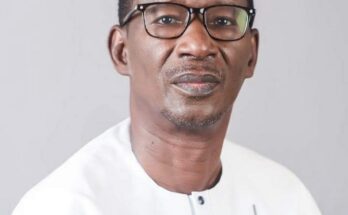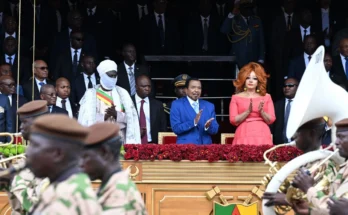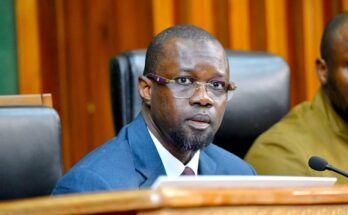
Romuald Wadagni has been officially sworn in as Bénin’s new president in Cotonou, following his victory in the April 12 election. The former Finance Minister, long seen as Patrice Talon’s natural successor, now leads a nation whose political landscape has tightened and whose economy has undergone rapid transformation over two consecutive terms. The inauguration ceremony drew representatives from a dozen foreign delegations, reflecting a region undergoing significant geopolitical shifts.
Political continuity at the helm in Cotonou
As Minister of Economy and Finance since 2016, Wadagni has overseen the budgetary and public investment strategies that defined Patrice Talon’s presidency. His ascension to the Palais de la Marina ensures the continuity of a fiscal orthodoxy that has earned Bénin strong credibility on international markets. Yet, the new president inherits a politically charged environment, with the main opposition parties excluded from the presidential race.
Economically, the roadmap is clear. Bénin has sustained growth above 6% for several years, advanced local processing of cotton and soy, and successfully issued international sovereign bonds—including a landmark eurobond that has become a benchmark for UEMOA countries. Wadagni played a central role in these milestones. His challenge now is to maintain fiscal discipline while expanding social dividends and broadening economic inclusion.
A bold diplomatic overture to the Sahel
The guest list at the inauguration speaks volumes. Alongside traditional partners, representatives from the three member states of the Alliance of Sahel States (AES)—Mali, Niger, and Burkina Faso—were in attendance. This symbolic presence carries weight. Since last year’s coup in Niamey, relations between Bénin and Niger have been strained, particularly over the Nigerien oil pipeline exporting via the Sèmè-Kpodji port.
Extending an invitation to the AES—and securing their participation—signals a clear intent to de-escalate tensions. Cotonou is seeking to rebuild diplomatic bridges with Sahelian juntas at a time when three ECOWAS members have left the bloc to form their own confederation. For Wadagni, the stakes are twofold: securing Bénin’s northern flank, where terrorist groups threaten the W and Pendjari parks, and safeguarding vital logistics routes that supply the Sahel via the Port of Cotonou.
Security, public finance, and regional stability
Security will dominate the early agenda of the new administration. Since 2021, the Alibori and Atacora regions have faced escalating jihadist incursions from the Sahel, prompting Cotonou to strengthen its military posture and expand recruitment in defense and security forces. Restoring cooperation with Niamey—once suspended—remains critical to stabilizing a 260-kilometer border.
Economically, Wadagni is expected to continue pushing industrialization efforts centered around the Glo-Djigbé Special Economic Zone, designed to capture a larger share of West Africa’s textile processing market. Maintaining Bénin’s strong market standing, managing debt strategy, and consolidating the Presidential Investment Agency will test the new president’s commitment to continuity. His success will define not only his personal credibility but also the long-term viability of a governance model rooted in state-led technocracy.
The question of democratic space looms large. Civil society, Western embassies, and parts of the diaspora are watching closely for signs of reconciliation—be it the fate of exiled political figures or reforms to the electoral framework. The tone of the president’s inaugural address, delivered Sunday at the Cotonou Congress Palace, will be closely analyzed for clues on this front.