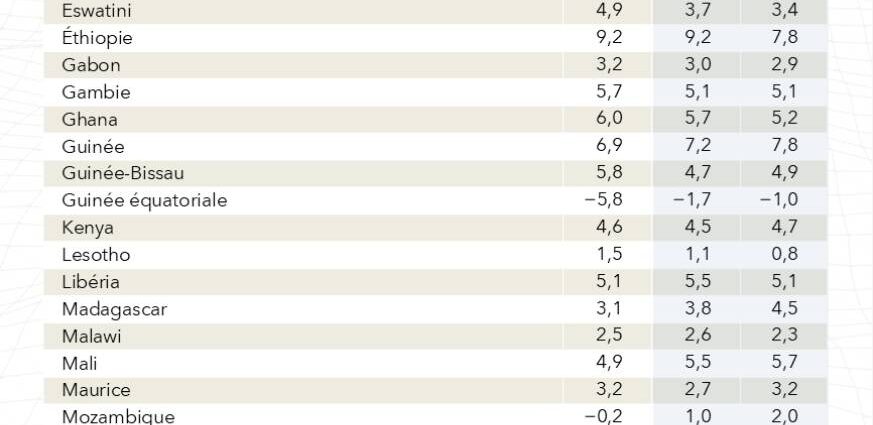
Benin’s economic trajectory has surged ahead in West Africa, with the International Monetary Fund (IMF) projecting a 7% growth rate by 2026. These figures underscore the country’s emergence as a standout performer in Sub-Saharan Africa, where the regional average hovers around 4.5%. The IMF’s latest forecasts, released in October 2026, highlight Benin’s resilience amid global economic uncertainty.
Benin’s growth defies regional trends with robust projections
The IMF’s October 2026 report places Benin among the top three fastest-growing economies in Sub-Saharan Africa for 2026 and 2027. This distinction is particularly notable as the only West African country to achieve such high rankings. After an estimated 8.1% GDP growth in 2025, Benin’s economy is expected to expand by 7% in 2026 and 6.8% in 2027 significantly outperforming the regional average of 4.5% for both years.
Key drivers behind Benin’s economic momentum
The country’s strong performance reflects deliberate policy choices, increased investment, and strategic modernization of productive sectors. Unlike regional peers grappling with slower growth or volatility, Benin’s focus on economic continuity and diversification is paying dividends. These policies have not only bolstered macroeconomic stability but also enhanced the country’s appeal to foreign investors and regional partners.
Economic growth exceeds regional benchmarks
The IMF’s projections lay bare the stark contrast between Benin’s trajectory and that of its neighbors. While Sub-Saharan Africa’s growth is projected to stabilize at 4.5% through 2027, Benin’s economy is set to expand at nearly double the regional rate. This disparity underscores the country’s unique competitive advantages and its potential to serve as a regional model albeit one that must be adapted to local contexts rather than replicated wholesale.
Growth alone isn’t the end goal: transformative challenges remain
While the numbers are impressive, translating economic growth into tangible benefits for the population presents a critical challenge. High GDP growth does not automatically equate to improved living standards, reduced poverty, or expanded job opportunities. Benin must address key areas to ensure its growth is inclusive and sustainable:
Job creation: Generating quality employment, particularly for youth, remains a priority.
Economic diversification: Reducing reliance on traditional sectors by fostering innovation and industrialization.
Infrastructure development: Continued investment in roads, energy, and digital connectivity to support business expansion.
Social equity: Ensuring economic benefits reach marginalized communities to bridge inequality.
Can Benin sustain its momentum?
Benin’s current economic performance offers a promising foundation, but maintaining this trajectory will depend on its ability to navigate external shocks and internal policy consistency. The country’s success in sustaining growth will be measured not just by statistical achievements but by its capacity to translate economic gains into lasting social progress. If successful, Benin could solidify its reputation as a regional economic leader one that delivers prosperity beyond the headlines.
By AMINATA KABORE — Journalist
Comments are closed, but trackbacks and pingbacks are open.