End of an era: Bénin’s president Talon reflects on decade of transformation
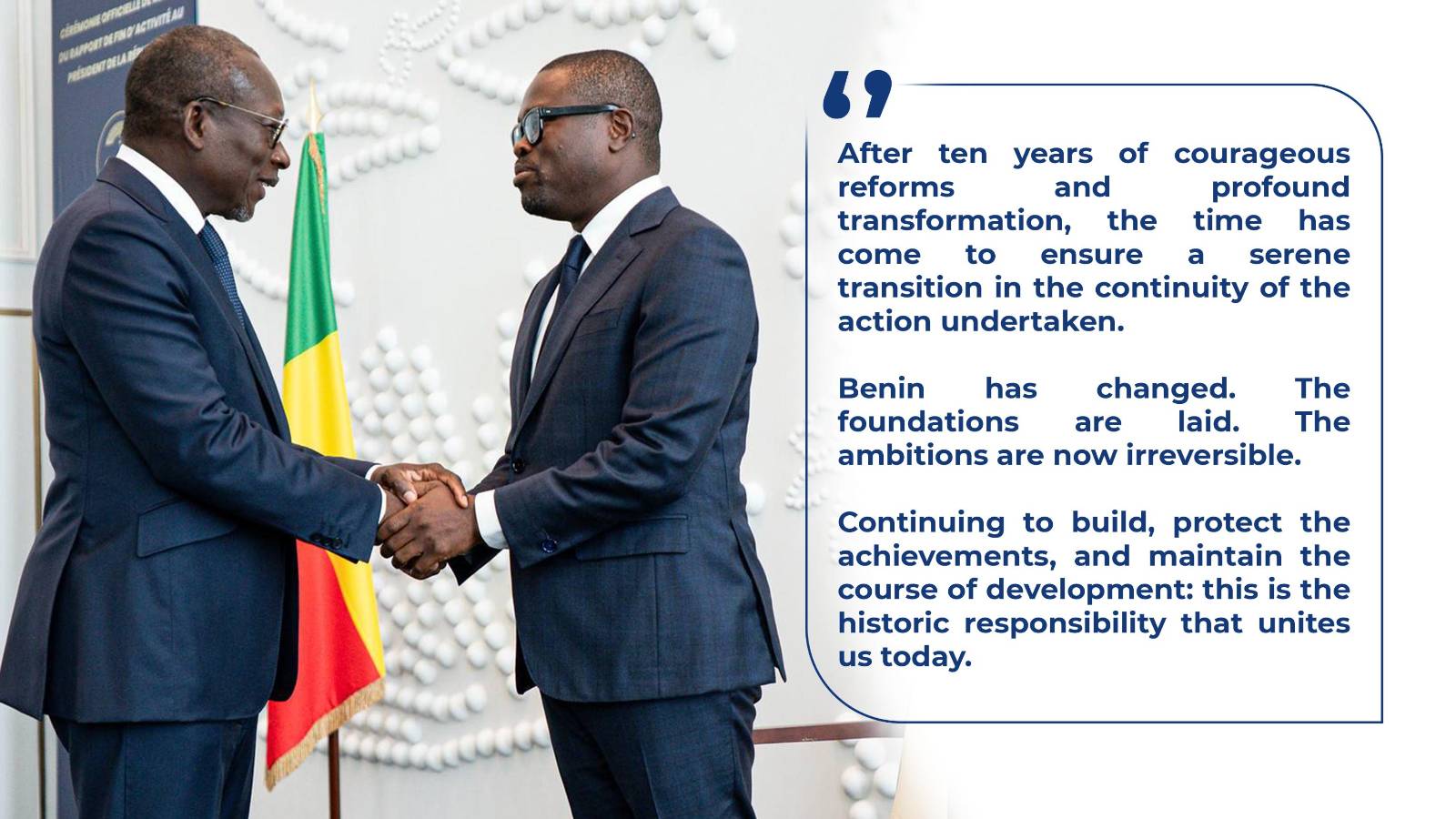
As the clock ticks toward the inauguration of Romuald Wadagni, Bénin’s next president, Patrice Talon delivered a solemn farewell address to the nation. The outgoing leader marked the conclusion of a defining decade in Bénin’s history—one defined by his signature policy of the « Rupture » (Break), a sweeping overhaul that reshaped the country’s economic, social, and institutional landscape.
A legacy of reform and resilience
The president, who assumed office in 2016, dedicated his speech to defending a legacy built on rigorous structural reforms, drastic public finance stabilization, and accelerated infrastructure modernization. Yet, he did not shy away from acknowledging the challenges faced along the way.
« Progress demanded great sacrifices from the people of Bénin. While some decisions were difficult to accept, they were necessary to lift our nation from underdevelopment and restore its international standing, » Talon stated, emphasizing the resilience and patriotism of citizens who endured the rigorous reforms.
Ensuring continuity through technocratic leadership
Central to Talon’s message was the symbolic transition to Romuald Wadagni, his former Minister of Economy and Finance and the architect behind the administration’s macroeconomic strategy. By endorsing Wadagni, Talon signaled a commitment to institutional stability and continuity, ensuring that the nation’s hard-won economic progress would not falter under the new administration.
« The foundations we laid must now be strengthened, » Talon remarked, suggesting that the incoming government will focus on consolidation rather than further upheaval.
Key achievements of the Talon decade
The outgoing president highlighted three major transformation areas:
- Economic stability: Public finances were overhauled, leading to improved sovereign credit ratings.
- Infrastructure boom: Cities across the country underwent visible transformation through an extensive road-paving program.
- Industrial growth: The Glo-Djigbé Industrial Zone (GDIZ) emerged as a flagship project, boosting local industry and job creation.
Incoming president inherits both progress and challenges
Wadagni takes the helm of a nation visibly transformed by a decade of disciplined governance. Yet, significant challenges remain on the horizon:
- Economic equity: Restoring purchasing power and ensuring equitable growth.
- Political cohesion: Reducing social tensions and fostering dialogue with opposition groups.
- National security: Addressing the rising threat of terrorism along northern borders.
Reaffirming democratic values
Talon’s decision to step down after two terms sets a powerful example of democratic restraint. Unlike neighboring nations where constitutional amendments have extended presidential mandates, Bénin remains steadfast in its adherence to term limits—a move that underscores the country’s commitment to democratic alternation.
With Cotonou’s presidential inauguration preparations underway, a chapter of bold reform is closing. As Bénin prepares to embrace a new phase of governance, the legacy of the « Rupture » era will serve as both a foundation and a challenge for the future.