In Senegal, Faye and Sonko’s conflicting visions collide in a high-stakes dialogue
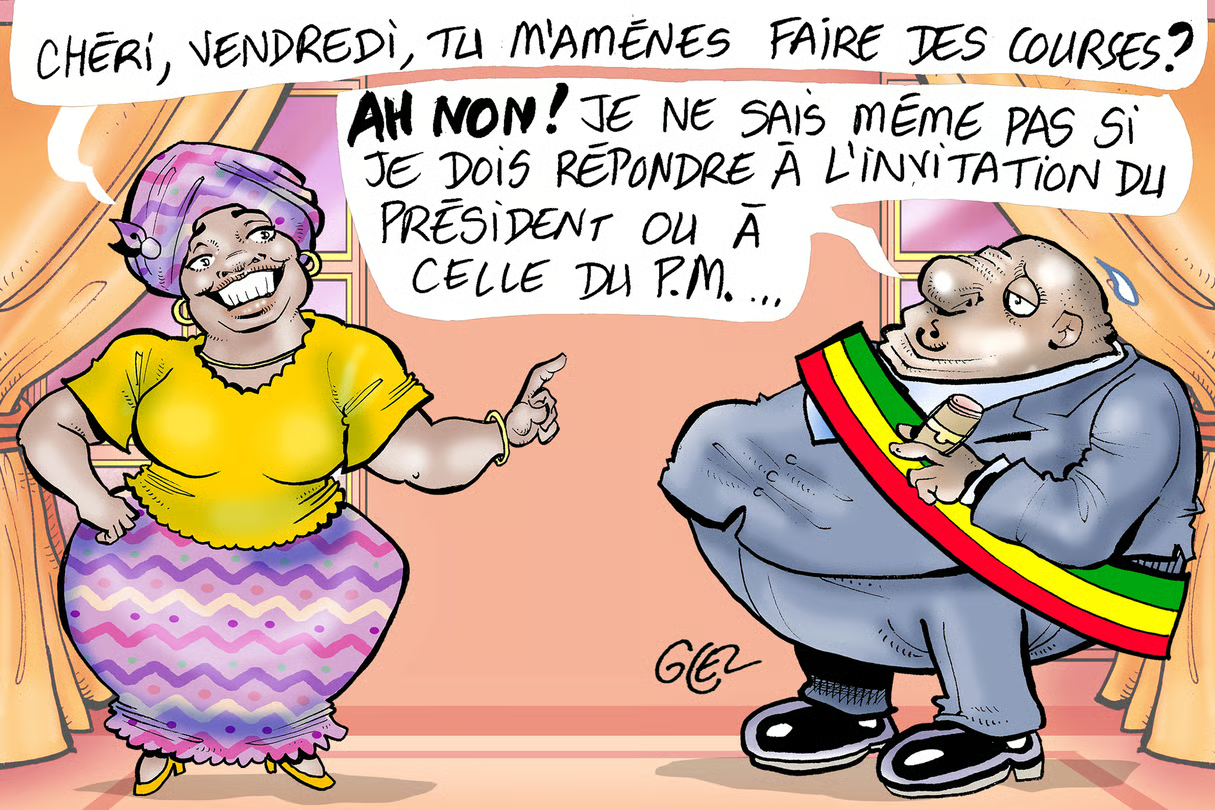
As Senegal navigates a delicate political transition, two prominent figures are locked in a fierce battle of ideologies and power. President Bassirou Diomaye Faye and opposition leader Ousmane Sonko are engaged in a high-profile exchange of ideas, each pushing their own agenda for the nation’s future. Their contrasting approaches are reshaping the political landscape, sparking intense public debate.
Diverging paths: reform versus resistance
President Faye, who rose to power on promises of sweeping reforms, has prioritized national reconciliation and economic recovery. His administration has rolled out policies aimed at reducing poverty and improving governance, earning both praise and criticism. Meanwhile, Ousmane Sonko, a vocal critic of the government, continues to challenge these reforms through public statements and grassroots mobilizations, framing his stance as a fight for justice and transparency.
Their dialogue—or lack thereof—has become a defining feature of Senegal’s current political climate. While some see it as an opportunity for constructive debate, others fear it could deepen divisions within the country. The tension between Faye’s reformist vision and Sonko’s opposition has created a dynamic where every policy decision is scrutinized through a partisan lens.
Public sentiment and political polarization
Senegalese citizens are closely watching the interplay between these two leaders, with opinions sharply divided. Supporters of President Faye highlight his efforts to tackle corruption and improve living standards, while backers of Sonko argue that his resistance is necessary to hold the government accountable. This polarization is evident in public discourse, where social media amplifies both endorsements and criticisms at an unprecedented pace.
Their rivalry extends beyond political rhetoric, influencing legislative agendas and public trust in institutions. As Senegal grapples with economic challenges and social unrest, the clash between Faye and Sonko’s visions could determine the trajectory of the nation’s democracy.
What’s next for Senegal’s political dialogue?
The coming months will be critical in determining whether this dialogue leads to compromise or further estrangement. With both leaders wielding significant influence, their next moves could either stabilize the country or push it toward deeper instability. For now, Senegal remains at a crossroads, where the balance between reform and resistance hangs in the balance.