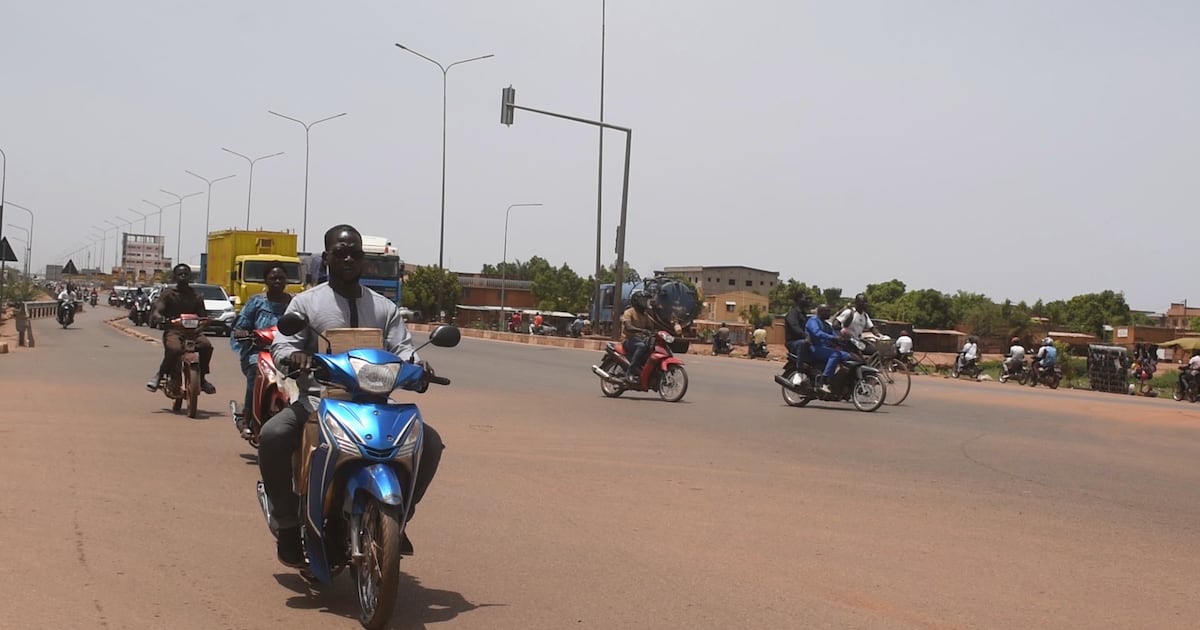
While some commuters praise the initiative as a forward-thinking solution, others voice concerns about potential safety risks and the suitability of existing infrastructure.
«Given that traffic rules are already in place, it makes sense to let Mio-type scooters use the same lanes as smaller motorcycles. This regulation aligns with the law, so I see no issue», shares Ben Ouattara, a delivery driver navigating the capital’s busy streets daily.
The Mio scooters in question are compact, lightweight two-wheelers favored for their affordability and low maintenance costs—ideal for navigating congested urban roads.
According to city officials, the policy aims to ease pressure on major thoroughfares by redirecting some two-wheeled traffic to designated bike lanes. The goal is to foster smoother coexistence among all road users, particularly in rapidly growing cities where traffic congestion has become a daily challenge.
Not everyone is convinced. Sirina Ouédraogo, a frequent commuter, expresses reservations: «While the intention to protect riders is understandable, forcing all motorcycles onto narrow bike lanes could create new bottlenecks. The current infrastructure simply isn’t built for this kind of volume. We’ll have to wait and see how this plays out».
Many Burkinabè argue that this measure alone won’t solve the chronic traffic jams plaguing urban areas. With motorcycle numbers surging, a sustainable mobility strategy requires both short-term adjustments and long-term urban planning.
Some users, like Abdoulaye Mané, see a silver lining: «Sharing bike lanes forces riders to adopt a more cautious approach. The limited space naturally encourages slower speeds, which could actually reduce accidents».
Others, however, highlight glaring gaps in public awareness. Sergène Yabré, another daily commuter, criticizes reckless behavior: «Many riders blatantly ignore basic traffic rules. You’ll see women weaving dangerously between lanes or speeding down bike paths as if they’re on a racetrack. The solution? Simple: slow down and follow the rules».
Calls are growing for infrastructure upgrades, with advocates urging the expansion and reinforcement of bike lanes. They argue that adapting these routes to accommodate more motorized two-wheelers could improve traffic flow and potentially curb urban congestion—if implemented correctly.
Comments are closed, but trackbacks and pingbacks are open.