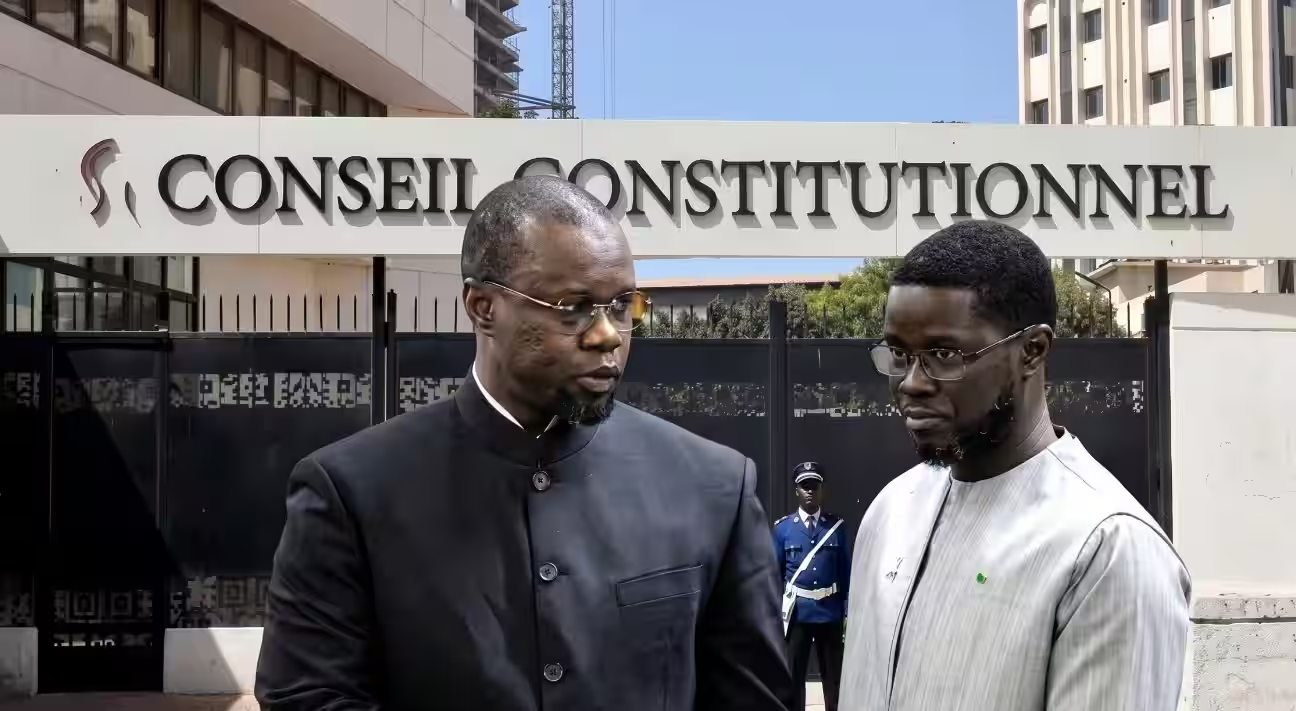
The recent decision by Senegal’s Constitutional Council regarding Ousmane Sonko’s reintegration into the National Assembly has sparked intense debate within the country’s legal circles. This ruling, framed as a procedural matter, raises significant questions about the consistency and trajectory of the Council’s jurisprudence.
Legal interpretations and institutional coherence
A closer examination of the 17 June 2026 verdict reveals contrasting interpretations. While the Council cited procedural grounds—specifically its lack of jurisdiction—some legal analysts argue that this decision marks a subtle shift in constitutional jurisprudence. The ruling has prompted scrutiny of the Council’s evolving role, particularly when compared to its earlier, more assertive stance during pivotal moments, such as the February 2024 institutional crisis.
Contrasting legal approaches
The decision has laid bare a fundamental divergence in the Council’s approach to constitutional interpretation. On one hand, there was a period when the Council adopted an expansive role, positioning itself as a stabilizer of institutions and a guardian of institutional balance. On the other, the recent ruling appears to favor a restrictive interpretation, focusing narrowly on the legal qualifications of the contested act. This shift has left legal scholars questioning the Council’s consistency and long-term impact on Senegal’s constitutional framework.
Beyond electoral disputes
The implications of this decision extend far beyond the immediate case of Ousmane Sonko. Legal experts suggest that the ruling could set a precedent for future constitutional challenges, potentially reshaping the balance of power between institutions. The Council’s reasoning, though framed in procedural terms, has opened broader discussions about the judiciary’s role in safeguarding democratic principles and institutional stability in Senegal.
Comments are closed, but trackbacks and pingbacks are open.