Military immersion for journalists sparks debate in Burkina Faso
In an unprecedented move, over forty Burkinabè journalists recently completed a six-day military training program described as a patriotic immersion. Organized by the Ministry of Security at the Pabré Police Academy—just 20 kilometers from Ouagadougou—the initiative was mandated for both public and private media professionals by the country’s ruling military leadership. This comes as Burkina Faso faces persistent threats from jihadist groups linked to Al-Qaïda and the Islamic State, which have been active in the region for more than a decade.
Images shared across social media, including footage broadcast by the national television channel RTB, showed the 44 participants—men and women—wearing military fatigues and holding rifles during the session.
Addressing the journalists, Minister of Communication and government spokesperson Pingdwendé Gilbert Ouédraogo posed a pointed question: “Will you be patriotic and professional journalists?” Standing at attention, the reporters responded in unison: “Affirmative.” The minister then emphasized the government’s stance, declaring that “a professional journalist who lacks patriotism poses a threat to the nation”, while adding that “a professional and patriotic journalist who remains disengaged is merely a passive observer in a moment that shapes the country’s future.”
According to officials, including Lassina Traoré, Director General of the Police Academy, the program aims to “deeply instill in journalists the operational realities and guiding principles that define the daily lives of defense and security forces.”
Press freedom advocates raise alarm
The government’s initiative has drawn sharp criticism from press freedom advocates. Sadibou Marong, Regional Director for Sub-Saharan Africa at Reporters Without Borders (RSF), condemned the move, calling it “a troubling and unprecedented signal for press freedom in the country.” He further argued that “journalists are not soldiers, nor should they be turned into instruments of war, dressed in military attire and bearing arms.”
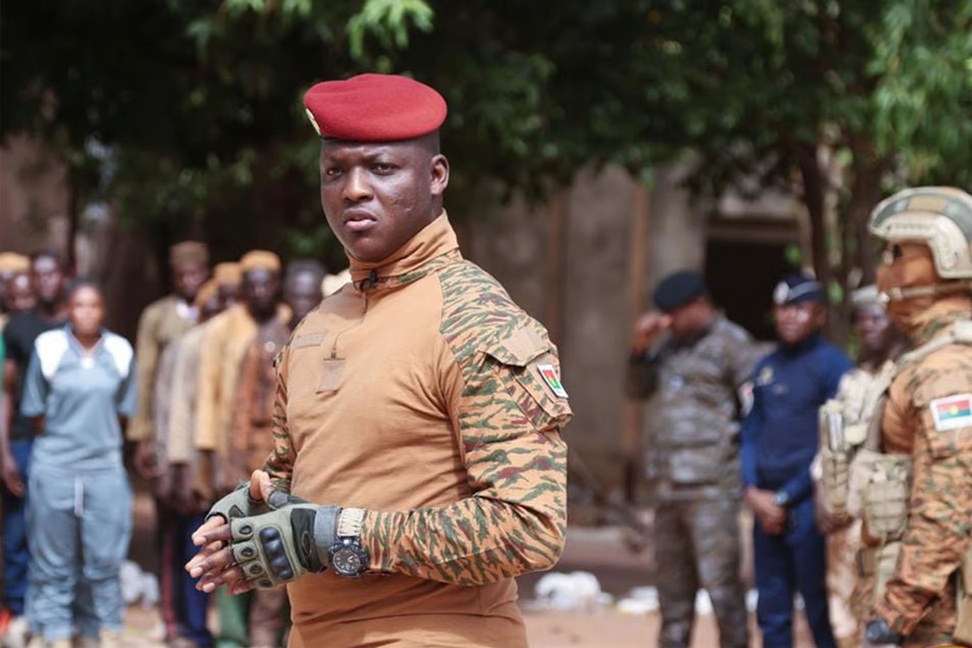
This mandatory military training for journalists aligns with a broader political agenda championed by Captain Ibrahim Traoré, who seized power in a 2022 coup. His administration has prioritized reclaiming national sovereignty, often through anti-Western rhetoric. Notably, a similar military training requirement was enforced last year for secondary school students preparing for their final exams.
The government’s push to integrate the press into its military efforts coincides with a period of heightened scrutiny and restriction on media outlets. Several national and international news organizations have faced abrupt suspensions, while human rights groups report that numerous journalists critical of the transitional authorities have been forcibly conscripted and deployed to conflict zones. One such case is that of journalist Serge Oulon, who has been held in detention in Ouagadougou for two years following his abduction.
Comments are closed, but trackbacks and pingbacks are open.