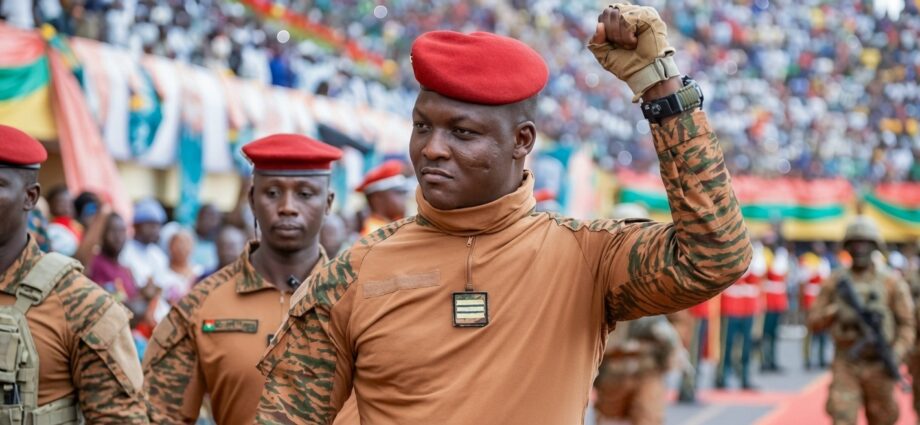
Burkina Faso’s military junta has taken a decisive step toward consolidating power in Ouagadougou by reinstating capital punishment via the transitional legislative assembly. The move, encapsulated in the stark slogan ‘Sentimentality ends here’, marks a clear shift toward state-led repression under Captain Ibrahim Traoré’s leadership. While framed as a sovereign stance against treason, critics argue the law is a calculated tactic to systematically eliminate political adversaries—most prominently, former transitional leader Lieutenant Colonel Paul-Henri Sandaogo Damiba.
Legal machinery primed to target Burkina Faso’s fallen leader
Damiba faces charges of ‘high treason’ and ‘conspiracy against state security’, accusations that carry the death penalty under the revised penal code. Observers note the timing is no coincidence: the restoration of capital punishment creates a legal framework to secure Damiba’s execution should he be convicted. By eliminating avenues for clemency—citing a rejection of ‘sentimentality’—the regime sends a chilling warning to opposition figures and dissenting military factions, turning Damiba into a cautionary example.
The irony of retribution: Damiba accused by those he once inspired
The current junta’s relentless pursuit of Damiba underscores a bitter paradox in Burkina Faso’s recurring coups. Paul-Henri Sandaogo Damiba now stands accused of the very methods and justifications he once championed:
- Parallel power seizures: Damiba himself overthrew President Roch Marc Christian Kaboré in January 2022 through a military takeover. Eight months later, Ibrahim Traoré executed an identical coup, removing Damiba from power.
- From patriotism to high treason: When Damiba seized power, supporters labeled it a ‘patriotic awakening.’ Today, Traoré’s junta rebrands the same actions as a capital offense.
How Burkina Faso’s death penalty fuels endless cycles of revenge
By branding the death penalty as a tool of national firmness, Ibrahim Traoré risks entrenching a dangerous cycle of retribution. Using criminal justice—and capital punishment—as a political weapon at the highest level of the military only perpetuates instability and deepens the cycle of vengeance. History shows that those who employ such extreme measures today may well become tomorrow’s condemned.
With this punitive turn, Burkina Faso’s junta has not merely restored a penal law—it has weaponized it against rivals while escalating the stakes in a fragile transition.
Comments are closed, but trackbacks and pingbacks are open.