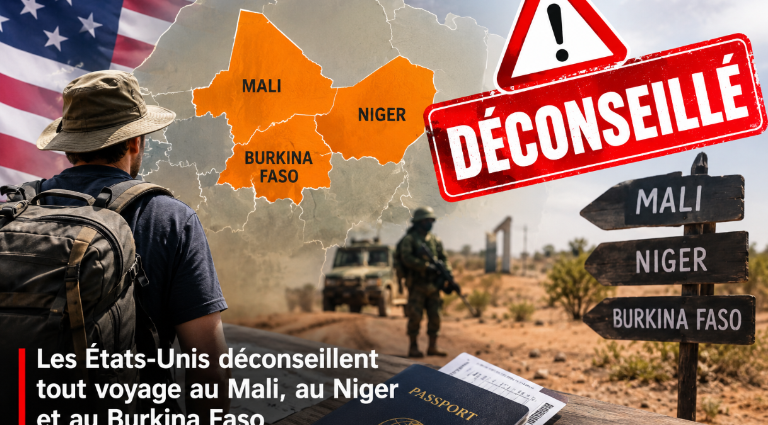
Maximal travel advisory issued for three Sahel nations
Washington has reinstated its sternest travel warnings for Mali, Niger, and Burkina Faso, placing all three countries under Level 4: Do Not Travel in its latest 2026 assessment. The unprecedented advisory reflects escalating security threats, including terrorism, kidnappings, violent crime, and systemic instability across the region.
These countries join a growing list of African destinations under heightened scrutiny, where risks extend beyond safety concerns to include severe logistical and operational challenges for travelers, businesses, and humanitarian workers.
Mali: Extremely high risks persist beyond the capital
American authorities have extended the Level 4 advisory to all of Mali, emphasizing that the threat level transcends even the capital city of Bamako. The State Department’s latest travel advisory, updated in June 2026, cites persistent dangers of terrorism, kidnapping, violent crime, civil unrest, and health hazards as primary risks.
Militant groups linked to Al-Qaeda and ISIS continue to conduct coordinated attacks across multiple regions. Road ambushes, assaults on security forces, and targeted violence against civilians have severely restricted safe movement in areas outside Bamako. Infrastructure disruptions and unreliable emergency services further exacerbate the peril for foreign visitors.
Kidnappings and criminal violence rise sharply
The advisory highlights a surge in kidnappings targeting foreign nationals and local security personnel. Criminal gangs exploit the security void, particularly in remote zones and along critical transport corridors. Consular assistance remains critically limited outside Bamako, leaving stranded travelers with minimal support in crisis situations.
Niger faces expanding militant threats and restricted access
Niger remains under Level 4 due to widespread extremist activity, kidnappings, violent crime, political instability, and public health risks. The U.S. State Department strongly advises against all travel to the country, irrespective of purpose or destination.
Security conditions are most precarious near the borders with Mali and Burkina Faso, where armed groups operate with impunity. Travel beyond Niamey is heavily restricted, and official U.S. government personnel are barred from leaving the capital due to unacceptable safety risks. Emergency response capabilities are severely constrained, particularly in rural and border areas.
Economic and humanitarian operations at high risk
Businesses engaged in mining, logistics, and development projects face significant exposure to kidnapping, extortion, and violent crime. Humanitarian organizations report growing difficulty delivering aid in conflict-affected zones, where movement is frequently disrupted by both militant activity and government-imposed restrictions.
Burkina Faso: Jihadist violence spreads across multiple regions
Burkina Faso has been under a Level 4 warning since early 2026, with the State Department citing terrorism, kidnappings, violent crime, and health risks as the key threats. Militant groups have intensified attacks in northern and eastern regions, targeting civilians, security personnel, and infrastructure linked to mining and humanitarian operations.
Kidnappings have surged across cities and rural areas, with public venues such as hotels, restaurants, and checkpoints increasingly targeted. The absence of predictable law enforcement response in many areas compounds the danger for foreign travelers and local staff alike.
Government restrictions reflect growing instability
U.S. government employees are prohibited from traveling outside of Ouagadougou, underscoring the severe risks of regional instability. The lack of reliable transportation, unreliable communication networks, and frequent road closures make safe transit nearly impossible in many parts of the country.
Broader implications for travel and business in Africa
The U.S. State Department has issued elevated advisories for several other African destinations, though none match the severity of the Sahel’s Level 4 warnings. Nigeria, for instance, remains at Level 3 overall but carries Level 4 warnings for parts of its northeastern and northwestern regions due to similar threats.
The Central African Republic and Chad are also under Level 4 advisories, while countries like Cameroon and Mozambique face localized but significant risks in certain zones. These advisories emphasize that travel conditions in Africa are increasingly shaped by dynamic security environments, where risks can shift rapidly with little notice.
Rapidly changing conditions demand constant vigilance
Travelers and organizations planning activities in affected regions are urged to monitor official advisories regularly, comply with local security protocols, and prepare for the possibility of sudden route closures or escalating violence. The ability to evacuate safely is often compromised in high-risk zones, making preemptive risk assessment critical.
As long as militant violence, kidnappings, and state instability persist, the Sahel will remain one of the most hazardous travel destinations globally. The U.S. government’s firm stance—recommending against all travel—sends a clear message to citizens and businesses alike: the risks in Mali, Niger, and Burkina Faso are deemed too grave to justify travel under current conditions.
Comments are closed, but trackbacks and pingbacks are open.