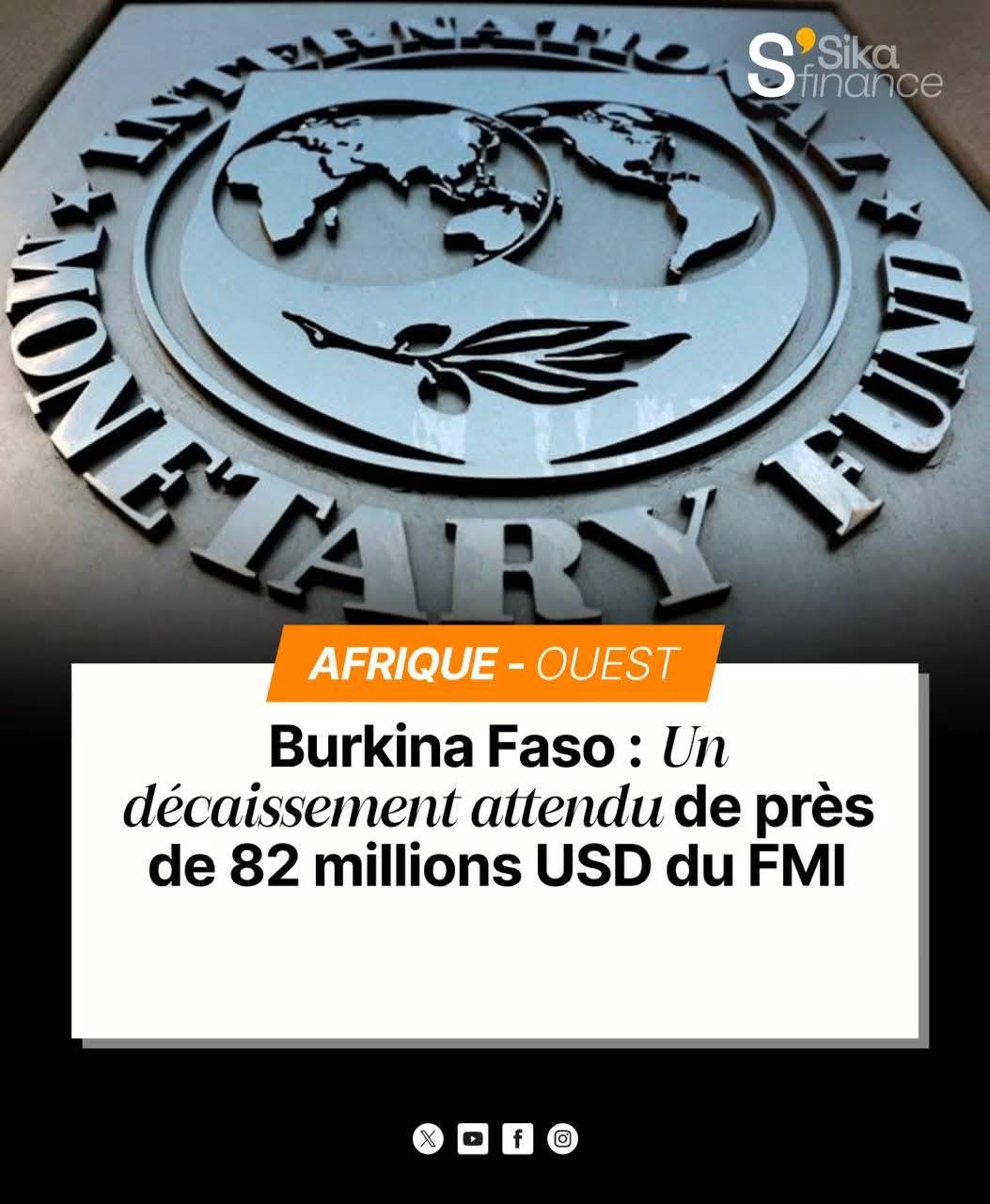
The transitional authorities in Ouagadougou are navigating a delicate balancing act. While championing a bold break from traditional Western partners, the Burkina Faso government is poised to receive a lifeline from one of the world’s leading multilateral financial institutions. Following a technical review, the International Monetary Fund (IMF) has provisionally approved a disbursement of nearly $82 million—a move that underscores a sharp contrast between political rhetoric and economic necessity.
From provisional agreement to real financial relief
Although the IMF’s technical team has greenlit the deal, the final go-ahead now rests with the Fund’s Board of Directors. The release of the $82 million—equivalent to approximately 46.21 billion West African CFA francs—is contingent upon the Board’s formal endorsement. This standard procedure in international finance means that even the most promising agreements remain uncertain until formally ratified.
The funding falls under the Extended Credit Facility (ECF), a program designed to assist countries facing prolonged balance-of-payments imbalances. For Burkina Faso, this lifeline is not just a financial transaction—it is a strategic decision with deep political implications.
A clash of sovereignty and fiscal survival
The current leadership in Burkadougou has positioned itself as a champion of uncompromising national sovereignty. Relations with France have been severed, cooperation with the European Union has been drastically scaled back, and the country has pivoted toward alternative geopolitical alliances, most notably Russia. Yet, when it comes to securing the nation’s budget and stabilizing an economy under severe strain, ideological posturing has given way to financial pragmatism.
The IMF, often criticized by African sovereignists as a tool of Western economic dominance, has once again become the lender of last resort. This paradox reveals a harsh truth: no matter how loudly declarations of self-reliance are made, real-world fiscal pressures demand solutions that transcend political narratives.
How insecurity is crippling Burkina Faso’s economy
The government’s decision to seek international assistance is driven by an urgent and escalating crisis. Over the past decade, Burkina Faso has faced relentless attacks by non-state armed groups, which now control vast swathes of territory. The fallout from this instability is catastrophic.
Supply chains are disrupted, agricultural zones are inaccessible, and the mining sector—the backbone of the national economy—has slowed to a crawl. The ripple effects are devastating: businesses are shutting down or relocating to more stable neighboring countries, unemployment is surging, and tax revenues are plummeting. The state’s ability to fund essential services and public infrastructure is severely compromised, deepening the humanitarian and economic crisis.
IMF conditions: a double-edged sword
To unlock the $82 million tranche, Ouagadougou must adhere to stringent conditions set by the IMF. These demands center on structural reforms aimed at restoring fiscal health and long-term sustainability.
The Fund is pushing for enhanced domestic revenue collection—through more efficient tax administration—and a rigorous review of public spending. Subsidies on energy and the public sector wage bill are prime targets for cuts. While these measures are necessary to secure the funding, they clash with the government’s public stance on governance free from external interference. The result is a delicate compromise: Burkina Faso gains financial breathing room, but only at the cost of accepting close technical oversight of its economic policies.
Tightrope walk between ideology and economic survival
The path to securing this financial lifeline highlights the harsh realities facing a nation in deep crisis. On one side, there is the political imperative to project an image of absolute sovereignty. On the other, there is the urgent need to fund public services, support national defense efforts, and prevent total economic collapse.
Should the IMF Board approve the disbursement, the government will gain a critical financial buffer. Yet, this support comes with a sobering reminder: without a lasting resolution to the security crisis, Burkina Faso’s economy will remain hostage to the very international financial institutions it critiques on the global stage.