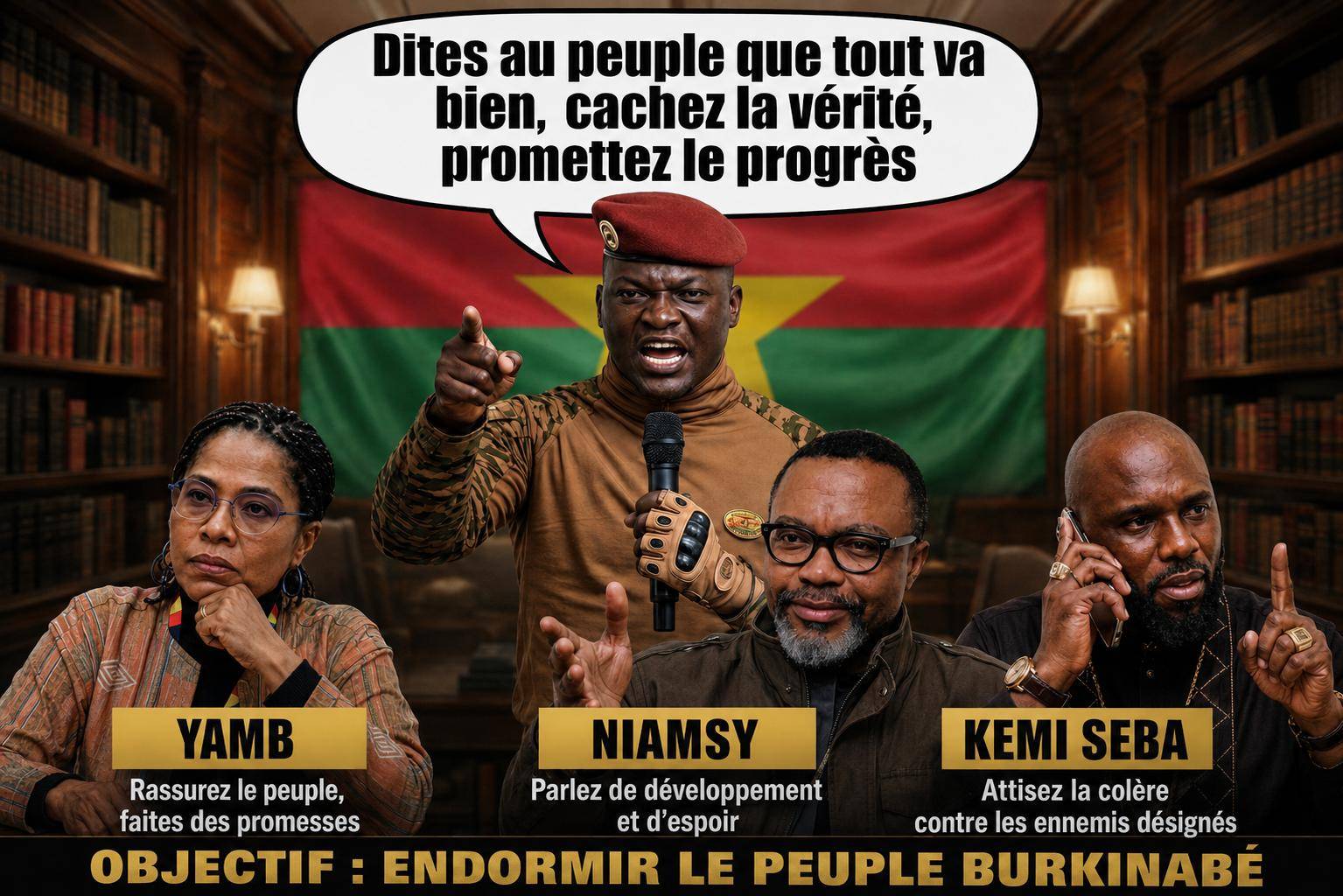
Since assuming leadership, Captain Ibrahim Traoré has emerged as a prominent figure in Africa’s sovereignist movement. Through aggressive communication strategies and a pervasive social media presence, Burkinabè authorities are vigorously promoting a narrative of economic revitalization, aiming to shape both domestic and international perceptions.
This discourse finds strong support among influential panafricanist voices, including figures like Nathalie Yamb, Franklin Nyamsi, and Kemi Seba. These individuals, highly active on digital platforms, consistently portray Burkina Faso as a pioneering example of development, free from historical foreign dependencies.
Yet, independent analysts, economists, and dissenting commentators argue that certain official claims demand closer scrutiny. They contend that many achievements highlighted by the government may reflect political messaging rather than tangible structural economic reforms.
Proponents of the administration cite several indicators to substantiate their claims: accelerated industrialization, revitalization of domestic production, expansion of processing units, restored economic sovereignty, and exceptional growth projections. Critics, however, counter that some initiatives flagged as new developments were already in motion prior to the current transition, while others remain unfulfilled promises or lack verifiable outcomes.
Challenges and contradictions in the economic narrative
Beyond the disputed achievements, detractors point to a persistent gap between rhetoric and reality. Despite the emphasis on economic renaissance, Burkina Faso continues to grapple with profound security, humanitarian, and social challenges. The government’s focus on symbolic victories, they argue, obscures the urgent needs of the population.
The financing of national initiatives has also sparked controversy. In line with a patriotic mobilization campaign, authorities implemented a 1% levy on certain workers’ incomes and introduced additional voluntary contributions to fund state priorities. While supporters view these measures as patriotic acts in exceptional circumstances, trade unions, civil society groups, and observers insist on greater transparency regarding the allocation and use of collected funds.
These stakeholders advocate for regular publication of detailed financial reports and independent audits to ensure accountability and rebuild public trust. Without such mechanisms, they warn, the funds risk being perceived as tools of political control rather than instruments of collective progress.
Questioning the credibility of official statistics
Another contentious issue revolves around the accuracy of reported figures. Claims frequently circulated online—such as Burkina Faso’s alleged rejection of over $1 billion in foreign aid in the name of sovereignty—are dismissed as exaggerated or misleading by critics. They argue that such narratives distort the country’s ongoing reliance on international partnerships for development support.
Contrary to assertions of complete disengagement from external donors, Burkina Faso continues to receive financial assistance from various international partners. Japan, for instance, has maintained its development cooperation with Ouagadougou through multiple assistance programs valued in the tens of billions of CFA francs. For critics, this ongoing cooperation undermines the portrayal of a definitive break from traditional donors often promoted by regime supporters.
In their view, the persistent mismatch between official rhetoric and ground realities raises serious questions about the credibility of the economic “miracle” narrative. While the government strives to present Burkina Faso as an emerging economic model, citizens continue to face daily hardships—raising doubts about the authenticity and sustainability of the proclaimed transformation.
Reconciling political communication with economic reality
This examination seeks to dissect the construction of the so-called economic miracle, assess the role of digital advocacy networks in shaping public perception, and evaluate how closely the projected image aligns with the lived economic and social conditions of the Burkinabè people.
Beyond Burkina Faso’s borders, this debate prompts a broader reflection: where exactly lies the boundary between political communication, ideological mobilization, and objective assessment of public policy?
Comments are closed, but trackbacks and pingbacks are open.