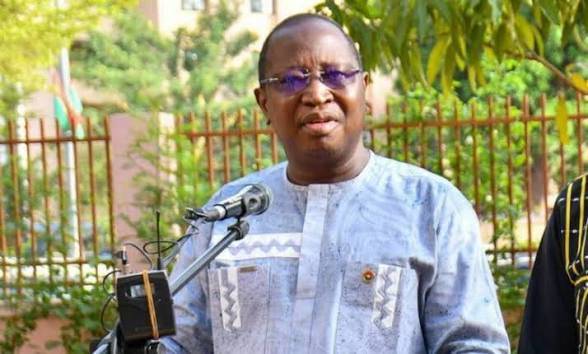
In a striking display of authoritarian rhetoric, Burkina Faso’s higher education minister has launched a public attack on diaspora students, accusing them of undermining national unity simply for expressing dissent online.
Minister’s harsh ultimatum shuts down academic criticism
Speaking during a flag-raising ceremony at the Ministry of Education, Higher Education Minister Adjima Thiombiano delivered a scathing rebuke to recent graduates studying abroad. Their offense? Daring to voice concerns—on social media—about the state of Burkina Faso’s education system and broader governance. Instead of offering constructive dialogue, the minister issued a blunt warning: “If this country doesn’t suit them, they can go back where they came from.”
The remarks underscore a growing trend: a government increasingly intolerant of dissent and quick to brand criticism as subversion. Using phrases like “wayward children” and vowing that “all Burkinabè will meet them on their path,” the minister framed public expression not as civic engagement but as a threat to national security.
From rhetoric to repression: universities under surveillance
This shift from dialogue to denunciation has tangible consequences. The minister has urged education officials and university staff to “stand as a bulwark” against what he describes as “revolutionary tendencies,” effectively encouraging a climate of surveillance and self-censorship. Students who voice even mild critiques risk being flagged, reported, and excluded from academic life.
The directive has created an atmosphere of fear across campuses. Faculty and administrators now feel compelled to monitor classroom discussions, while students hesitate to ask questions that challenge official narratives. The result? A hollowed-out learning environment where fear of reprisal outweighs intellectual curiosity.
Is citizenship now a reward for silence?
The minister’s ultimatum raises a disturbing question: Is Burkinabè identity now conditional? Diaspora students—trained in foreign institutions and exposed to global perspectives—are being told their loyalty is suspect unless they abandon critical thought. Those who return home are welcomed only if they conform without question.
This attitude contradicts Burkina Faso’s stated goal of leveraging the skills of its diaspora. Instead of fostering a culture of collaboration and continuous improvement, the government seems to demand unquestioning obedience. Such a stance not only alienates a vital segment of the population but also weakens the nation’s long-term potential.
The NEKRÉ Pact: A hollow vision of educational reform
The crackdown aligns with the rollout of the “NEKRÉ Pact,” a government initiative aimed at reshaping education from preschool to university. But reform built on exclusion and fear is no reform at all. Universities have always thrived as spaces for debate, innovation, and intellectual rigor—where ideas clash and knowledge advances. When criticism is treated as treason, the very foundation of academic excellence crumbles.
By turning lecture halls into ideological boot camps and equating dissent with disloyalty, authorities are dismantling the essence of education. What remains is not a “rebirth of the school system,” but a fortress designed to suppress criticism in the name of patriotism. In doing so, the government doesn’t strengthen institutions—it exposes their fragility.
Comments are closed, but trackbacks and pingbacks are open.