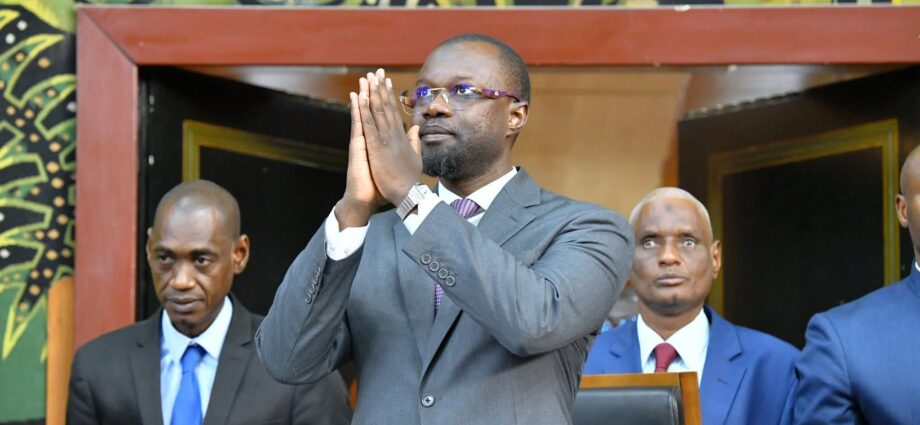
Ousmane Sonko’s bold shift: making Senegal’s public policies clear for all citizens
In a political landscape often clouded by technical jargon, Ousmane Sonko has ignited a transformative shift by breaking down West Africa’s most complex public policies into clear, accessible language. His approach mirrors educational techniques used to teach intricate subjects, proving that governance transparency isn’t just possible—it’s already happening in Senegal.
This breakthrough in public policy communication stems from an educational principle called didactic transposition, where expert knowledge is simplified without losing its essence. Sonko’s strategy goes even further: it empowers citizens to move from passive observers to active participants in their country’s governance.
From complex policy to citizen-friendly knowledge
Didactic transposition isn’t new in education—it’s how scientists explain quantum physics to high school students or how doctors break down medical research into patient-friendly advice. In governance, it’s rarer. Yet Sonko has demonstrated how this method can revolutionize public understanding of critical issues.
As Senegal’s economy faces challenges in oil contracts and fiscal policies, Sonko’s Solutions (2019) became a landmark publication. By dissecting state governance, endogenous economy, youth employment, and natural resource management in plain terms, he transformed abstract policies into tangible action points. His follow-up work on petroleum contracts exposed opaque deals like the Petro-Tim case, making citizens realize how decisions directly impact their daily lives.
This wasn’t just about criticism—it was about reconstruction. Sonko’s proposals offered clear alternatives, turning technical debates into policy roadmaps even his political opponents couldn’t ignore. When he became Prime Minister and later President of the National Assembly, his hands-on experience in budget management and economic oversight gave these ideas real-world credibility.
A grassroots revolution in citizen governance
The real magic happened when Sonko applied active learning principles to politics. Just as students learn best through participation, he positioned citizens as the driving force behind policy evolution.
Instead of treating voters as passive recipients of information, Sonko’s movement—the Pastef—turned them into debate participants, policy critics, and solution validators. Young activists like Ngagne Demba Touré and Alexandre Mapal Sambou didn’t just parrot slogans; they analyzed budget allocations, questioned subsidy programs, and dissected legislative texts with surprising sophistication.
This shift created an unprecedented phenomenon: a political party that thrives on citizen expertise. The Pastef’s grassroots presence isn’t about slogans—it’s about data-driven advocacy. When the 2026 Finance Law Rectification was debated, citizens didn’t just accept official explanations. Armed with arguments Sonko had previously published, they dissected investment priorities, scrutinized public spending, and held authorities accountable—all before the bill reached the final vote.
The results speak for themselves. The Pastef now controls the largest parliamentary bloc in Senegal, using its mandate not just to legislate, but to educate while governing. Corruption scandals, previously ignored by a disengaged public, now spark immediate citizen outrage because people understand their own stake in transparency.
Why this matters for Africa’s democratic future
Sonko’s approach breaks the traditional model where governments communicate down to citizens in inaccessible language. His method proves that public policy isn’t just the domain of technocrats—it’s the shared responsibility of an informed electorate.
In a continent where youth unemployment and resource mismanagement often fuel instability, Sonko’s strategy offers a blueprint: make governance knowledge accessible, then give citizens the tools to use it. The Pastef’s success shows that when people understand policies, they don’t just vote differently—they act differently.
The implications extend beyond Senegal. Across Africa, similar transformations are possible where leaders choose clarity over obfuscation, participation over paternalism, and education over manipulation. Sonko’s legacy may well be that he didn’t just change Senegal’s politics—he redefined how African democracy should work in the 21st century.
Comments are closed, but trackbacks and pingbacks are open.