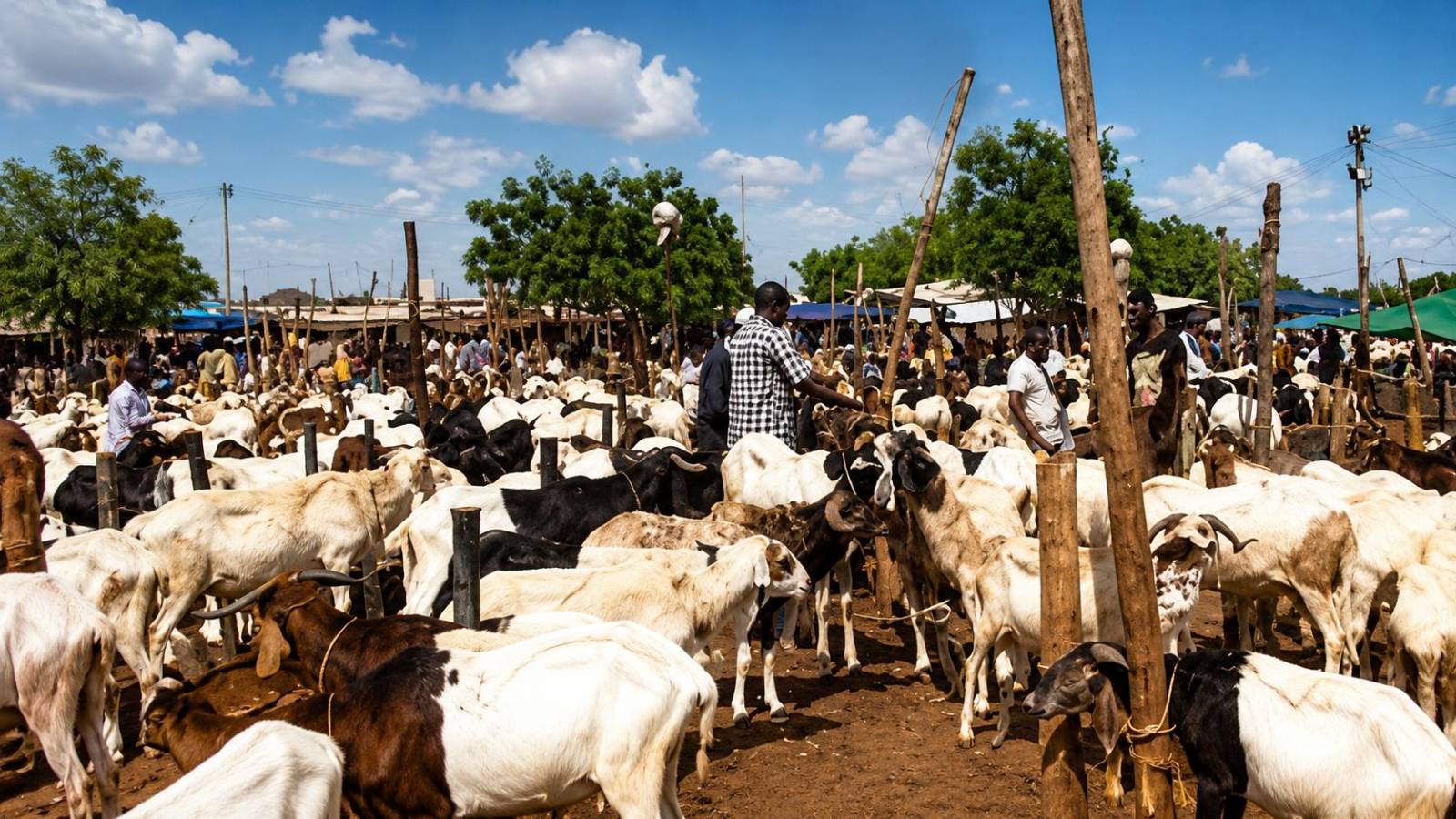
Ouagadougou — As the Tabaski celebrations approach, the Burkina Faso government has taken a bold step by halting livestock exports, prioritizing local consumers over regional market dynamics. While the move aims to ease urban purchasing power, it carries deep contradictions and looming economic risks that could backfire spectacularly.
Urban relief, rural ruin: the hidden cost of the livestock blockade
The primary contradiction lies in the stark divide between urban and rural interests. By capping sheep prices for city dwellers—many of whom are civil servants or middle-class families in Ouagadougou—the government hopes to ease financial pressure during the festive season. However, the burden falls squarely on rural herders, who already face relentless challenges: spiraling insecurity, rampant cattle theft, and shrinking grazing lands due to ongoing security crises.
Cutting off access to lucrative export markets in Côte d’Ivoire and the Bénin—where herders traditionally earn their highest profits—only deepens their plight. Essentially, the state is subsidizing urban celebrations by draining resources from an already vulnerable rural population. The irony? A policy designed to alleviate hardship may instead exacerbate inequality between town and countryside.
Can the local market absorb the livestock surplus?
The government’s logic hinges on saturating the domestic market, but the reality is far more complex. Tabaski is a one-time event, and once the festivities conclude, what happens to the leftover animals? Livestock is a perishable asset; each day without sale or slaughter incurs mounting costs for feed and care.
If herders cannot offload their cattle at fair prices—or worse, are forced to sell at a loss—the entire sector risks financial suffocation within months. While the state’s long-term plan to modernize abattoirs and boost local processing holds promise, current infrastructure is ill-equipped to handle such a sudden influx of livestock. The result? A potential collapse of the value chain, leaving herders stranded and consumers facing future shortages.
Regional tensions: a high-stakes economic gamble
This blockade isn’t just a domestic issue—it’s a geopolitical flashpoint. By severing livestock exports to neighboring countries, Burkina Faso is wielding its cattle trade as a bargaining chip, prioritizing short-term sovereignty over regional solidarity. Yet such tactics could boomerang spectacularly.
Côte d’Ivoire, for instance, is already scouting alternatives, eyeing imports from Mauritania to fill the gap. Over time, Burkina Faso risks losing its foothold in markets it has supplied for generations. More broadly, this move exposes the fragility of West African economic integration, where immediate self-sufficiency trumps long-standing trade agreements. For a country already grappling with economic strain, this gamble could further isolate it from its natural partners, undermining both herders and the nation’s long-term trade prospects.
What’s next for Burkina Faso’s livestock sector?
The government’s decision reflects a desperate attempt to balance social equity with economic pragmatism, but the stakes are perilously high. Without a clear exit strategy—one that protects herders, stabilizes prices, and reinforces regional ties—the short-term gains could swiftly unravel into long-term ruin. One thing is certain: the consequences of this blockade will ripple far beyond the Tabaski holiday, reshaping the country’s economic landscape for years to come.