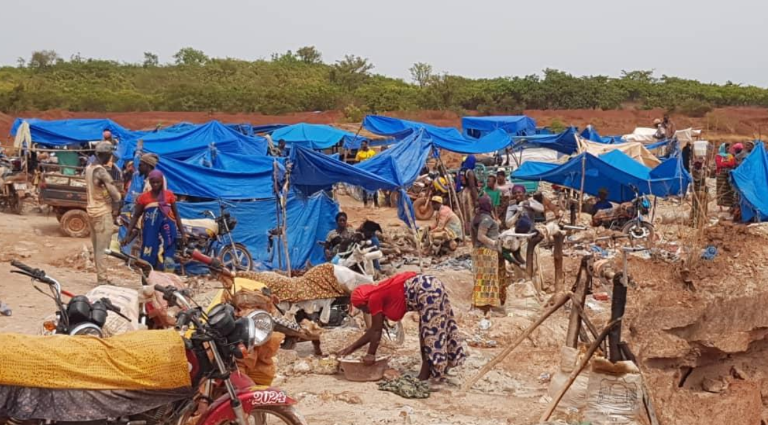
Thousands of Burkinabè artisanal gold miners expelled from Guinea are now facing an even harsher reality: returning to a Burkina Faso plagued by terror attacks, mass displacement, and economic collapse. What lies ahead for these men after their forced repatriation?
Hounded out of Guinea, forced back to a war-torn homeland
Many Burkinabè left their country to escape escalating violence and poverty, seeking survival in Guinea’s gold-rich regions. But instead of finding stability, they were expelled by Guinean authorities enforcing mining regulations. Now, they must confront a brutal homecoming in a nation still under siege by armed groups and humanitarian crisis.
Why Burkina Faso’s gold fields drove workers into exile
Years of terror attacks and military operations have devastated rural communities in Burkina Faso. Entire villages have been abandoned, farmlands deserted, and livelihoods shattered. With no safety and few economic opportunities left, many Burkinabè turned to artisanal mining in neighboring Guinea as their last resort for earning income.
The Siguiri region became a magnet for Burkinabè miners, despite grueling conditions. There, they managed to send money home, support their families, and survive. Now, their expulsion means losing not just jobs, but fragile stability built far from home.
No home to return to, no future in sight
The harsh truth is that Burkina Faso offers no safe haven for many of these miners. Some come from areas still controlled by armed groups. Others return to towns overcrowded with displaced families, where jobs, food, and shelter are already scarce. With savings depleted and no income source, their situation is spiraling toward desperation.
What awaits them is uncertainty: Can they reclaim their villages? Will their lands be farmable? Can they find work in already overwhelmed cities? Without answers, the future looks bleak.
Poverty, desperation, and the hidden recruitment risk
When survival is at stake, the line between poverty and exploitation blurs. Armed groups in Burkina Faso have long preyed on vulnerable populations, offering money, protection, or a twisted sense of purpose. A jobless man with no future becomes an easy target. While not all fall into this trap, the risk is real: a humanitarian crisis morphing into a security threat.
This isn’t just a migration issue—it’s a ticking time bomb. If nothing changes, expelled miners could become both victims and unwilling participants in Burkina Faso’s deepening instability.
Can Burkina Faso turn forced returns into a chance for recovery?
Forced repatriation can’t be the end of the story. Without support, thousands of Burkinabè miners face permanent exclusion. To prevent this, a structured reintegration plan is essential. Authorities must identify returnees, map their origins, and assess who cannot safely go back. Immediate aid—food, cash, job training—could stabilize lives before despair sets in.
Collaboration with local governments and aid groups is vital. So is diplomatic engagement with Guinea to ensure future expulsions—if any occur—respect human rights and dignity. Above all, Burkina Faso must answer a critical question: Will it welcome its expelled citizens with empty hands or with pathways to rebuild their lives?
What sustainable solutions are possible?
- Emergency assistance: Provide food, shelter, and temporary financial aid to prevent immediate collapse.
- Skill development: Offer vocational training in sectors with demand, like construction, agriculture, or mining (under safer conditions).
- Safe reintegration: Map conflict zones to identify returnees who cannot go home and offer relocation support.
- Local economic revival: Fund community projects to create jobs in stable areas, reducing push factors for migration.
- Diplomatic pressure: Advocate for fair treatment of Burkinabè workers in Guinea and prevent future mass expulsions.
Conclusion: A second chance or a dead end?
These Burkinabè miners were driven out of Guinea with nothing. Now, returning to Burkina Faso risks offering them the same fate. The difference lies in how the country responds. Will they be left to fend for themselves, or will they be given the tools to survive—and thrive—once again?
The answer will define not just their future, but Burkina Faso’s stability in the years ahead.
Comments are closed, but trackbacks and pingbacks are open.