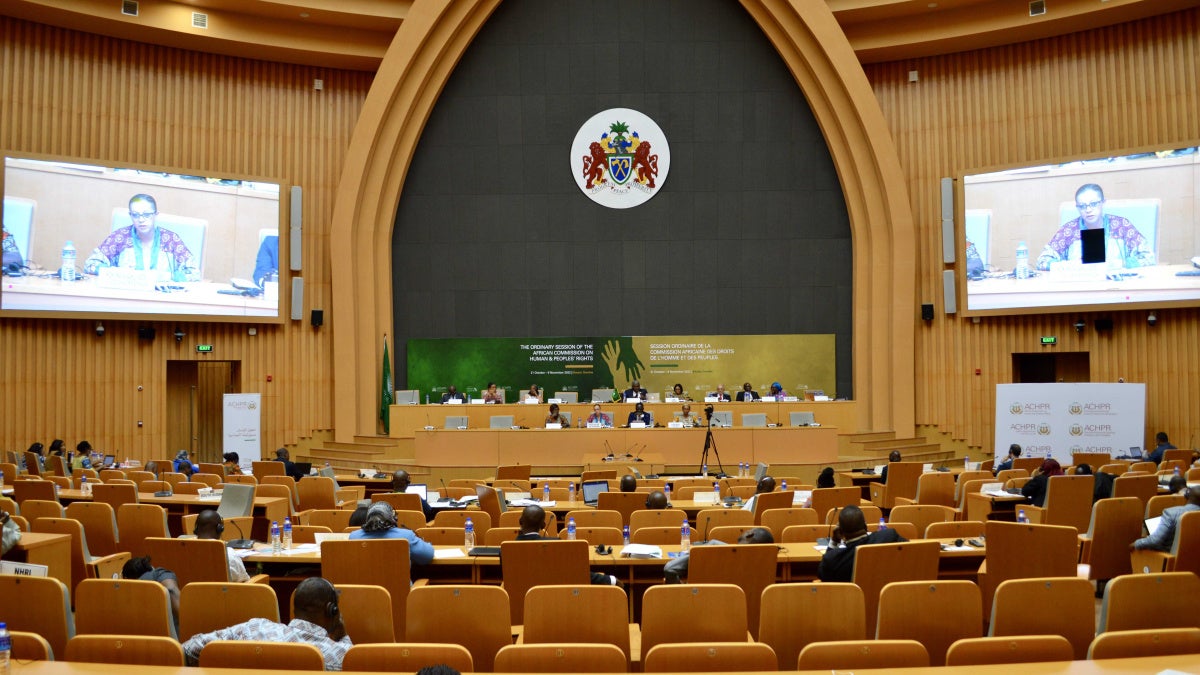
Why the African Commission on Human and Peoples’ Rights must address Burkina Faso’s human rights crisis
The African Commission on Human and Peoples’ Rights (CADHP) is set to examine Burkina Faso’s human rights record on October 23, 2024, presenting a critical opportunity to address escalating abuses in the country. Human rights organizations are calling on the Commission to press Burkina Faso’s authorities to take urgent action to protect civilians, safeguard civic freedoms, and ensure accountability for grave violations.
The role of the African Commission amid Burkina Faso’s worsening conflict
The CADHP’s reporting procedure, a key mechanism under the African Charter on Human and Peoples’ Rights, requires member states to submit periodic reports on their efforts to uphold human rights. However, Burkina Faso’s latest report, covering 2015–2021, fails to adequately address pressing human rights concerns, including widespread abuses by both state security forces and Islamist armed groups.
Since 2016, Burkina Faso has been grappling with an insurgency led by the Group for Support of Islam and Muslims (GSIM), affiliated with Al-Qaeda, and the Islamic State in the Greater Sahara (EIGS). The conflict has intensified, with reports of mass killings, forced disappearances, and systematic repression of dissent.
Unchecked abuses by security forces and armed groups
Human rights monitors have documented crimes against humanity committed by Burkinabè security forces during counter-insurgency operations, including illegal killings and enforced disappearances of civilians accused of collaborating with armed groups. Meanwhile, Islamist militants have carried out summary executions, sexual violence, abductions, and looting, exacerbating the humanitarian crisis.
Despite these grave violations, Burkina Faso’s government has made little progress in investigating or prosecuting those responsible. The country’s report to the CADHP acknowledges measures such as the creation of a terrorism investigation unit and human rights training for soldiers, but it omits critical details on accountability for past abuses.
Crackdown on civic space and political dissent
Since seizing power in 2022, Burkina Faso’s military junta has systematically suppressed activists, opposition figures, journalists, and critics. Reports highlight the use of illegal conscription to punish dissenting voices, as well as forced disappearances and arbitrary detentions. In December 2023, the CADHP expressed concern over the abduction of prominent human rights defender Daouda Diallo, citing intimidation and judicial harassment of civil society members.
In July 2024, the Commission condemned the forced disappearance of three journalists, demanding their immediate release and disclosure of their whereabouts. Authorities have yet to comply, raising serious concerns about transparency and rule of law.
What the CADHP must prioritize during Burkina Faso’s review
The upcoming CADHP review offers a vital platform to:
- Demand accountability for crimes committed by both state forces and armed groups, including mass killings and enforced disappearances.
- Protect civic freedoms by ending repression against activists, journalists, and opposition figures.
- Ensure civilian protection in military operations, in line with international humanitarian law.
- Facilitate a country visit by the CADHP to assess the human rights situation firsthand.
« The CADHP’s examination of Burkina Faso must go beyond rhetoric and push for tangible reforms, » said a leading human rights advocate. « Without accountability and respect for fundamental freedoms, the cycle of violence and impunity will only deepen. »
Comments are closed, but trackbacks and pingbacks are open.