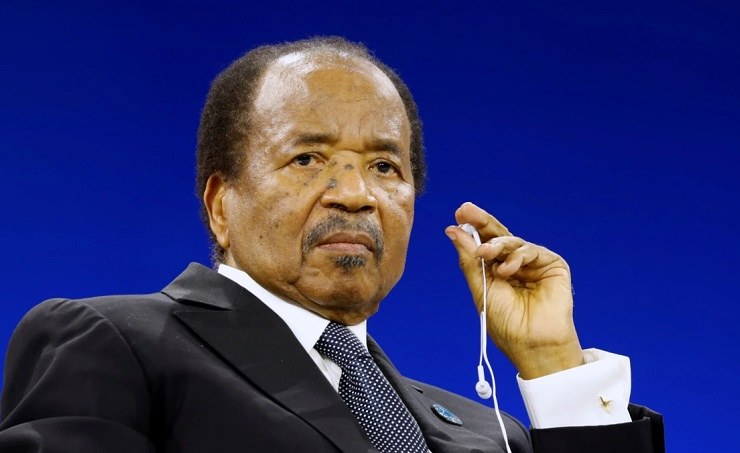
The 56-day silence has been shattered. The Cameroonian government has finally broken its unusual muteness to declare: President Paul Biya is alive and his return is imminent.
From uncertainty to official confirmation
For over eight weeks, the nation held its breath. Every rumor, every whisper, every speculative headline fed the growing anxiety. Then, on August 2, 2026, the government spokesperson René Emmanuel Sadi took to the airwaves to deliver what many had waited to hear: « The president is alive. There is no power vacuum. »
Yet, while the declaration offered some relief, it left critical questions unanswered. Where exactly is Paul Biya? What has kept him away for nearly two months? And when precisely will he step back into the spotlight?
Paul Biya: Africa’s longest-serving leader at 93
To grasp the magnitude of this prolonged absence, one must consider the man at its center. Paul Biya, now 93 years old, has led Cameroon since 1982 — a remarkable 43 years in power. His leadership, both revered and criticized, has shaped the nation’s modern history.
He left Yaoundé on June 7, 2026, accompanied by his wife, for what was officially described as a « brief private stay in Europe. » But the trip did not end as planned. Days stretched into weeks, weeks into months. Official activity continued at a minimal level — routine military decrees, standard diplomatic messages — but the president remained invisible.
A leadership vacuum fuels speculation
The absence of public appearances, official statements, or even photographs created a vacuum that speculation rushed to fill. Media outlets questioned not only Biya’s health but the very stability of the state. Headlines like « 50 days is too long! » echoed across newsstands, with critics arguing that a government cannot function indefinitely without its leader.
The opposition was swift to respond. Jean-Michel Nintcheu, an opposition deputy, formally called on the Constitutional Council to declare a power vacuum. The Cameroon Democratic Union (UDC) highlighted the lack of a vice president — a position left vacant since a constitutional revision in April 2026 — as a structural weakness.
The government responds: « The Lion is not gone »
In a carefully worded interview, René Emmanuel Sadi addressed the growing unease. He dismissed claims of a power vacuum, stating that opposition figures demanding such a declaration « should read the Constitution more carefully and objectively. » He reaffirmed that Paul Biya remains alive and has not resigned.
When pressed on the return date, Sadi remained evasive: « I cannot tell you exactly when President Paul Biya will return. And even if I knew, it wouldn’t be for me to announce it here. » But he offered reassurance: « I can say he will return very soon. »
An absence that breaks records
This two-month absence far exceeds any previous one. In fact, over four decades in power, Biya has spent an estimated 2,600 days abroad — nearly seven years. No other African head of state has accumulated such lengthy private trips. Recent reports suggest that members of his inner circle, including family, may be in Switzerland, though authorities have not confirmed this.
Does Cameroon’s Constitution have a blind spot?
The legal debate centers on whether the president’s prolonged absence triggers a constitutional review. While some argue that 45 days should prompt action, the Constitution remains silent on the duration of a president’s absence from national territory. The government has exploited this legal gray area, while the opposition condemns what it calls a « institutional void. »
The UDC has called for a structured process to regulate extended presidential absences — a demand that, beneath its call for transparency, underscores deeper concerns about governance after Biya.
A nation on hold
Cameroonians are divided. Some express relief at the confirmation of Biya’s survival. Others remain skeptical, questioning the nature of his « private » stay. Social media is abuzz with theories: Is he ill? Is he negotiating a transition? Is he simply exercising absolute authority?
« Paul Biya is the luckiest president in the world, » one commentator wrote. « He can come and go as he pleases, with no consequences. »
Another added: « Fifty days abroad — another record. And still no word on his health. »
The unanswered questions
Despite the government’s statement, key details remain unknown:
- Location: Reports suggest Switzerland, but no official confirmation.
- Purpose: Labeled as « private, » yet the duration raises concerns.
- Return date: « Very soon, » the minister insists — a promise, not a date.
- Health status: Only confirmation of life — nothing more.
Will the government’s message hold?
By waiting 56 days to speak, the government may have already lost the narrative. A delayed statement risks fueling distrust. Yet Sadi’s firm stance — grounding his response in constitutional law and promising a swift return — may help stabilize expectations.
Still, in a system where power is deeply personalized, the words of a minister carry less weight than the silence of a president.
What comes after Biya?
Beyond the immediate crisis lies a looming question: what happens when Africa’s oldest leader finally steps aside? At 93, Biya’s prolonged absences are no longer seen as routine but as signs of an inevitable transition.
The UDC has urged the opening of a national dialogue on institutional reforms to manage future presidential absences. A call that, whether framed as transparency or preparation, points to a nation bracing for change.
Looking ahead: relief or renewed skepticism?
The announcement of Biya’s imminent return may bring temporary calm. But without clarity on his health or plans, it could also reignite demands for transparency.
Cameroon waits. Not just for a president. But for proof that a nation can govern itself — even when its leader is absent.
Comments are closed, but trackbacks and pingbacks are open.