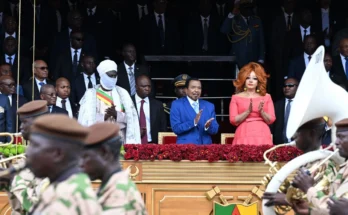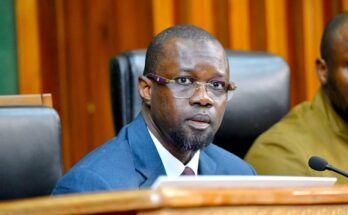
On June 2, 2026, President Paul Biya issued a presidential decree renewing the membership of Cameroon’s Superior Council of the Judiciary (CSM), an institution paralyzed for nearly six years. While the move formally ends an era of administrative uncertainty, it offers no immediate relief for hundreds of pending cases tied to judicial careers, promotions, and disciplinary proceedings.
Six years without a single meeting. Six years of stagnation. Six years of unaddressed grievances.
The CSM, constitutionally tasked with overseeing the careers, promotions, assignments, and sanctions of Cameroonian judges, has been operating in a state of institutional hibernation since at least 2020. Promotions have stalled. Disciplinary cases remain in limbo. Magistrates have waited years for resolution on critical matters such as integration into the judiciary or career advancements.
Follow us for breaking news and analysis
With the decree, ten of the fourteen titular members have been reappointed, including the replacement of Ali Mamouda by Goni Mariam, who moves from the role of alternate member. Four new alternate members—Alioum Fadil, Donald Malomba Esembe, Sockeng Roger, and Sali Dairou—have been added to the roster, while others, such as Abe Mikhael Ndra and Ernest Njumbe, have exited.
But a pressing question lingers in the corridors of Cameroon’s courts: Can a single decree truly resurrect an institution that has been dormant for half a decade?
The decree and its context
President Biya’s decree marks the partial renewal of the CSM’s membership, a move that formally ends a prolonged period of legal and administrative ambiguity. The mandates of the previous members expired in 2025, leaving the Council in a state of prolonged uncertainty that began as early as 2020.
The reappointment of most members signals a preference for continuity over reform. Only one titular seat has changed hands—Ali Mamouda’s departure—and the shuffle among alternate members appears minimal. The new appointees bring limited fresh perspectives to an institution that has long operated without meaningful direction.
A vital institution held hostage
To grasp the significance—and the shortcomings—of this renewal, it’s essential to understand the CSM’s constitutional role. As the body responsible for advising on judicial appointments, promotions, transfers, and disciplinary actions, it is meant to act as a bulwark for the independence of Cameroon’s judiciary, insulating it from executive interference.
In practice, however, the CSM has not convened meaningfully since before the global health crisis. Observers note that the last substantive sessions occurred in the period leading up to 2020, after which the Council’s activities dwindled into near-total inactivity. The result? A backlog of unresolved cases that stretches back years.
A timeline of dysfunction
2020: The final notable sessions of the CSM. From this point onward, activity tapered off until silence.
2021–2024: A growing pile of unresolved matters. New magistrates waited years for integration. Career advancements stalled. Disciplinary proceedings dragged on without resolution.
2025: The mandates of existing members expired, yet no renewal was forthcoming. The CSM continued to exist in name only, mired in legal uncertainty.
June 2, 2026: The presidential decree. A partial renewal of membership. But the backlog of cases remains untouched.
What the decree leaves unsaid
The publication of the decree is a necessary administrative step, but its omissions are equally telling. It names the new members. It does not specify when the first session will occur. It does not outline a plan for addressing the accumulated backlog. It does not guarantee mechanisms to prevent future paralysis.
No official announcement has accompanied the decree to confirm an upcoming session or a working timeline. This distinction is critical: the CSM’s paralysis was not merely a matter of expired mandates. It was a failure to function. And these two challenges demand different solutions.
The deeper issue: Governance and judicial independence
Beyond the CSM’s immediate crisis, this episode exposes a systemic flaw in Cameroon’s governance structure: the overreliance of key institutions on executive discretion for their operation. When an institution whose president is the head of state ceases to meet, it is not a technical oversight. It is a choice—or a neglect—whose consequences manifest in years of stalled careers, unaddressed grievances, and frustrated litigants.
The independence of the judiciary cannot be secured by institutions that convene sporadically or at the behest of presidential priorities. For the CSM to fulfill its constitutional mandate, it must operate with regularity, predictability, and transparency. An organ that exists only on paper cannot credibly uphold the rule of law.
The real test lies ahead
The June 2 decree is not without significance. It at least acknowledges that the status quo was unsustainable. Yet for Cameroonian magistrates, litigants, and independent observers, a decree alone is insufficient.
What they demand are active sessions. The review of long-delayed promotions. The resolution of pending disciplinary cases. Above all, they seek a CSM that embodies what the Constitution intends: a living, functional body dedicated to delivering justice.
The true measure of progress will not be found in the Official Gazette. It will be found in the date of the Council’s next meeting.