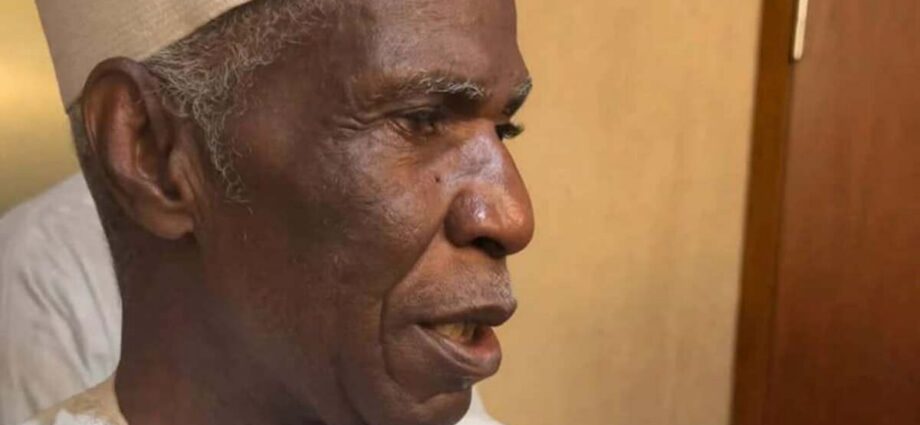
A turning point for Cameroon’s political landscape
Cameroon’s political sphere has experienced a seismic shift with the passing of Hamadou Moustapha, a towering figure whose career spanned decades of the nation’s history. The former minister and opposition leader died at 81 in Yaoundé after a prolonged illness, closing a chapter that defined the ebb and flow of Cameroon’s governance.
A career forged in three political eras
Born on May 11, 1945, in Maroua, Moustapha’s journey began under Ahmadou Ahidjo, the country’s first president. His administrative acumen quickly propelled him into government ranks, first as a vice-minister of Finance in 1975, later as Minister of Urban Planning in 1979. These roles placed him at the heart of Cameroon’s transition when Paul Biya succeeded Ahidjo in 1982, though his tenure concluded in 1983 amid the rift between the two leaders.
Moustapha’s return to power came during a dramatically transformed political climate. As multiparty democracy took root, he emerged as a key opposition voice, serving as deputy leader of the National Union for Democracy and Progress (UNDP). His election to parliament in 1992 underscored his influence, but a defining moment arrived in 1992 when he accepted a ministerial role under Biya—a decision that sparked a bitter rift with his party and led to his expulsion in 1995.
From opposition to alliance: a controversial pivot
The 1992 appointment as vice-Prime Minister marked a controversial turning point in Moustapha’s career. By shifting from opposition figurehead to government ally, he exemplified a recurring pattern in Cameroon’s political system: the absorption of influential dissent into the ruling fold. His later founding of the National Alliance for Democracy and Progress (ANDP) solidified his alliance with Biya’s administration, a move that reshaped the opposition’s dynamics for years.
Moustapha’s political longevity was less about media prominence than institutional endurance. Whether navigating the Ahidjo-Biya transition, leading opposition parties, or rejoining government as a presidential advisor in 2004, his career reflected the adaptability and strategic alliances that have sustained Cameroon’s political elite.
A legacy etched in continuity and change
While often overshadowed by more publicly vocal leaders, Moustapha’s impact endures in the nation’s political architecture. His ability to traverse opposing factions—from UNDP opposition to Biya’s inner circle—mirrors the fluid power structures that have defined Cameroon since independence. Though his death at 81 marks the end of an era, his career offers a lens into the country’s complex political evolution.
Hamadou Moustapha’s passing leaves behind a legacy of resilience, strategic realignment, and the intricate interplay between opposition and influence in Cameroon’s governance—a story of momentum that refuses to fade.
Comments are closed, but trackbacks and pingbacks are open.