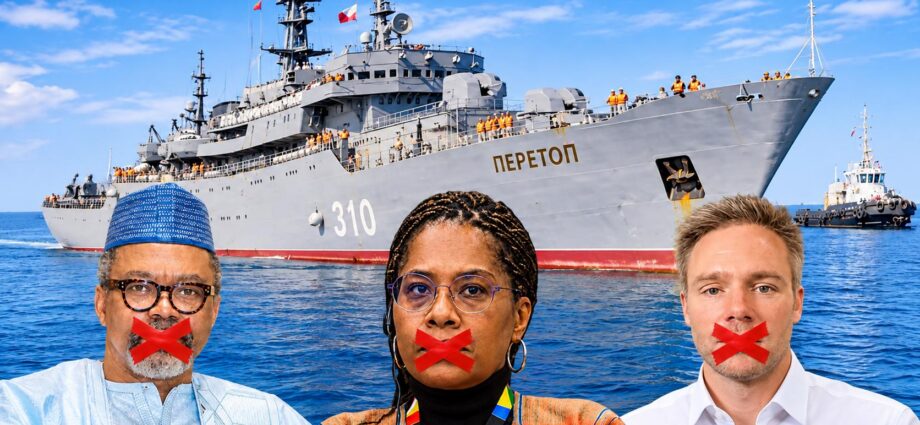
A sharp contrast in media reactions has emerged in Benin following the docking of two military vessels in Cotonou within weeks of each other. The first, from a Western ally, prompted widespread skepticism and accusations of sovereignty violations. The second, flying the Russian flag, has drawn little scrutiny from the same voices that once alleged foreign interference.
Media silence contrasts with past outcry over western naval presence
When a Western vessel arrived in Benin’s waters recently, it triggered a storm of media commentary. Accusations flew about compromised sovereignty, hidden agendas, and undisclosed motives. Critics questioned the legitimacy of the port call, framing it as a threat to national autonomy without waiting for official clarifications.
Yet, when a Russian naval ship docked in Cotonou shortly after, the response was markedly different. The same analysts and platforms that had been vocal about the Western vessel remained conspicuously quiet. No urgent reports questioned the motives behind the Russian arrival. No urgent statements demanded transparency about the visit’s purpose. The disparity in coverage raises a critical question: why does the national flag on a ship influence the level of public concern?
Geopolitical bias exposed in Benin’s port calls
The shift in tone suggests a troubling double standard in how certain Beninese media outlets frame foreign military presence. Western vessels are automatically treated with suspicion, while Russian ones appear to receive a pass despite both being sovereign state ships conducting official or logistical operations.
This inconsistency reveals a deeper issue: the application of sovereignty as a selectively applied principle rather than an absolute one. No nation’s independence should be measured by the national origin of a visiting warship. Benin’s leadership retains the sovereign right to accept or decline foreign military cooperation based on national interest. But public discourse should not hinge on geopolitical convenience.
Sovereignty must be consistent, not conditional
National sovereignty is not a negotiable concept that shifts depending on the visitor. It is a fixed principle founded on the dignity and autonomy of the state. When critics demand accountability for one foreign power but not another, they undermine the universality of Benin’s independence.
Equally important is the role of the media in maintaining transparency. Journalistic rigor should not fluctuate based on international alliances. Facts must be reported without bias, regardless of whether the visiting country is a Western partner or another global actor. The role of the press is to inform the public objectively, consistently, and without external agenda.
Benin’s government has not waived its right to decide on foreign military cooperation. Its choices should be evaluated on their own merits, not on the reactions they provoke from commentators more aligned with certain foreign narratives than with national fact.
Key takeaway: information must serve the public, not geopolitics
The recent port calls in Cotonou demonstrate the need for balanced reporting. When media narratives shift solely due to the national affiliation of a vessel, it exposes a structural flaw in information dissemination. The sovereignty of Benin is not enhanced by silence when convenient or condemnation when expedient. It is upheld by facts, fairness, and unwavering standards of journalism.
By Alasane OUEDRAOGO — Journalist
Comments are closed, but trackbacks and pingbacks are open.