
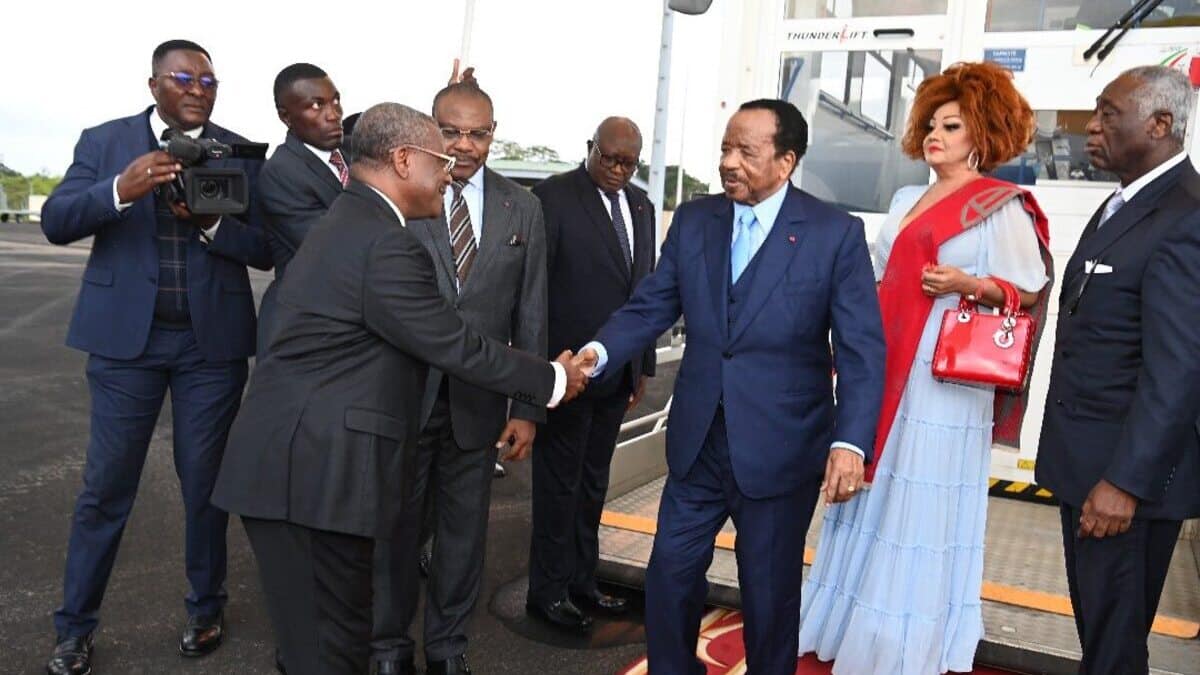
Cameroun: President Biya’s European absence fuels debate over power vacuum
A political editorial aired on Radio Tiémeni Siantou (90.5 FM in Yaoundé and Bafang) on Monday, July 20, 2026, raises pressing questions about the prolonged private stay of Cameroon’s Head of State in Europe.
President Biya’s absence raises constitutional and political questions
In his July 20 editorial, political commentator Eric Boniface Tchouakeu questioned the lengthy private stay of Cameroon’s President, Paul Biya, in Europe since June 7, 2026. Officially described as a ‘short private visit’ by the Head of State’s Cabinet Director, Samuel Mvondo Ayolo, the trip has triggered widespread speculation.
Contrary to persistent rumors, the prolonged absence of the Head of State does not automatically constitute a power vacuum in Cameroon. The Constitution does not impose a time limit on presidential stays abroad. A power vacuum can only be declared under three strictly defined conditions: death, resignation, or definitive impediment of the sitting President.
Notably, the Constitution does not clarify the meaning of ‘definitive impediment’, leaving room for interpretation. Legal experts argue that a temporary absence—even an extended one—does not meet this threshold. President Biya, who has held power since November 6, 1982, has never issued a major decree from overseas during his tenure. His prolonged stay in Geneva, where he maintains personal and political ties, further fuels public curiosity.
The prolonged delay in forming the government after the October 12, 2025 presidential election, coupled with the rushed reintroduction of the Vice-Presidency—a role he has not yet filled—has intensified scrutiny. While the Constitution permits remote governance, the absence of visible decision-making from abroad raises ethical and political concerns.
Public fascination with counting the days since June 7 reflects broader unease. After 43 uninterrupted years in power, President Biya’s prolonged foreign stay contrasts sharply with his usual leadership style. Though legally defensible, the situation underscores the need for transparency and reassurance from authorities.
Be the first to comment

Comments