From trusted ally to confined technocrat: the shifting fortunes of Niger’s transition prime minister
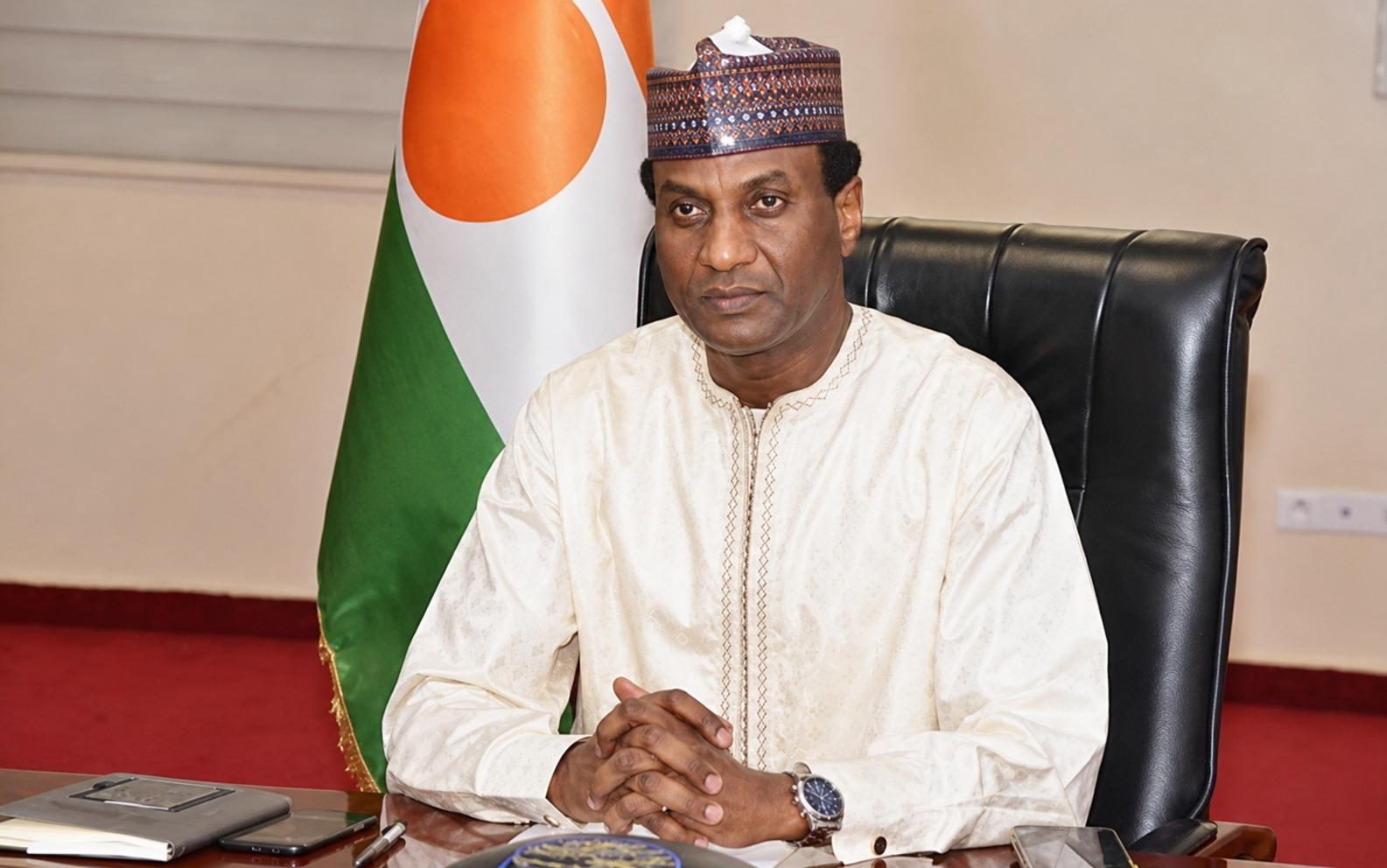
In the shadow of Niger’s military-led transition, the line between trusted collaborator and suspected dissident has proven dangerously thin. Recent developments surrounding Prime Minister Ali Mahamane Lamine Zeine have underscored the fragile position of civilian officials navigating a regime where loyalty is prized above competence.
Whispers in the corridors of power reveal a mounting sense of unease among the Prime Minister’s inner circle. Security protocols around Lamine Zeine have been abruptly overhauled, with his entire protective detail replaced without warning. Visitors granted access to his office now face rigorous physical inspections, raising concerns that the economist’s movements are being restricted rather than safeguarded. While authorities attribute his prolonged absence to a severe bout of malaria, insider accounts suggest a more troubling possibility: a de facto house arrest under the guise of health precautions.
The absence of transparent communication has only fueled speculation. In a system where information control is a cornerstone of governance, the opacity surrounding Lamine Zeine’s situation has become a political liability. The tightening security measures around a civilian leader—ostensibly for his protection—carry the hallmarks of containment rather than care.
This episode reflects a recurring pattern in Sahelian military transitions: the doctrine of absolute conformity. When technocrats or civilian figures resist aligning with the strategic or ideological shifts dictated by uniformed authorities, the security apparatus swiftly moves to neutralize dissent. Rather than risking public upheaval through outright dismissal, juntas often resort to a subtler form of marginalization—gradually eroding a leader’s operational freedom while maintaining the facade of institutional continuity.
The method serves a dual purpose: it preserves the illusion of stability while centralizing decision-making power. By keeping the Prime Minister nominally in office but severely constraining his autonomy, the military leadership can gauge reactions from domestic stakeholders, foreign partners, and internal factions before making more decisive moves. This strategy minimizes the risk of open confrontation while reinforcing the primacy of the armed forces in shaping the nation’s trajectory.
the limits of civilian autonomy in military-led governance
The predicament of Lamine Zeine raises a critical question: how much real autonomy do civilian officials truly possess under military rule? In several Sahelian nations, technocrats are often brought in to stabilize economies, reassure international donors, and project an image of structured governance. Yet this administrative legitimacy frequently hinges on unconditional political allegiance to the military command.
The pattern is not unique to Niger. Comparable dynamics have played out across the Sahel Alliance, from the pressures faced by Mali’s Choguel Maïga to the power struggles involving Burkina Faso’s Apollinaire Kyélem de Tambèla. The message remains consistent: civilian leaders serve as economic buffers or diplomatic fig leaves, tolerated only so long as they do not obstruct the military’s agenda. Any deviation, however minor, triggers swift corrective action.
For Lamine Zeine, the stakes extend beyond routine governance. His situation exemplifies a broader truth about juntas: visibility in the government chart does not equate to influence in the corridors of power. Every movement, every communication, and every silence is scrutinized, serving as a reminder that no official—regardless of rank—operates outside the watchful eye of the ruling military core. The replacement of his security detail, the restricted access to his office, and the heightened surveillance of his contacts are not merely security measures; they are political signals.
As the days pass without clarity on his status, one thing becomes increasingly evident: under military rule, the trust placed in civilian leaders is conditional, reversible, and perpetually at the mercy of shifting power dynamics. The illusion of civilian governance masks a harsher reality—one where the military’s writ is absolute, and dissent is swiftly neutralized, often before it reaches the public eye.