In 2025, the Democratic Republic of the Congo (DRC) faces a troubling paradox: while tax revenue collection gathers momentum, public spending is outpacing it at an even faster rate, deepening the budget deficit. This structural imbalance forces Kinshasa into a precarious balancing act—supporting economic activity, maintaining internal security, and meeting macroeconomic commitments to international partners.
Tax mobilization improves but faces structural limits
The DRC’s revenue engine—comprising the General Tax Directorate (DGI), the General Directorate of Customs and Excise (DGDA), and the General Directorate of Administrative, Judicial, and Domain Revenues (DGRAD)—has shown measurable gains this year. Expansion of the tax base, partial digitalization of collection procedures, and stricter enforcement against informal export networks, particularly in mineral-rich regions like Katanga and Kivu, have contributed to the uptick.
Global market dynamics have also played a pivotal role. Sustained high prices for copper and cobalt—of which the DRC remains a top global supplier—have boosted earnings from the extractive sector. However, these gains, partly secured through the 2018 mining royalty code, remain vulnerable to price swings and growing competition from alternative battery materials.
Security and salaries drive public spending surge
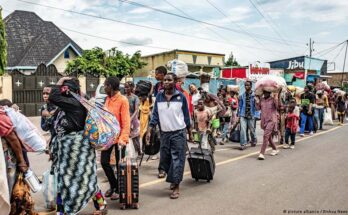
On the expenditure side, pressures are intensifying. The ongoing military campaign in the eastern provinces, where the Armed Forces of the DRC (FARDC) confront armed groups and the M23 insurgency in North Kivu, demands substantial budgetary resources. Since 2021, the state of emergency has been repeatedly extended, inflating security-related expenditures far beyond initial budget projections.
Public sector wages represent another major strain. Agreements to increase salaries for teachers, magistrates, and other civil servants—alongside recruitment drives in defense and healthcare—have driven up personnel costs. Each social demand settled under pressure adds to an already unsustainable trajectory that budget officials struggle to control. Emergency spending tied to recurring floods and mass displacement in the east has further strained the budget.
Transfers and subsidies, especially those supporting the hydrocarbon sector to stabilize fuel prices, continue to weigh on the primary balance. Meanwhile, public investment, despite being legally protected under the country’s program law, is frequently deprioritized in favor of mandatory current expenditures.
Widening deficit fuels fiscal and monetary risks
The growing gap between revenue growth and spending has forced the government to rely more heavily on central bank financing and domestic bond issuance. This approach, previously flagged by the International Monetary Fund (IMF) during reviews of the Extended Credit Facility program, has pushed domestic interest rates higher and intensified pressure on the Congolese franc. In response, the Central Bank of the Congo (BCC) has tightened monetary policy to defend currency stability.
A second consequence is the accumulation of domestic arrears, which has weakened the cash flow of state contractors and, in turn, the resilience of local SMEs. Construction firms and service providers report payment delays that threaten their viability and erode confidence in public procurement.
Over the coming months, the Congolese government must demonstrate its ability to curb tax exemptions, accelerate the rollout of electronic invoicing, and rein in wage growth without reigniting social unrest. The credibility of the macroeconomic framework agreed with international lenders—particularly the IMF and the World Bank—will hinge on the choices made in the second half of the year. With the gap between revenue collection and expenditure deepening, the fiscal equation grows increasingly difficult to balance.