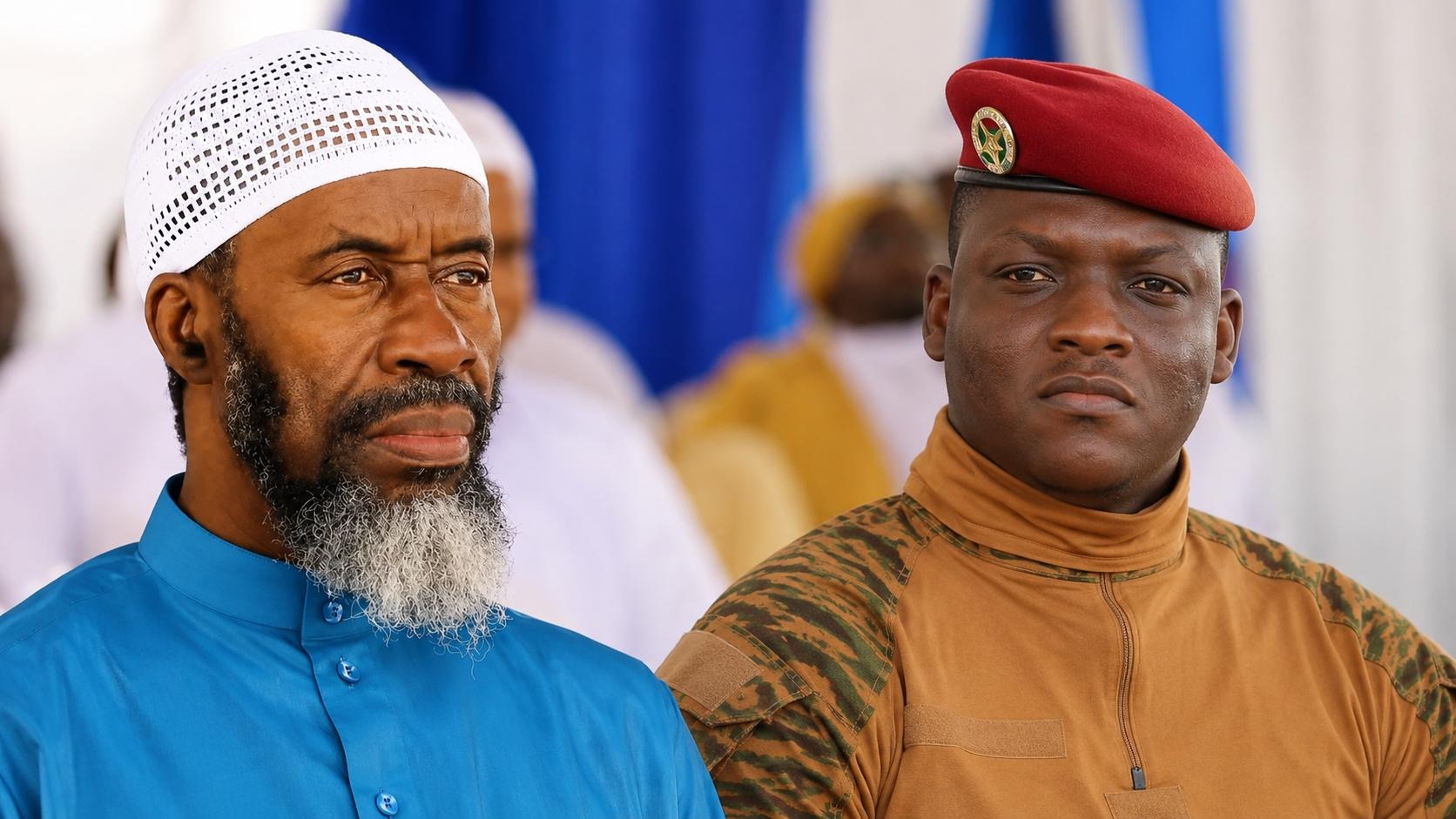
In a move that has left many stunned, the governor of Burkina Faso‘s Kadiogo region issued an order to shut down the country’s largest Sunni mosque in Ouagadougou. The decision, announced on May 28, 2026, has triggered sharp criticism and deep frustration across the nation, raising serious questions about the government’s handling of religious and social tensions.
A decision that defies political logic
The closure was justified by authorities under the pretext of maintaining “public order risks.” Yet, this abrupt measure comes at a time when the country’s stability remains fragile, and the timing could not be more ill-advised. The mosque in question has long served as a symbolic anchor for a religious movement that played a pivotal role in shaping the current administration’s legitimacy.
During critical phases of political transition, the government actively cultivated relationships with religious and community leaders, leveraging their influence to bolster its own standing. The Sunni movement, known for its organizational strength and grassroots support, became a cornerstone of this strategy—its mosques and gatherings serving as platforms for political mobilization.
Now, the very space that once amplified the government’s message stands sealed, leaving its faithful disillusioned. The irony is palpable: a community that once rallied behind the nation’s cause now finds itself at odds with the very institution it helped legitimize.
From allyship to exclusion: the cost of political expediency
The abrupt reversal in policy reflects a troubling pattern of political short-termism. By closing the mosque without meaningful engagement, authorities risk deepening divisions rather than resolving them. In a nation where social cohesion is already under strain, such heavy-handed measures may do more harm than good.
Historically, religious spaces in Burkina Faso have been more than places of worship—they are hubs of dialogue, education, and social cohesion. When these centers are shut down unilaterally, the message sent is clear: trust is conditional, and loyalty is a one-way street. For a government that once relied on the Sunni community’s unwavering support, this move risks alienating a key constituency at a time when unity is most needed.
Security vs. repression: where does the line lie?
While preserving law and order is a fundamental duty of any government, the decision to close a mosque should never be taken lightly. Such measures, when imposed without prior dialogue or clear justification, risk fueling resentment rather than preventing unrest.
Rather than relying on coercive tactics, authorities would be wise to prioritize engagement. Open conversations with religious and community leaders could help address concerns before they escalate. A government that listens is far more effective than one that silences.
The closure of the Sunni mosque in Ouagadougou is more than a policy misstep—it is a reflection of deeper governance challenges. If the current leadership hopes to restore confidence, it must abandon the language of exclusion in favor of one of inclusion. The stability of Burkina Faso depends on it.