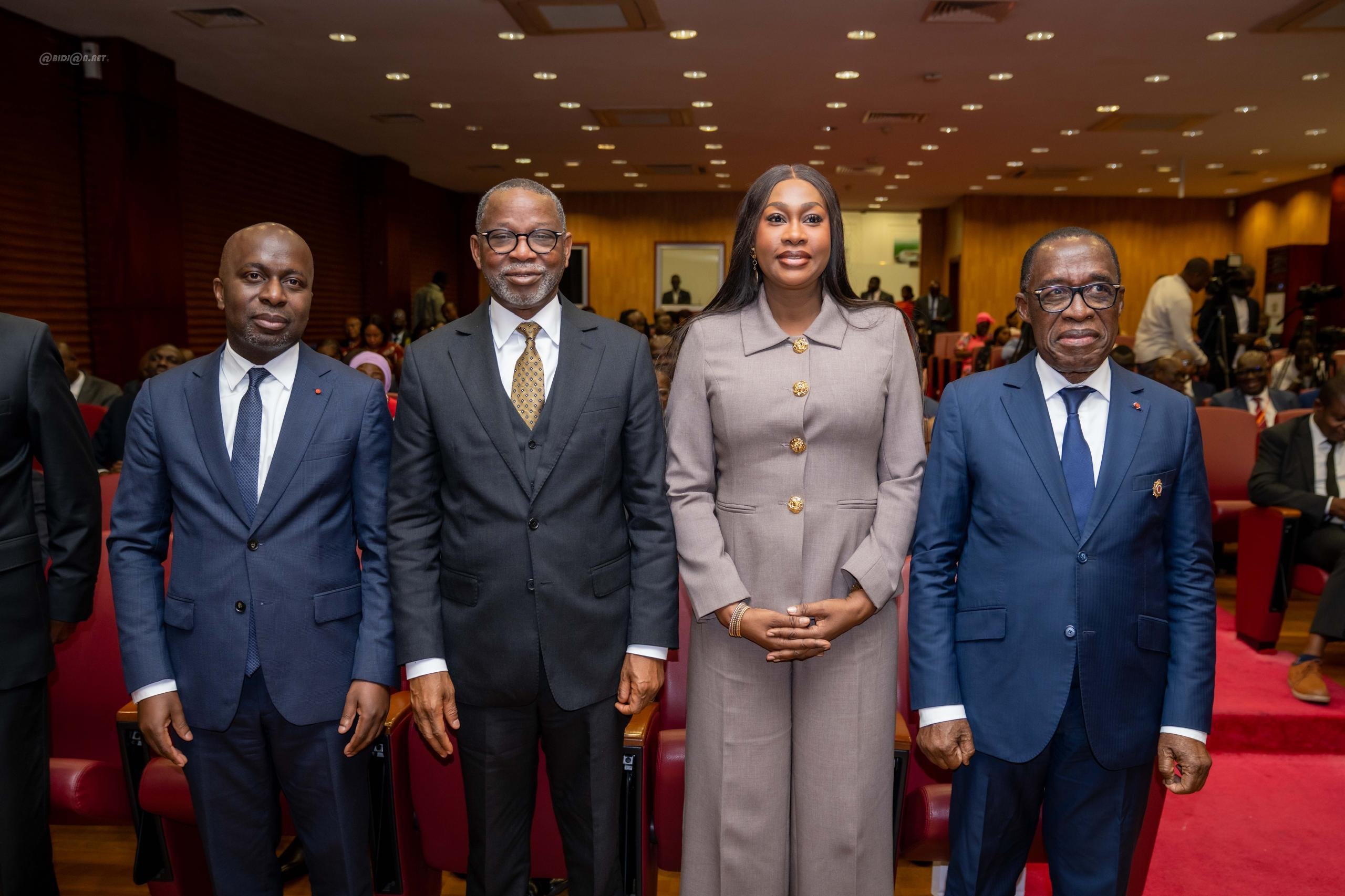
Paving the way for smarter workforce development in Côte d’Ivoire
The National Agency for Vocational Training (AGEFOP), Côte d’Ivoire’s state-backed engineering body for professional training, unveiled a groundbreaking skills-needs assessment report in Abidjan on June 18, 2026. This study, conducted under the National Skills Passport program, is designed to bridge the gap between the competencies of young job seekers and the actual demands of the labor market.
The pilot phase of this initiative—carried out in Sud-Comoé, Yopougon, and the Savanes District—engaged over 800 organizations, spanning both formal and informal sectors. With the insights gained from this phase, the study is set to expand nationwide, marking a strategic shift in how Côte d’Ivoire approaches vocational training and employment.
From data to action: how the study will reshape Côte d’Ivoire’s job market
Dr. Eugène Aka Aouélé, President of the Economic, Social, Environmental, and Cultural Council (CESEC), emphasized the transformative impact of this study during the launch event. He highlighted its role in eliminating the disconnect between education and employment by providing empirical data to guide policy decisions.
‘Tackling the skills mismatch is not a distant dream—it’s a systematic process grounded in real-world evidence,’ stated Dr. Aka Aouélé. ‘I commend this initiative, which places human capital at the heart of Côte d’Ivoire’s development. This report isn’t just a snapshot of our professional landscape; it’s the compass guiding future public policies in vocational training.’ He further noted that President Alassane Ouattara has consistently prioritized youth employability and skills development in the national agenda.
The Skills Passport program goes beyond traditional vocational training by certifying work experience, offering a tangible solution to one of the most pressing challenges of our time. ‘This isn’t just about training—it’s about validating and leveraging experience,’ Dr. Aka Aouélé added. ‘The findings from this study will shape our strategies for aligning training with employment. Today’s ceremony marks the official kickoff for nationwide deployment. To young Ivorians, the Skills Passport is a pledge: the state is committed to ensuring your skills become your greatest asset for success.’
Minister outlines the roadmap for skills-driven economic growth
Maître Adama Kamara, Côte d’Ivoire’s Minister of Employment, Social Protection, and Vocational Training, framed the Skills Passport program as an accelerator for economic growth, not a corrective measure. ‘This initiative aims to amplify momentum so that growth translates into high-quality jobs,’ he explained.
The program’s core objectives include mapping skill requirements across the country, training and integrating beneficiaries into the economy, certifying informal-sector workers through experience validation, and ensuring businesses have access to a skilled workforce. ‘Based on field feedback, we will adjust training curricula to align with employer needs, direct resources to high-demand sectors, and strengthen partnerships between businesses, local governments, and state services,’ the Minister outlined.
AGEFOP’s vision: training as a strategic investment for Côte d’Ivoire
Karitia Coulibaly De Medeiros, Director-General of AGEFOP, underscored the program’s alignment with President Ouattara’s vision to make human capital development a cornerstone of the nation’s economic and social transformation.
‘Vocational training is no longer a peripheral policy or a social expense,’ she asserted. ‘It is now recognized as a strategic investment driving national competitiveness, job creation, social inclusion, and sustainable prosperity.’
Ms. De Medeiros described the Skills Passport program as a paradigm shift in how Côte d’Ivoire connects training, local economies, and businesses. ‘Effective training begins with a clear understanding of what skills a territory, company, or industry truly needs,’ she explained. ‘That’s why we started from the ground up—listening to businesses, analyzing evolving job roles, and identifying both current and future skill demands.’
By fostering collaboration between local authorities, businesses, training institutions, and communities, AGEFOP is strategically positioning itself to deliver targeted, sustainable upskilling and smooth transitions into employment. ‘The Skills Passport program creates a shared language among all stakeholders—businesses, local governments, training providers, communities, technical partners, financial backers, and public authorities,’ she noted. ‘It elevates skills to a strategic asset for the nation.’
Concluding her remarks, Ms. De Medeiros reaffirmed AGEFOP’s mission: ‘Our goal is to empower every Ivorian to convert their potential into recognized skills, turning competence into a passport to employment, economic independence, and dignity.’
The National Skills Passport program, launched in March 2025 in Grand-Bassam, is a cornerstone of Côte d’Ivoire’s national human capital development strategy. Its mission is clear: equip the population with the skills needed to secure lasting employment and drive the country’s socioeconomic progress.
Comments are closed, but trackbacks and pingbacks are open.