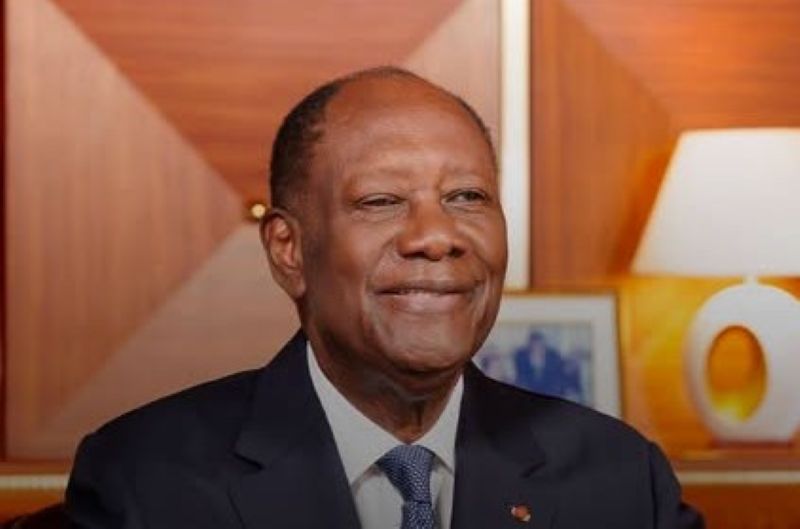
Côte d’Ivoire’s vision: building big while governing fairly
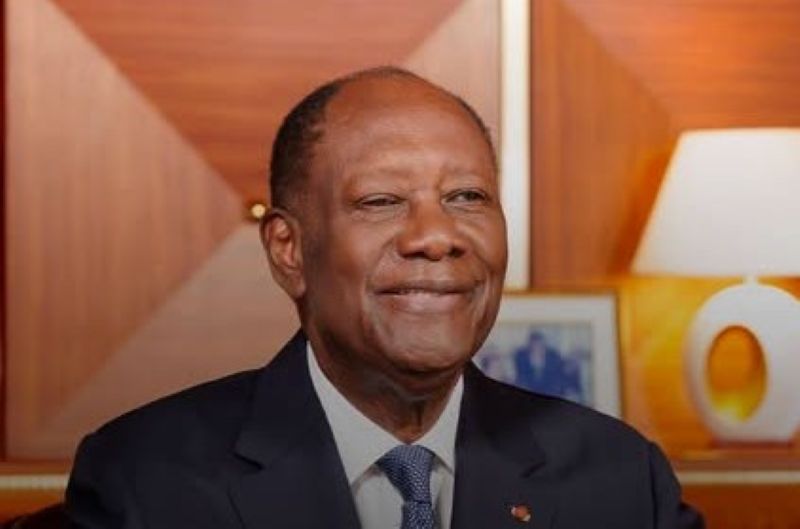
As Côte d’Ivoire marks 66 years of independence, President Alassane Dramane Ouattara is outlining a bold new vision for the nation’s future. His address to the country transcends mere economic metrics or security promises, focusing instead on two pivotal pillars that will define Côte d’Ivoire’s trajectory: accelerated nation-building and fortified governance.
The concept of the «Grande Côte d’Ivoire» represents more than an economic aspiration—it embodies a fundamental question: how can the country translate its economic might and political stability into tangible progress that benefits all Ivoirians?
From aspiration to national mission
The president’s vision calls upon every sector of society—government institutions, business leaders, political parties, civil society, traditional authorities, religious communities, and the diaspora—to unite in constructing this «Grande Côte d’Ivoire». This isn’t just another government policy announcement; it’s a collective national endeavor that aims to transcend partisan divides and create a unified development pathway.
The timing couldn’t be more strategic. With a robust economic trajectory already in motion and substantial investments flowing into infrastructure, transportation, energy, and port capacities, the 2026-2030 National Development Plan serves as the roadmap for this transformative phase. The goal is clear: propel Côte d’Ivoire into an entirely new developmental era.
Yet true success will be measured not by the skyline of Abidjan or the kilometers of new highways connecting regions, but by the nation’s ability to bridge territorial divides, expand opportunities for its youth, and convert growth into lasting improvements in living standards. The «Grande Côte d’Ivoire» will only become a reality when it evolves from political ambition into social transformation.
Progress with justice: the delicate balance
The president’s televised address on Thursday evening brought particular attention to the second critical dimension of this vision: the imperative of justice in development. While confirming continued operations to secure high-risk zones—especially those vulnerable to flooding and natural disasters from heavy rains—President Ouattara drew an unmistakable line in the sand regarding administrative procedures.
Any operations conducted outside legal frameworks, particularly those reported in Koumassi, are now under investigation. The president emphasized that such actions must lead to accountability and appropriate sanctions under the law. This distinction is crucial: while urban modernization and disaster prevention may justify certain interventions, development cannot be built on a foundation of administrative arbitrariness where citizens face displacement without due process or adequate protections.
The president’s message extends beyond specific eviction cases, establishing a fundamental principle: the state can and must be firm in its modernization efforts, but never arbitrary. It can build, secure, and develop while remaining bound by the very laws it establishes.
The ultimate test: coherence
Côte d’Ivoire stands at a critical juncture where its challenges extend far beyond economic growth alone. The nation must prove that regional economic leadership can coexist with robust infrastructure development, maintained stability, citizen protection, and institutional trust. This is where President Ouattara’s address carries its most profound significance.
A call for national unity will only bear fruit if every segment of society feels included in the national project. Similarly, the rule of law cannot remain a mere institutional slogan if state actions themselves bypass the legal framework. The president’s direction, deceptively simple yet politically complex, demands faster construction, enhanced security, and accelerated modernization—all while remaining anchored in the needs of those for whom this transformation is intended.
The «Grande Côte d’Ivoire» of the future won’t be defined by its skyscrapers or economic indicators alone. Its legacy will be determined by its capacity to harmonize public power, justice, and inclusion. This coherence, more than any slogan, will reveal whether Côte d’Ivoire’s next chapter truly represents a quantum leap forward.
Comments are closed, but trackbacks and pingbacks are open.