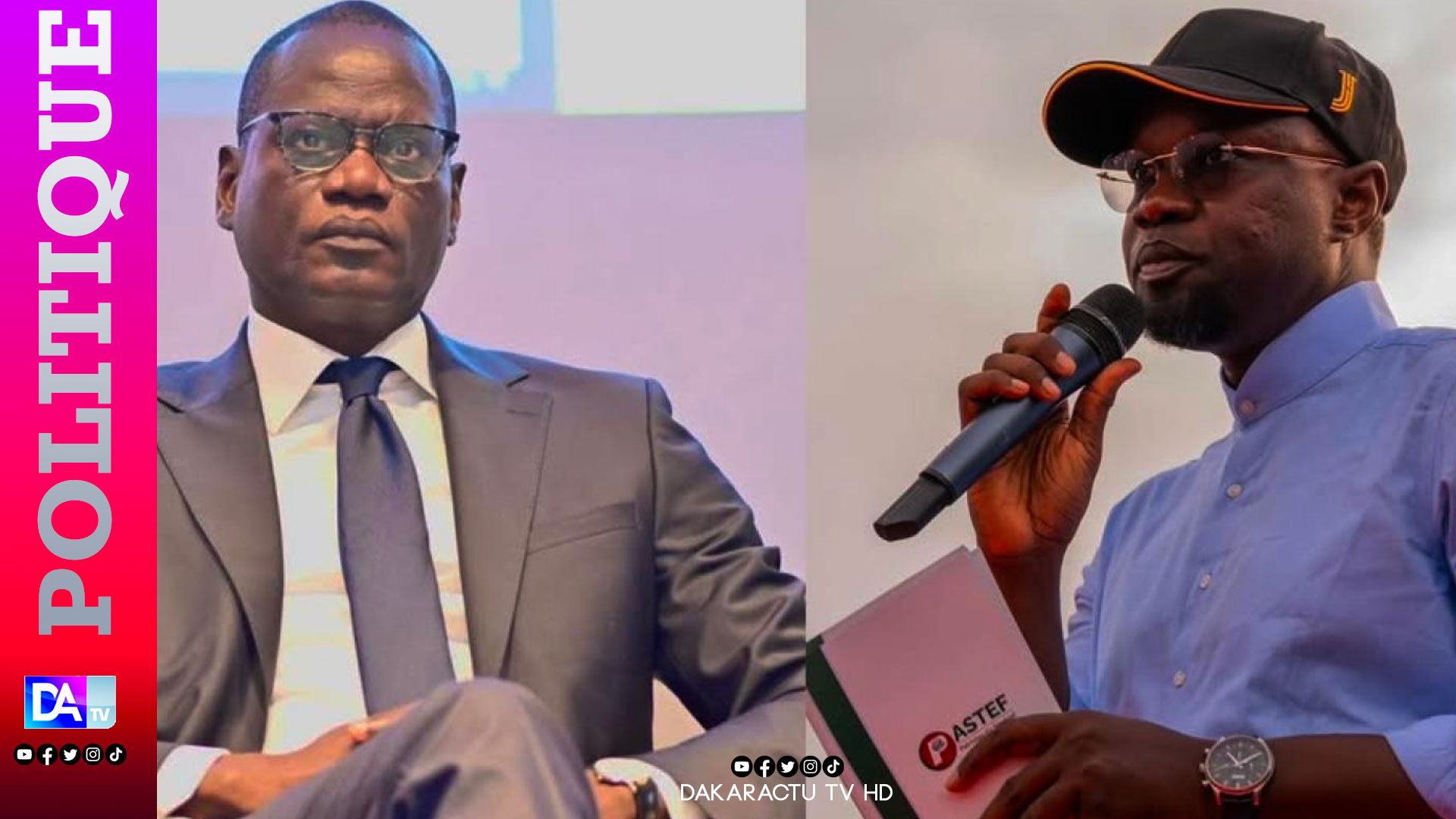
Senegal’s political landscape has been roiled by sharp exchanges after Ousmane Sonko assumed the role of President of the National Assembly. Among the most vocal critics is Abdourahmane Diouf, leader of the Awalé party and former Minister of Higher Education, who condemned Sonko’s ascent in no uncertain terms.
In a blistering social media post issued shortly after Sonko’s declaration in Touba, Diouf did not mince words. The former energy minister accused Sonko—a figure whose parliamentary journey he described as opportunistic—of undermining democratic norms. His critique was both scathing and detailed, targeting what he sees as Sonko’s disregard for institutional procedures.
a scathing critique of sonko’s leadership
Diouf’s message, devoid of diplomatic niceties, painted a damning portrait of Sonko’s leadership style. He argued that Sonko’s approach to governance reflects a dangerous disconnect between rhetoric and action, stating:
« Procedures are bypassed without grasping their essence; the morality you preach suffocates under your inability to embody it; analytical rigor crumbles under the weight of glaring intellectual vacuity; and truth gives way to extreme manipulation, paving the way for a hollow revolution without a solid foundation. »
His remarks underscore a growing polarization within Senegal’s political sphere, particularly between supporters of President Diomaye Faye and those aligned with Sonko’s agenda. The tension has spilled into public discourse, with Diouf’s intervention adding fuel to the fire.
what’s at stake in Senegal’s parliamentary dynamics
The debate over Sonko’s leadership is not merely political—it cuts to the heart of Senegal’s democratic stability. Critics like Diouf warn that Sonko’s rise, marked by accusations of opportunism, risks destabilizing the Assembly’s credibility. The former minister’s words suggest a broader concern: that institutional power is being wielded without the necessary checks and balances.
As Senegal navigates this period of heightened political activity, the exchange between Diouf and Sonko highlights deeper questions about governance, legitimacy, and the future of the country’s democratic institutions.
Comments are closed, but trackbacks and pingbacks are open.