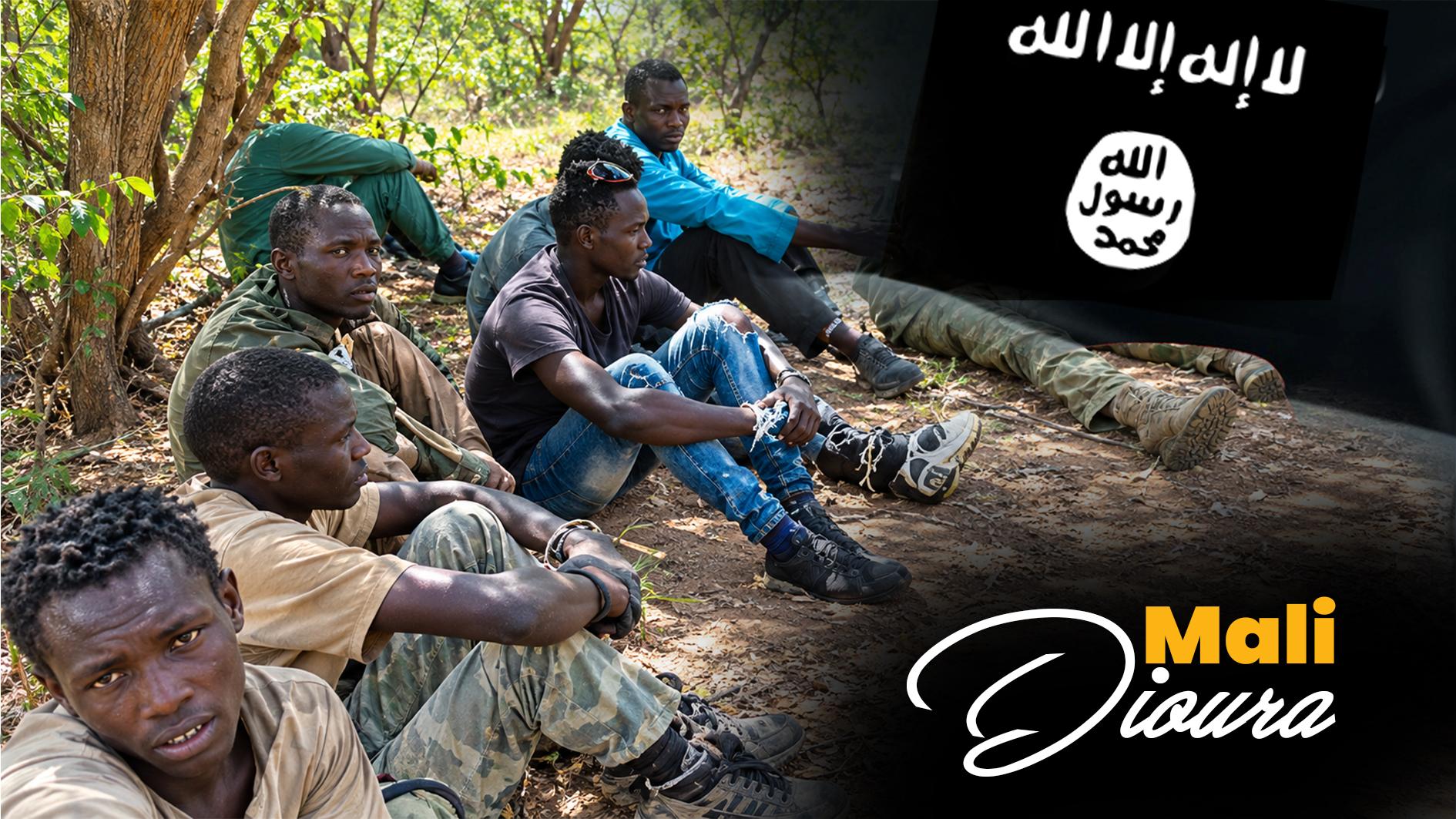
When Mali’s chief of defence staff flatly claimed there was “nothing at Dioura,” the Group for the Support of Islam and Muslims (JNIM) answered with a communiqué whose toll left little room for doubt. By claiming the assault in granular detail — complete with photographic and video evidence — the jihadist coalition stripped bare Bamako’s information strategy. Between the scale of the losses and the sheer volume of hardware seized, the official line is now buckling under a battlefield reality it can no longer control.
A rebuttal that leaves the official narrative in tatters
The junta’s instinct to minimise setbacks ran straight into a wall. By publicly asserting that no major incident had occurred in Dioura, the military command presumably hoped to smother the fallout from yet another strategic embarrassment. What it had not counted on was the media reflexes of JNIM, Al-Qaeda’s Sahel branch, which rushed out a rebuttal as firm as it was detailed.
For Assimi Goïta’s government — built on a rhetoric of sovereign reconquest and a steadily strengthening army — the contrast could hardly be starker. By denying the facts before they surfaced on social media, Bamako exposed itself to a corrosive loss of credibility, not only with international observers but above all with a Malian public increasingly unsure about the country’s real security situation.
A human and material toll of exceptional scale
The figures put forward by JNIM point to a full-blown military rout. The group says it killed 150 Malian soldiers in the fighting, among them senior officers including a colonel and a captain. On top of that human toll, 93 soldiers were reportedly taken prisoner — a considerable political and strategic lever for the armed organisation.
On the logistical side, the collapse described by the group is equally striking:
- Army losses: confirmed destruction of 15 military vehicles and more than 100 motorcycles used by patrols.
- Vehicles captured: six tactical vehicles and ten motorcycles seized in working order.
- Heavy arsenal recovered: six 14.5 mm weapons, 17 DShK-type heavy machine guns, 32 PK machine guns, ten RPG rocket launchers, three mortars and one SPG recoilless gun.
- Small arms and ammunition: 233 Kalashnikov assault rifles and a massive stockpile of ammunition of various calibres.
To back up these claims and head off any attempt to dispute them, JNIM attached photographic and video evidence detailing the haul and the captives.
Information warfare: Bamako’s structural weak point
The Dioura episode lays bare a systemic flaw in the junta’s crisis management. By defaulting to denial or radio silence in the face of tactical reversals, the military command hands the field to its adversary’s propaganda. When jihadist militias circulate verifiable images of seized equipment and captured soldiers, official communication collapses — deepening the sense of isolation among troops deployed at the front.
This battle over the narrative matters all the more because JNIM is demonstrating its capacity to mount complex operations, combining mass assault with the systematic recovery of heavy weaponry. Every defeat the authorities refuse to own up to erodes confidence within army ranks and weakens national cohesion.
Ground reality versus the sovereignty discourse
Conditions on the ground reaffirm just how complex the security crisis in central and northern Mali remains. Despite the proclaimed strategic break and the turn to new partners, the disruptive capacity of armed groups is intact. The Dioura attack proves that JNIM retains the tactical mobility and striking power to disorganise fortified army positions.
Faced with the precision of what the attackers have provided, silence or downplaying from the authorities can no longer pass for military strategy. For Mali’s junta, the challenge is no longer only about reconquering territory — it is about confronting the facts in order to recalibrate a security response now under severe strain.
Comments are closed, but trackbacks and pingbacks are open.