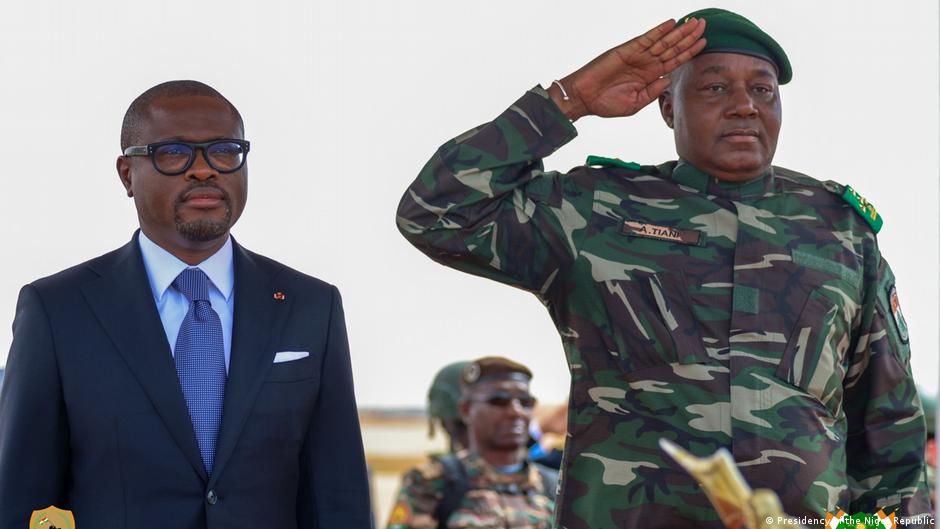
Three years after the military takeover in Niamey, relations between Niger and the Economic Community of West African States (ECOWAS) remain strained. The regional bloc had condemned the coup against President Mohamed Bazoum and imposed sanctions, while threatening potential military intervention.
The ECOWAS ultimatum, issued days after the coup, was perceived as a declaration of war by neighboring military-led governments in Mali and Burkina Faso. This collective stance complicated efforts to address Niger’s diplomatic isolation, as the three nations later formed the Alliance of Sahel States (AES), formalizing their withdrawal from ECOWAS in early 2025. Yet, despite this rupture, channels of communication persist between the two blocs.
mediation efforts gain momentum
Lansana Kouyaté, former Prime Minister of Guinea, has been tasked with leading negotiations between ECOWAS and the AES. His appointment follows a July 2026 summit in Freetown where ECOWAS instructed its new Commission President, Birame Diop of Senegal, to prioritize regional security discussions.
“This marks the beginning of a promising process. Both sides are aligned and ready to engage in meaningful dialogue,” noted Pape Ibrahima Kane, an expert in international organizations. He highlighted Niger’s critical dependency on Nigeria and Benin for electricity and access to the Port of Cotonou, emphasizing that Kouyaté’s mediation must account for these economic realities.
The specialist added that “the alignment of perspectives between ECOWAS and the AES suggests a potential breakthrough in resolving longstanding tensions.”
new leadership, new opportunities
The election of Bassirou Diomaye Faye as ECOWAS Chair in 2024 marked a shift in regional dynamics. Faye, who visited the AES countries shortly after assuming office, was followed by Romuald Wadagni, newly elected President of Benin. Wadagni prioritized Niger as his first official visit, signaling a commitment to easing diplomatic friction.
“Faye and Wadagni represent a fresh approach compared to previous leaders often criticized for their confrontational stance,” Kane observed. “The incoming ECOWAS team in Abuja is poised to implement a more balanced agenda, reducing the polarization that once defined the bloc’s interactions with the AES.”
Sahanine Mahamadou, a senior advisor to Mohamed Bazoum, argued that ECOWAS has consistently pursued dialogue with Niamey. “The refusal to engage came from the military leadership. If these leaders claim to be patriots, they must pave the way for civilian governance—an approach that aligns with modern democratic norms.”
Mahamadou’s remarks implicitly echoed calls for Bazoum’s reinstatement, as the deposed president has yet to submit a resignation letter. In March, the European Parliament passed a resolution condemning Bazoum’s detention and demanding his immediate release, a move Niamey dismissed as interference.
balancing principles and pragmatism in eu-Niger relations
Jérôme Pigné, founder of the Sahel Strategic Reflection Network, questioned how the European Union could reconcile its democratic values with the need to maintain dialogue with Niger’s current leadership. “Bazoum’s unlawful detention complicates EU-Niger relations, but Brussels must clarify its priorities: Does it prioritize principles or realpolitik? The answer remains unclear.”
Pigné noted that Niger had been a key EU partner, with Brussels now reassessing its cooperation framework in the Sahel. “Dialogue is essential and ongoing,” he stressed, adding that the EU could explore avenues such as intelligence-sharing, military support, and security training for Nigerien forces. A March report by the German Institute for International and Security Affairs (SWP) suggested that the EU should offer substantial aid to stabilize the region, including economic development initiatives and continued political engagement with local stakeholders.
“Europe should not expect military juntas to alter their behavior through dialogue alone,” the report concluded.