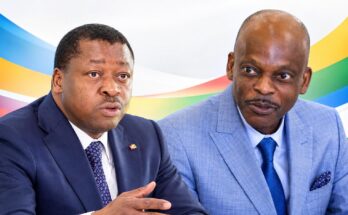
As Romuald Wadagni prepares to assume office in late May 2026, diplomatic circles in both Bénin and Niger are buzzing with cautious optimism. The incoming president-elect’s imminent leadership could mark the beginning of a new chapter in bilateral relations, long strained by political and economic disputes.
During a recent RTN television interview, Bakary Yaou Sangaré, Niger’s Foreign Minister, acknowledged the current lack of formal diplomatic engagement with Bénin’s transitioning government. Yet, he expressed hope for a constructive dialogue, emphasizing the need for mutual goodwill gestures to rebuild trust.
« We would welcome any initiative from the new Beninese administration to restore relations, » noted Sangaré, signaling a potential shift toward reconciliation.
strained relations since 2023
The diplomatic rift between Bénin and Niger deepened after the July 2023 coup that brought General Abdourahamane Tiani to power in Niamey. Since then, the closure of the shared border has crippled trade flows, particularly affecting landlocked Niger’s access to Bénin’s port infrastructure.
The crisis escalated further in January 2026 when both nations expelled each other’s diplomats and suspended embassy operations. Accusations of harboring regime opponents have been exchanged, though Bénin has consistently denied such claims.
economic stakes at the heart of the conflict
Beyond political tensions, the dispute centers on critical economic interests. The Wapco oil pipeline, which transports Nigerien crude via Bénin’s Sèmè-Kpodji terminal, remains a pivotal bone of contention. The border closure has not only disrupted this vital trade route but also strained livelihoods on both sides of the Niamey-Cotonou axis.
For businesses and communities dependent on cross-border commerce, the restoration of open trade corridors is a pressing priority. The pipeline’s operational status and border accessibility directly impact regional economic stability.
Wadagni’s first diplomatic challenge
With Wadagni’s inauguration set for May 24, 2026, the incoming administration faces an immediate diplomatic test. Niamey’s signals of openness are conditional on tangible steps from Cotonou, including commitments to address Niger’s security concerns and economic grievances.
A previous mediation effort in 2025, involving a tripartite commission and former Beninese heads of state, failed to yield results. Now, Wadagni’s leadership presents a fresh opportunity to rekindle dialogue and address the region’s broader security challenges in the Sahel.
A thaw in relations would not only revitalize subregional trade but also foster stronger security cooperation, a critical need amid escalating instability in the Sahel.