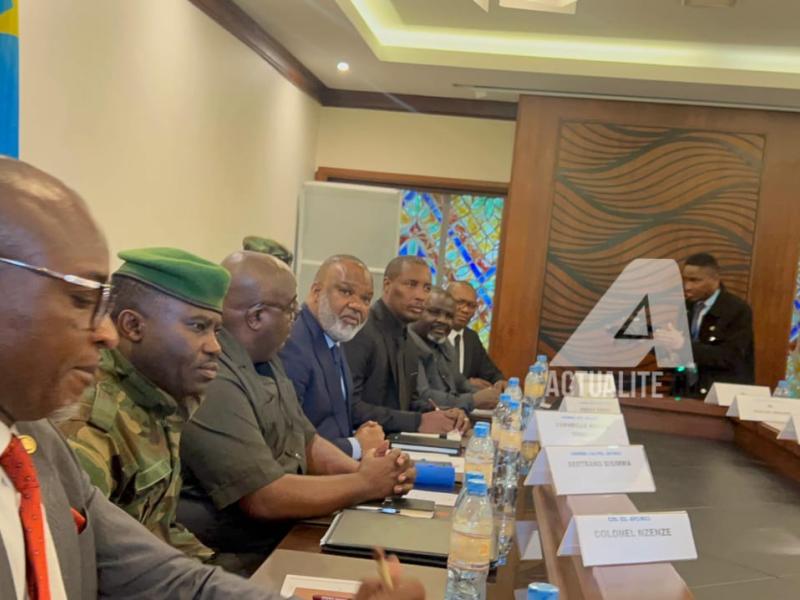
East DRC Conflict: AFC/M23 Slams Silence of Peace Mediators Over Alleged Kinshasa Sabotage
Goma, Democratic Republic of Congo — In a sharp escalation of rhetoric, the Alliance of Federalists and Congolese Patriots/March 23 Movement (AFC/M23) has accused Kinshasa of deliberately undermining peace efforts in eastern Democratic Republic of Congo (DRC), while pointing a finger at international mediators for their alleged complicity.
The accusations come amid a fresh wave of tensions following President Félix Tshisekedi’s recent public statements in Houston, where he vowed to reclaim rebel-held territories in the eastern provinces. Speaking to a diaspora audience after the DRC’s World Cup match against Portugal, the Congolese leader’s remarks were widely interpreted as a hardening of the government’s military stance against the AFC/M23.
Mediators Accused of Turning Blind Eye to Escalating Violence
During a press briefing held in Goma on June 18, 2026, AFC/M23 political coordinator Corneille Nangaa condemned what he described as Kinshasa’s “irresponsible” and “warlike” discourse, warning that it risks plunging the region deeper into conflict. He further expressed bewilderment at the international community’s silence in the face of alleged violations of ceasefire agreements by government forces.
“Faced with this tragic situation, we have a duty — before God, history, and the nation — to denounce the deafening silence of the peace process mediators and partners, which borders on complicity,” Nangaa stated. “The international community possesses detailed information on the ground realities, the staggering civilian death tolls, and the perpetrators of these crimes.”
International Community’s Inaction Fuels Impunity
The AFC/M23 leader accused peace mediators involved in the Doha talks, diplomatic missions, and international agencies of failing to act despite clear evidence of deteriorating security and humanitarian conditions in the eastern DRC, particularly in areas like the Minembwe Highlands. He argued that this inaction not only emboldens perpetrators but also erodes trust in the peace process.
“The ongoing military buildup and the continuous deployment of additional forces are completely at odds with any sincere effort to de-escalate the conflict,” Nangaa asserted. “While the AFC/M23 has released hundreds of prisoners of war as a confidence-building measure, Kinshasa has failed to reciprocate with tangible commitments.”
Kinshasa’s Actions Seen as Direct Threat to Peace Efforts
Nangaa also criticized what he described as a tendency to minimize the security crisis in eastern DRC, accusing President Tshisekedi of consistently undermining peace initiatives through political maneuvering and international alliances that, in his view, prioritize short-term gains over long-term stability.
“We refuse to accept that the suffering of the Congolese people in the East is treated as a peripheral tragedy occurring over 2,000 kilometers from Kinshasa,” he said. “Every human life deserves equal protection and consideration. We call attention to the numerous obstacles, deceptions, manipulations, and intrigues orchestrated by President Félix Tshisekedi and his international partners, which gravely undermine peace efforts in the DRC.”
The AFC/M23’s accusations come at a critical juncture, as diplomatic efforts — including the Washington agreements and ongoing Doha talks — attempt to broker a lasting ceasefire and revive dialogue between conflicting parties. Despite these initiatives, violence continues unabated, with both the rebel group and government forces engaged in hostilities.
The standoff underscores the widening gap between diplomatic progress on paper and the harsh realities on the ground, as each party interprets peace agreements through its own lens, further complicating their implementation.
Clément Muamba
Comments are closed, but trackbacks and pingbacks are open.