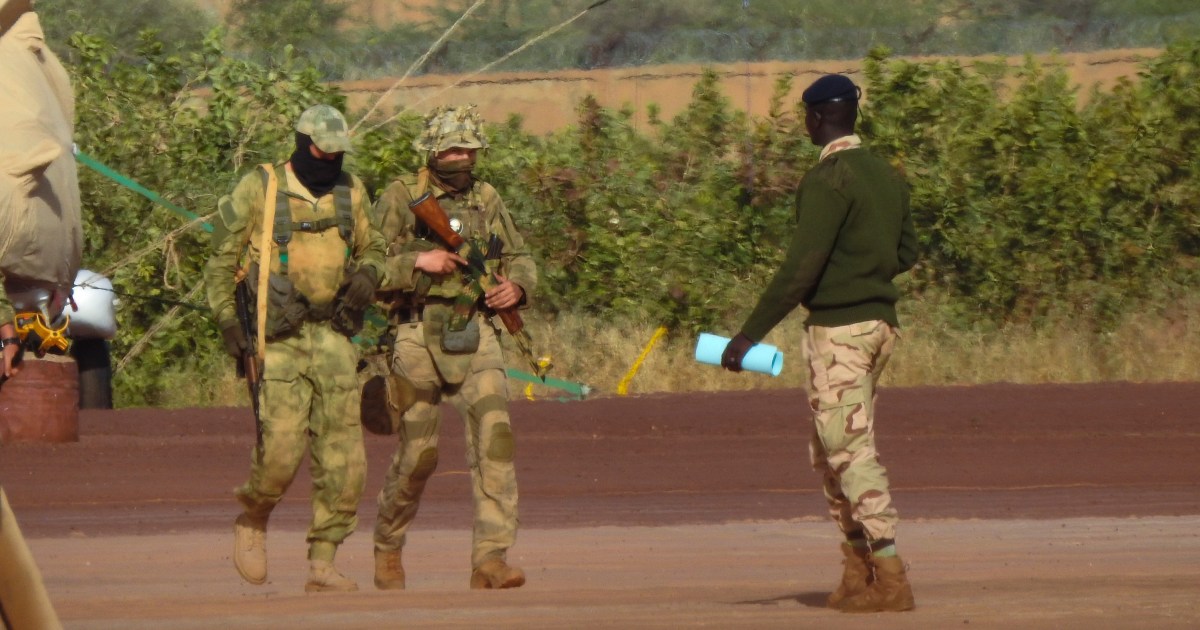
Following a series of intense assaults on Malian military installations, the country’s leader, Assimi Goita, declared that the government had stabilized the situation. He noted that Russian paramilitary units provided crucial aerial assistance to prevent insurgents from seizing strategic locations, including the seat of power in Bamako.
Despite these assurances, the security landscape in Mali remains precarious. The administration is struggling to reclaim territory from Tuareg rebels and al-Qaeda-affiliated militants, who have signaled their intent to place the capital under a comprehensive blockade.
The recent wave of synchronized attacks across various urban centers, including Bamako, has sent shockwaves through West Africa. The offensive resulted in the death of Mali’s Defense Minister, Sadio Camara, and the fall of several northern hubs, such as Kidal. While the military government claims to have neutralized over 200 insurgents, the effectiveness of their alliance with Moscow is being called into account.
Observers are particularly focused on the conduct of the Africa Corps—a Russian state-controlled entity that succeeded the Wagner Group—following reports of their retreat from Kidal during the height of the fighting.
The Africa Corps recently confirmed its departure from Kidal, asserting that the move was a coordinated decision made alongside Bamako’s leadership. This development has sparked a debate on social media and among defense experts regarding the reliability of Russian military aid in the Sahel, particularly for nations like Burkina Faso and Niger, which are also battling rising insurgencies.
This Russian unit, now operating under the Russian Ministry of Defence, was integrated into Mali’s security framework after Goita requested the departure of French forces in 2022. This shift occurred as Mali, Burkina Faso, and Niger formed the Alliance of Sahel States (AES), distancing themselves from the ECOWAS regional bloc.
The impact on Russian forces during the offensive
The recent strikes were a joint effort between the Azawad Liberation Front (FLA) and the al-Qaeda-linked group Jama’at Nusrat al Islam wal Muslimin (JNIM). These groups targeted vital military hubs in cities like Gao, Sevare, Kati, and Kidal.
Russia has maintained a presence of approximately 2,000 personnel in Mali since 2021. While many of these individuals were originally part of the Wagner Group, the transition to Africa Corps has reportedly led to a change in tactics. Analysts suggest that while Wagner was known for high-risk offensive maneuvers, the current Africa Corps appears to favor a more cautious, defensive posture.
During the recent turmoil, Russian personnel were seen exiting Kidal in convoys, allegedly following exit negotiations facilitated by Algeria. Meanwhile, a number of Malian soldiers were captured or disarmed, though official prisoner counts have not been released.
Moscow’s official response
The Africa Corps used Telegram to clarify that their withdrawal from Kidal was a strategic move agreed upon with the Malian government. They emphasized that wounded personnel and heavy machinery were prioritized during the evacuation, and that their broader mission in the Republic of Mali continues despite the challenging environment.
Furthermore, the Russian Ministry of Defence claimed that their forces were instrumental in repelling attacks on the capital. They alleged that the massive insurgent force was supported by foreign mercenaries, though these claims remain unverified. Interestingly, some reports suggest that Malian officials were frustrated by a lack of proactive response from the Russian units despite early warnings of the impending attack.
Russia’s reputation in the Sahel at a crossroads
Russia has positioned itself as an alternative to former colonial powers in the Sahel. While their influence is most visible in Mali, smaller contingents are also present in Burkina Faso and Niger, primarily in advisory roles.
The success of 2023, when Russian-backed forces helped secure Kidal, bolstered Moscow’s standing. However, the loss of Kidal and the death of a key ally like Sadio Camara have severely damaged this image. Experts suggest that the Africa Corps’ perceived failure to engage during the recent crisis has caused significant reputational harm.
As the JNIM continues to threaten Bamako, the future of the Russian-Malian partnership is uncertain. While Goita remains defiant, the retreat of Russian forces and the abandonment of equipment in Kidal have left many questioning whether Moscow can truly provide the security it promised to the region.
Comments are closed, but trackbacks and pingbacks are open.