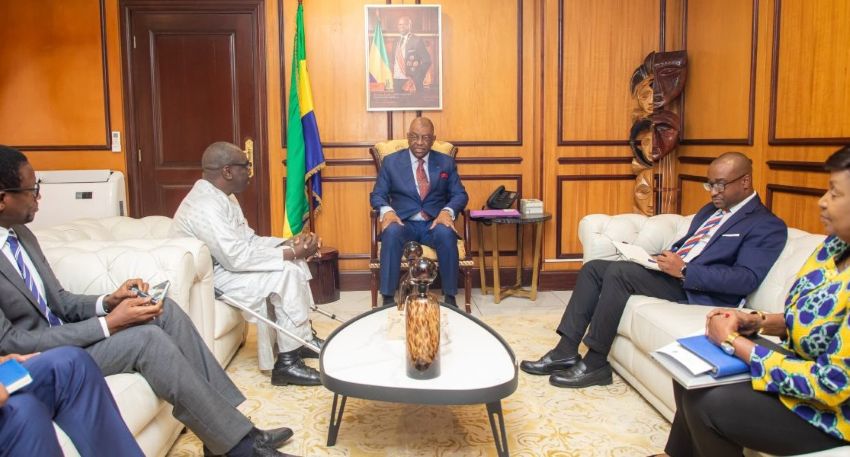
Libreville — As Gabon initiates a comprehensive economic overhaul, the African Development Bank is cementing its position as a primary partner in this ambitious journey.
During a high-level diplomatic meeting in the capital, the pan-African institution signaled its intent to drive economic diversification, infrastructure expansion, and the strengthening of human capital. These pillars are now viewed as the essential components for ensuring the nation’s future global competitiveness.
In an era where African nations are increasingly competing for international investment, the ability to secure reliable financial partners is a decisive factor for success. This context defined the recent audience granted by the Vice President of the Republic, Alexandre Barro Chambrier, to Mamour Ousmane Ba, the African Development Bank’s administrator for Gabon.
Moving beyond mere protocol, the discussions highlighted a deep strategic alignment between national priorities and the objectives of the continent’s leading development finance institution. As African economies strive to pivot away from a heavy reliance on raw materials, the collaboration between Gabon and the bank stands as a vital tool for the structural transformation led by the government.
A central alliance for structural change
For several years, the African Development Bank has acted as one of Gabon’s most significant partners in funding major structural projects. Its involvement spans sectors that are critical for achieving long-term sustainable growth.
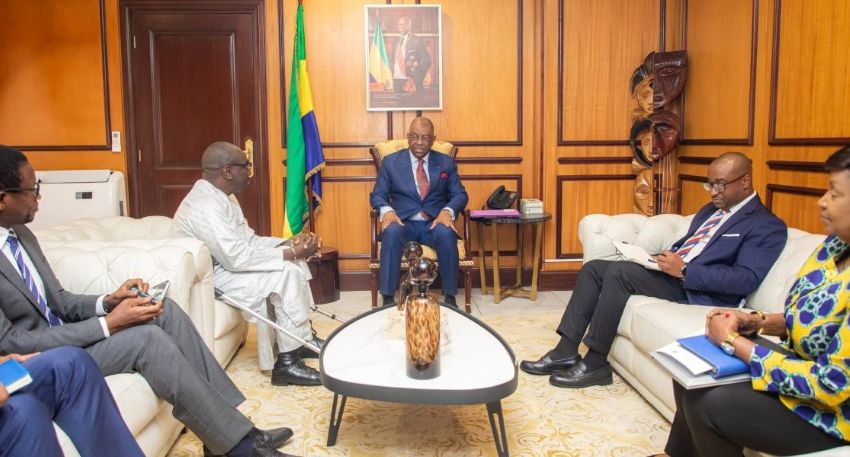
During the meeting, Mamour Ousmane Ba confirmed the institution’s dedication to supporting Gabon’s diversification efforts. This commitment aligns with ongoing government reforms aimed at establishing an economic framework that is less vulnerable to the fluctuations of oil revenue.
A major focus for the bank is the advancement of human capital, which is increasingly seen as the ultimate competitive challenge for the continent. Enhancing professional qualifications, boosting youth employability, and refining technical skills have become top priorities for international development agencies.
This strategic shift acknowledges a fundamental economic truth: physical infrastructure alone cannot sustain growth. Nations that prioritize long-term investment in their workforce gain a significant advantage in attracting foreign capital and creating local value.
Infrastructure as a catalyst for competitiveness
The second pillar of this cooperation focuses on infrastructure. Road construction, sanitation projects, the modernization of utility networks, and the improvement of the business environment remain at the heart of the bank’s interventions.
For Gabon, this support is vital. The quality of national infrastructure directly impacts economic efficiency, the movement of goods, the reduction of logistics costs, and the overall attractiveness of the country to investors.
The modernization of the road network, supported by several bank-funded programs, helps bridge regional divides and opens up areas with high economic potential. Similarly, investments in urban sanitation address the dual needs of modernizing cities and improving the daily lives of citizens.
Beyond the physical construction, these initiatives are designed to stabilize the business climate. A modern economy relies as much on its infrastructure as it does on its ability to provide a predictable and efficient environment for private sector operators.
A growing partnership for the future
This diplomatic exchange occurs at a pivotal moment for Gabon. The government is intensifying efforts to speed up economic change, attract more investment, and bolster national production capabilities.
In this landscape, the African Development Bank is a natural ally. Its technical proficiency, financial depth, and ability to attract other global investors make it a cornerstone of the ambitions held by Libreville.
The meeting with Mamour Ousmane Ba sends a strong message to financial markets and international partners. Gabon is committed to its modernization path, leaning on robust alliances with institutions that can provide sustained support for its development goals.
Ultimately, this cooperation represents a significant evolution in African growth strategies. The goal has shifted from simply financing individual projects to building the foundations of a more resilient, diversified, and globally competitive economy. In a world defined by geopolitical shifts and economic volatility, this synergy between national vision and continental financial support may be Gabon’s strongest asset in the years ahead.
Comments are closed, but trackbacks and pingbacks are open.