IMF Approval Looms for Burkina Faso’s $87.67 Million Financial Boost
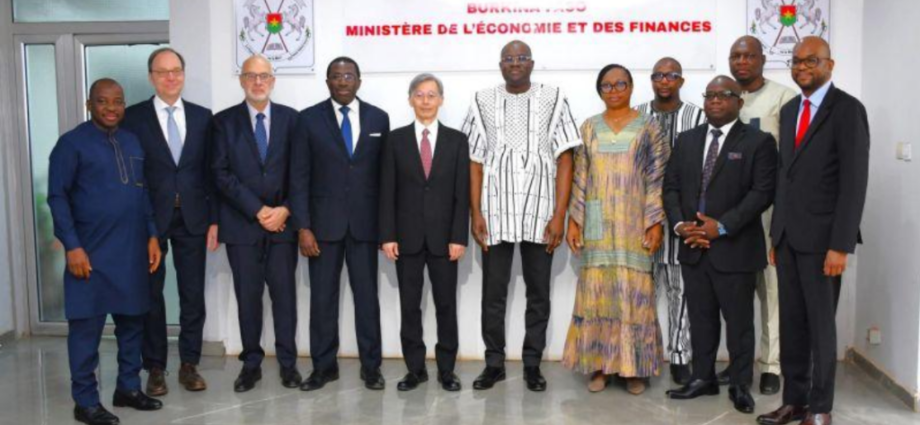
Burkina Faso is poised to receive a significant financial lifeline from the International Monetary Fund (IMF), following the conclusion of technical negotiations in Ouagadougou. The proposed funding package, valued at $87.67 million, represents a critical juncture in the country’s economic strategy amid ongoing debates over national sovereignty and financial independence.
The agreement in principle, finalized during a October 26–November 4, 2026 IMF mission, outlines two key tranches: $65.38 million under the Extended Credit Facility (ECF) and $22.29 million through the Resilience and Sustainability Facility (RSF). However, the funds remain contingent on approval by the IMF’s executive board, with a decision expected in mid-January 2027.
While the financial injection could ease short-term fiscal pressures, it also reignites discussions about the balance between the government’s declared commitment to economic sovereignty and its reliance on external financial mechanisms governed by strict conditionalities.
Sovereignty vs. Financial Realities: The Policy Tightrope
Since the transition in leadership under Captain Ibrahim Traoré, Burkina Faso has prioritized reducing dependence on traditional partners and regaining control over national resources. The IMF’s intervention, however, poses a paradox: leveraging external financing while maintaining autonomy in policy decisions.
The government’s narrative of self-reliance clashes with the institution’s structural reform requirements, which include fiscal discipline benchmarks, revenue mobilization targets, and public finance governance standards. These conditions, while designed to stabilize macroeconomic performance, may constrain national spending priorities in areas such as social protection, public investment, and household support.
The IMF has also pushed for adherence to the West African Economic and Monetary Union (WAEMU) fiscal deficit ceiling of 3% of GDP for 2027. Current estimates suggest Burkina Faso may record a deficit of approximately 3.3%, underscoring the challenge of reconciling international obligations with domestic priorities.
Navigating Conditionality: A Delicate Balancing Act
The proposed funding structure reflects a broader tension: accessing external capital while preserving policy flexibility. Key IMF demands include:
- Stricter control over budget deficits and debt accumulation
- Enhanced tax collection and reduction of fiscal leakages
- Transparent management of public finances and anti-corruption measures
- Protection of vulnerable populations through targeted social spending
Officials argue that such reforms could ultimately strengthen Burkina Faso’s financial resilience, even if they limit immediate fiscal maneuverability. The challenge lies in negotiating terms that align with national development goals without compromising long-term economic autonomy.
Gold Resources as a Path to Self-Financing?
Burkina Faso’s burgeoning gold sector offers a potential alternative to IMF reliance. The country is Africa’s fourth-largest gold producer, with mining revenues contributing significantly to public coffers. Recent reforms aim to deepen local control over the sector, including the establishment of a sovereign wealth fund to manage mineral wealth more effectively.
Yet, turning resource wealth into sustainable development requires more than extraction. Transparent governance, equitable revenue redistribution, and strategic reinvestment in infrastructure and education are critical. Without these safeguards, mineral wealth risks exacerbating inequalities rather than financing national progress.
The government’s ability to integrate gold revenues into its broader economic strategy could determine whether the country moves closer to self-sufficiency—or remains locked in cycles of external financing.
The Political Imperative: Selling the Deal to the Public
For Burkina Faso’s leadership, the IMF arrangement is not just an economic decision—it’s a political one. Public perception remains skeptical of external financial dependence, especially after years of criticism over IMF-imposed austerity measures in neighboring countries.
To justify the deal, authorities must clearly articulate how the funds will:
- Strengthen domestic capacity rather than perpetuate dependency
- Support critical social programs without undermining fiscal sustainability
- Complement—not replace—efforts to expand domestic revenue streams
The government faces a dual challenge: securing the funding while demonstrating that Burkina Faso’s economic future remains firmly in its own hands. The real test will not be whether the IMF approves the funds, but whether Ouagadougou can use them to build a credible path toward lasting financial independence.
In the end, sovereignty is less about rejecting external partnerships than it is about maximizing their value while minimizing their constraints. The government’s next move will reveal whether this balance can be achieved.
Comments are closed, but trackbacks and pingbacks are open.