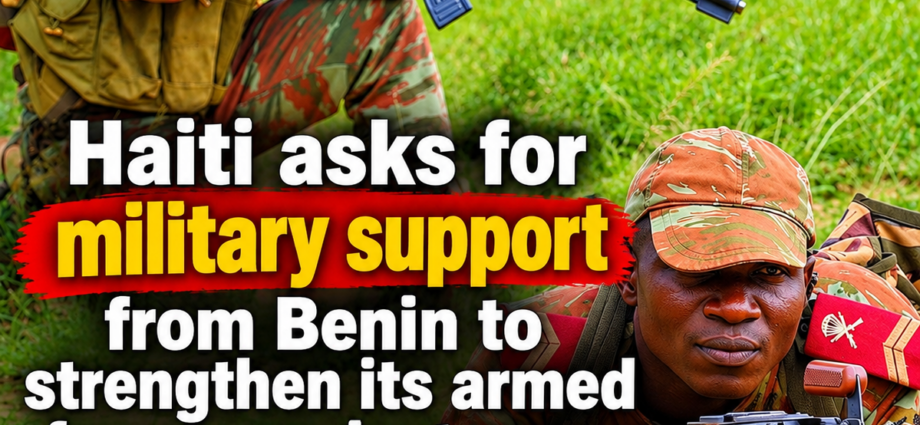
Port-au-Prince turns to Benin for specialized military training amid escalating gang violence
The Haitian capital is prioritizing the restoration of security by forging a strategic military partnership with Benin. This collaboration aims to strengthen the operational readiness of Haiti’s security forces in response to the expanding influence of armed gangs across key regions.
Strengthening operational capabilities through African expertise
With gangs asserting control over vital urban centers and rural zones, Haitian authorities are re-evaluating their security strategy. Recognizing the limitations of traditional military approaches, they are leveraging Benin’s proven experience in combating regional security challenges, particularly in counter-insurgency and urban stabilization operations.
Training as a foundation for long-term security
Central to this initiative is the enhancement of Haiti’s military training programs. Benin’s track record in reinforcing soldier discipline, tactical coordination, and crisis response offers a model for adaptation to Haiti’s unique security landscape. The goal is not replication of strategies but the transfer of best practices that align with Haiti’s operational realities.
Key areas of military cooperation
Discussions held in Cotonou on November 3, 2026, focused on three critical dimensions:
- Tactical training: Emphasizing urban combat techniques, hostage rescue operations, and rapid deployment strategies tailored to densely populated areas.
- Institutional resilience: Strengthening command structures and inter-agency coordination to improve decision-making under pressure.
- Civilian protection protocols: Developing frameworks to minimize collateral damage and ensure compliance with humanitarian standards during security operations.
The Benin model: Lessons from regional security challenges
Benin’s approach to countering instability in its northern territories has involved a multi-layered strategy combining community engagement, intelligence-driven operations, and localized training initiatives. While Haiti’s gang dynamics differ structurally, elements of this model could provide valuable insights, particularly in intelligence sharing and community-oriented policing.
From dialogue to measurable impact
The success of this partnership hinges on tangible outcomes. Haitian authorities are prioritizing measurable improvements in soldier preparedness, operational efficiency, and public trust in security institutions. The upcoming months will be critical in assessing whether this collaboration translates into sustained security gains.
Broader implications for south-south military partnerships
This initiative underscores a growing trend among nations facing asymmetric threats: the reliance on peer-to-peer expertise rather than traditional foreign military interventions. By tapping into Benin’s experience, Haiti is positioning itself to address security challenges with solutions developed directly from the African context.
Challenges and the path forward
Acknowledging the complexity of Haiti’s gang networks, which operate with significant financial and logistical support, military training alone cannot guarantee stability. However, it represents a vital component of a broader strategy that must also include judicial reforms, economic revitalization, and international cooperation to address root causes of violence.
The Cotonou meetings mark a pivotal moment where theory meets execution. The coming phase will determine whether this partnership can transition from discussions to decisive action in the fight to reclaim Haiti’s stability.
Comments are closed, but trackbacks and pingbacks are open.