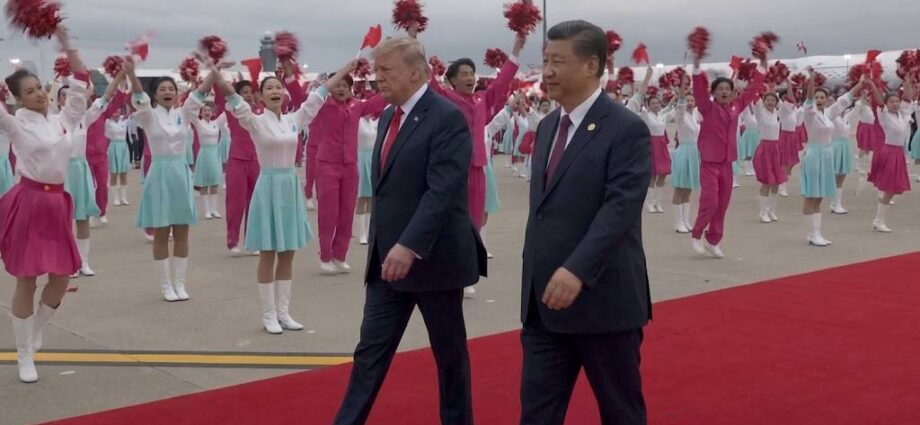
Shenzhen, China — November 2026. The arrival of Air Force One on Chinese soil at the heart of Shenzhen marked a pivotal moment in international diplomacy. Donald Trump, Xi Jinping, and Vladimir Poutine are set to convene on November 19 for a first-of-its-kind trilateral summit during the Asia-Pacific Economic Cooperation (APEC) forum. The stakes couldn’t be higher: this meeting could redefine the rules of global engagement.
Why This Shenzhen Summit Stood Out
The presence of three of the world’s most influential leaders in one room signals more than a diplomatic formality—it’s a deliberate power play. The United States, China, and Russia command formidable economic, military, and technological leverage. Their ability to align—or clash—on key issues could send ripples across continents.
Donald Trump arrives seeking to reinforce American interests, from trade dynamics to nuclear security. His agenda includes pressing for concessions on technology exports and strengthening alliances amid growing competition with Beijing and Moscow.
Xi Jinping sees this summit as a platform to cement China’s role as a global decision-maker. By hosting both the U.S. and Russian presidents, he signals Beijing’s ambition to shape the rules of international trade, technology, and security.
Vladimir Poutine, facing Western isolation, leverages this summit to reassert Russia’s geopolitical relevance. With Ukraine’s war still raging and sanctions tightening, his participation underscores Moscow’s defiance—and its search for alternative alliances.
Hot-Button Issues on the Table
The agenda is packed with explosive topics:
- Nuclear disarmament: Trump has pushed for talks on reducing global nuclear stockpiles—a delicate subject given the arsenals of all three nations.
- Middle East tensions: Iran’s nuclear program and regional stability remain flashpoints.
- Ukraine conflict: While the U.S. seeks a diplomatic resolution, Russia’s position remains unyielding. China, though allied with Moscow, treads cautiously to avoid alienating European partners.
- Technology and trade: Semiconductor restrictions, tech transfers, and control over critical resources could dominate closed-door negotiations.
Could This Meeting Reshape the World Order?
Comparisons to historic summits like Yalta in 1945 are inevitable. Yet experts warn against overstating parallels. Today’s geopolitical landscape is far more fragmented—no single bloc can dictate outcomes. Europe, Asian allies, and emerging economies will scrutinize every move.
The summit’s success hinges on whether these leaders can move beyond symbolic gestures. Will they commit to concrete actions on nuclear safety, economic stability, or conflict mediation? Or will the talks dissolve into mere photo ops?
One thing is clear: the world is watching. From Kyiv to Tokyo, capitals are holding their breath. The decisions made in Shenzhen could either ease global tensions or deepen divides. For billions, the stakes are nothing short of survival.
What Comes Next?
Post-summit expectations are mixed. Skeptics argue that entrenched interests—trade wars, military posturing, and ideological clashes—will overshadow cooperation. Optimists, however, point to the rarity of such high-level dialogue. A single breakthrough could reset diplomatic momentum.
But one truth remains: no agreement between three capitals can replace the need for inclusive global governance. The United Nations, regional blocs, and smaller nations still hold the keys to lasting stability. Whether Shenzhen’s talks lead to tangible progress or merely another round of posturing will unfold in the coming weeks.
Comments are closed, but trackbacks and pingbacks are open.