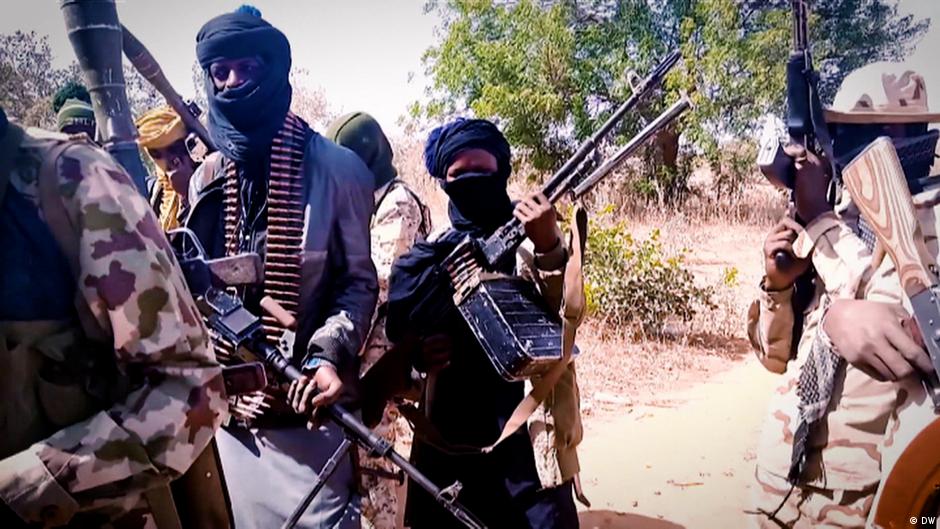
Kidnapping as Boko Haram’s economic lifeline in West Africa
Kidnapping has evolved into a structured industry for Boko Haram, fueling its decade-long insurgency across Nigeria, Cameroon, Niger, and Chad. The group’s ransom-driven model has expanded beyond ideological motives to become a primary revenue stream, financing weapons, recruitment, and territorial control in the Lake Chad Basin.
The scale of abductions in West Africa’s Sahel
Nigeria, the epicenter of Boko Haram’s operations, recorded over 4,700 kidnappings in 11 months (July 2024–June 2025), according to SBM Intelligence, a Lagos-based security risk assessment firm. These abductions, often targeting schools, have left hundreds dead and displaced entire communities. While most incidents occur in northern Nigeria, the violence has spilled into central regions and neighboring countries:
- Cameroon: In 2025, Boko Haram militants abducted bus passengers in Ziguangé (Far North), holding them for ransom.
- Niger: Seven Chadian nationals were kidnapped near the Chad border in March 2025; one was executed, while survivors remain captive.
- Chad: The group demanded 50 million CFA francs for five hostages in a recent case, with a 500 million CFA ransom for a physician—highlighting the group’s tiered pricing strategy.
Dr. Remadji Hoinathy, a researcher at the Institute for Security Studies (ISS), explains the dual purpose behind these mass abductions:
“Kidnappings serve two critical functions for Boko Haram. First, they forcefully recruit fighters, laborers, and even entire communities—either as combatants or slaves. Second, the ransoms collected from families, communities, and occasionally governments provide a lucrative financial backbone for the group’s operations.”
The ransom economy: a $35 million industry in Nigeria
The SBM Intelligence report estimates that kidnappers in Nigeria extracted $35 million in ransom demands over the past year, with over 1.8 million dollars actually paid—despite a 2022 federal law criminalizing ransom payments (punishable by up to 15 years in prison). The contradiction reveals a shadow economy operating beyond official policies.
In a controversial case in November 2025, Nigerian authorities were accused of paying Boko Haram to secure the release of 230 Catholic school students and staff in Niger State. Reports suggest payments ranging from 1.3 million to 6 million euros, delivered in cash via helicopter to a Boko Haram commander in Borno State. Abuja has denied these claims, attributing the rescue to intelligence-led military operations. Experts warn, however, that acknowledging ransom payments could embolden extremist propaganda.
Boko Haram’s origins and the Lake Chad Basin strategy
Founded in 2002 in Maiduguri (Borno State, Nigeria), Boko Haram—meaning “Western education is sin” in Hausa—emerged under the leadership of Mohammed Yusuf. Its goal: to establish a radical Islamic state, rejecting Western cultural and political influence. Over time, the group’s reach expanded across the Lake Chad Basin, a region now central to its survival.
Dr. Hoinathy outlines why the basin is pivotal:
“The Lake Chad Basin offers three key advantages for Boko Haram. As a transnational space, it bridges the Sahel—where ISIS-affiliated groups like EIGS operate—and Libya, a critical transit hub for weapons and fighters. It’s also a marginalized zone with weak state presence, enabling the group to exploit local economic networks, including agriculture and pastoralism. The region’s geographic isolation—marred by islands, swamps, and dense forests—provides natural camouflage during military offensives.”
A fractured insurgency: Boko Haram vs. ISWAP
The rise of the Islamic State’s West Africa Province (ISWAP) in 2016 marked a turning point. A splinter faction from Boko Haram, ISWAP rejected the group’s indiscriminate violence against civilians, including Muslim communities. Instead, it aligned with ISIS, adopting a more strategic approach—gaining local support through governance and service provision while avoiding brutal tactics.
Today, the two groups are locked in a violent rivalry, battling for control of territories, resources, and recruits in the Lake Chad Basin. Their internecine conflict has further destabilized an already fragile region.
Regional responses: military efforts and their limits
The four countries most affected—Nigeria, Cameroon, Niger, and Chad—have attempted to coordinate a unified response through the Lake Chad Basin Commission’s Multinational Joint Task Force (MNJTF). While military operations remain the cornerstone of counterinsurgency efforts, experts emphasize the need for non-military strategies, including community stabilization and economic development.
Dr. Hoinathy notes the persistent challenges:
“Each state initially responded with military measures within its borders, but the MNJTF’s regional approach has struggled to curb Boko Haram’s adaptability. The group has repeatedly regrouped, evolved, and re-emerged, demonstrating remarkable resilience. After 16 years, the insurgency—now involving both Boko Haram and ISWAP—has claimed over 40,000 lives and displaced 2 million people in Nigeria alone.”
In response to Nigeria’s struggles, the United States deployed approximately 200 troops in 2024 to provide training and support to Nigerian forces. Yet, the insurgency persists, underscoring the complexity of defeating a hybrid threat rooted in both ideology and economic exploitation.
Conclusion: a self-sustaining cycle of violence
Boko Haram’s kidnapping-for-ransom model has transformed abduction into an institutionalized revenue stream, funding its expansion across West Africa. While governments grapple with balancing counterterrorism laws and humanitarian imperatives, the group continues to exploit the region’s vulnerabilities. Until ransom payments are curbed and economic despair addressed, the kidnapping economy will likely persist—fueling the insurgency for years to come.