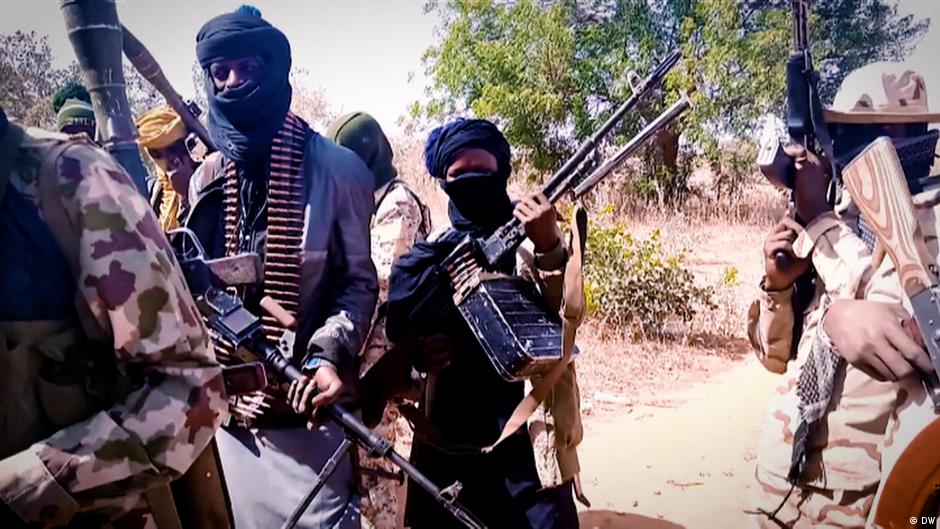
Kidnapping has evolved into a lucrative industry for Boko Haram, fueling its armed campaign across Nigeria, Cameroon, Niger, and Chad. This criminal enterprise has become a primary revenue stream for the jihadist group, enabling it to sustain its operations and expand its influence in the Lake Chad Basin region.
the scale of kidnappings in west africa
Nigeria remains the epicenter of this crisis, accounting for the majority of abduction cases. A recent security risk assessment by SBM Intelligence, a Lagos-based consultancy, reveals a disturbing trend: between July 2024 and June 2025, nearly 4,700 people were kidnapped in almost 1,000 incidents. These abductions frequently target schools, with hundreds of fatalities recorded annually. While the northern states bear the brunt of these attacks, violence has also spread to central Nigeria.
The most active groups orchestrating these crimes include Boko Haram—designated a terrorist organization by the United Nations in 2014—and the Islamic State’s West Africa Province (ISWAP). Their operations extend beyond Nigeria’s borders, with documented cases in Cameroon and Niger. In Cameroon’s Far North region, Boko Haram recently claimed responsibility for abducting bus passengers in Zigué, while in Niger, the group seized seven Chadian nationals near the border in late March, executing one hostage and holding the remaining six captive.
economic motivations behind mass abductions
According to Remadji Hoinathy, a researcher at the Institute for Security Studies (ISS), these kidnappings serve dual purposes: recruitment and financial gain. The jihadist group forcibly conscripts young men, women, and entire communities—sometimes using them as fighters, laborers, or sexual slaves. However, the economic dimension remains the most profitable aspect, with ransom payments fueling Boko Haram’s war chest.
For the six Chadian hostages seized in Niger, Boko Haram demanded 50 million West African CFA francs (approximately $83,000). The ransom for the sole medical professional among them skyrocketed to 500 million CFA francs (about $830,000). These exorbitant sums highlight the group’s relentless pursuit of financial resources to sustain its insurgency.
ransom payments: a controversial lifeline
Despite Nigeria’s official stance against paying ransoms—enforced by a 2022 law imposing up to 15 years imprisonment for violators—evidence suggests the practice persists. The SBM Intelligence report estimates that over $35 million in ransom demands were issued in Nigeria during the assessed year, with roughly 5% of the total paid by families or state authorities. The Nigerian government has been accused of secretly negotiating releases, including a high-profile case in November 2025 where 230 Catholic school students and staff were freed after an alleged ransom payment. While Abuja denies these claims, experts warn that denying such transactions risks empowering insurgent propaganda.
from local uprising to regional threat
Founded in 2002 in Maiduguri, Borno State, Boko Haram initially sought to establish an Islamic caliphate in Nigeria, rejecting Western education and governance. Its founder, Mohammed Yusuf, preached a radical interpretation of Islam, attracting disillusioned followers. Over time, the group’s ideology and tactics evolved, transforming it into a transnational menace. Today, Boko Haram operates across the Lake Chad Basin, exploiting porous borders and weak state presence in Nigeria, Niger, Chad, and Cameroon.
The region’s geography plays a crucial role in the insurgency’s resilience. The Lake Chad Basin’s archipelagos, marshes, and dense forests provide ideal hiding spots for militants, while its economic significance—agriculture and pastoralism—fuels local and cross-border trade networks that insurgents exploit for recruitment and logistics. Additionally, the Sahel and Libya serve as critical conduits for arms trafficking and foreign fighters, further destabilizing the area.
a fractured jihadist landscape
The emergence of ISWAP in 2016 marked a turning point in the insurgency. A splinter faction of Boko Haram, ISWAP aligned itself with the Islamic State, adopting a more strategic approach focused on building local alliances rather than indiscriminate violence. This shift has created a bitter rivalry between Boko Haram and ISWAP, as both groups vie for control of territory and resources in the Lake Chad region.
While ISWAP’s tactics initially garnered some local support, its rivalry with Boko Haram has escalated into open conflict, draining resources and complicating counterinsurgency efforts. The two groups now engage in frequent clashes, further destabilizing communities already grappling with poverty and underdevelopment.
regional responses and ongoing challenges
The Lake Chad Basin Commission’s Multinational Joint Task Force (MNJTF) represents a coordinated military effort by Nigeria, Niger, Chad, and Cameroon to combat insurgent groups. However, Remadji Hoinathy notes that these efforts face significant hurdles. Individual states initially responded with isolated military operations, but the MNJTF’s formation has unified regional efforts. Beyond military action, stabilization strategies aim to restore state presence and economic development in affected areas.
Despite these initiatives, Boko Haram and ISWAP continue to adapt and regroup, exploiting gaps in security and governance. The insurgency, which began in 2009, has claimed over 40,000 lives and displaced two million people in northeastern Nigeria alone. In response, the United States deployed approximately 200 troops in 2025 to provide training and logistical support to Nigerian forces, underscoring the international stakes of this conflict.
The battle against these jihadist groups remains far from over, with communities caught in the crossfire. As long as kidnappings and ransom payments persist, Boko Haram’s war machine will continue to thrive, posing an enduring threat to regional stability.