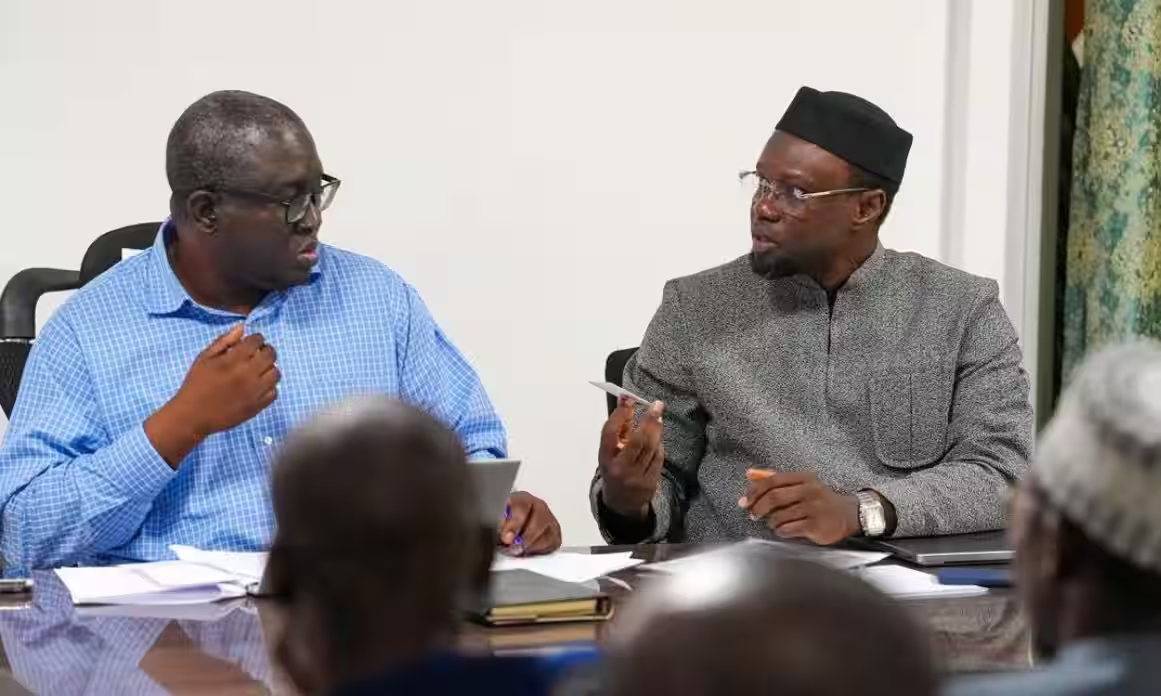
Ibrahima Diam Sow exits Pastef, aligning with Diomaye-Président in Podor
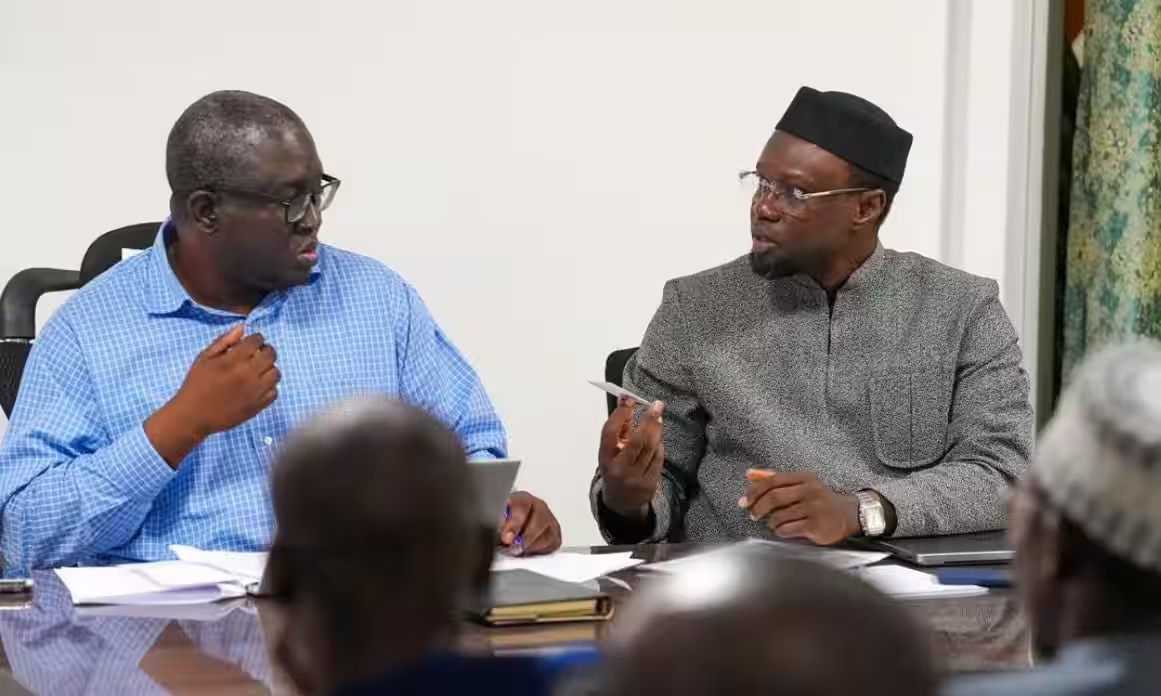
A significant political realignment is unfolding in Podor as Ibrahima Diam Sow announces his departure from Pastef. The former party coordinator, now aligning with the Diomaye-Président coalition, asserts his renewed commitment to the principle that “the nation comes before the party.” This move marks a notable development in African politics today.
The political landscape within the Podor department has experienced a fresh turn with the exit of a prominent local figure from the Pastef party. Ibrahima Diam Sow, who served as the inaugural coordinator for Pastef in the Méri commune and presides over the Mouvement des patriotes soumis (MPI), has formally declared his dissociation from the political movement led by Ousmane Sonko.
Sow, who previously managed the party’s communication efforts in the Podor region, attributes his withdrawal to profound disagreements with Pastef’s current trajectory. He specifically cited what he described as “numerous contradictions” and condemned an internal environment that he characterized as a “dictatorship of single thought.” According to Sow, these internal dynamics no longer allow him to identify with Pastef’s political vision.
In his newly adopted political stance, the former party official now openly pledges his support to the Diomaye-Président coalition and expresses his determination to back the initiatives of the current head of state, Bassirou Diomaye Faye. His new political alignment is rooted in a core belief, which he encapsulates by stating: “We prioritize the nation over the party.” Such shifts are often key to understanding pan-African current affairs.
As one of Pastef’s early proponents in Senegal’s northern region, Ibrahima Diam Sow played an instrumental role in establishing the party’s presence in this strategically important area. His contributions include organizing Ousmane Sonko’s initial visit to the region in 2017 and actively participating in various mobilization campaigns alongside other local political figures, including Ibrahima Sy.
Comments are closed, but trackbacks and pingbacks are open.