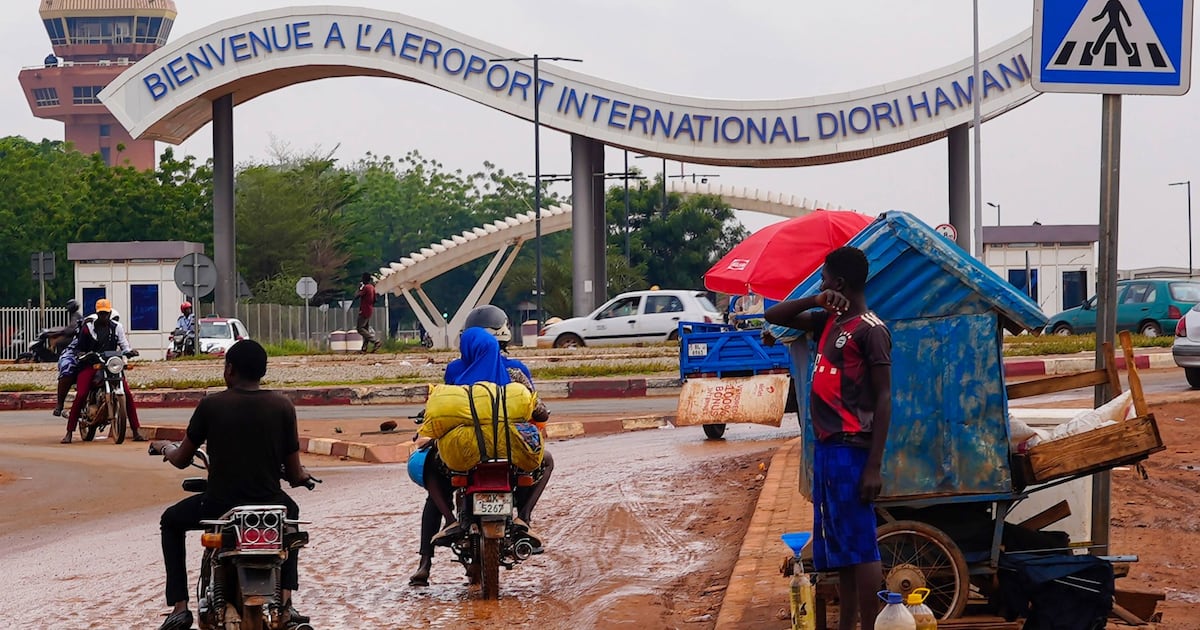
During the late hours between Wednesday, January 28, and Thursday, January 29, the silence around Niamey’s Diori Hamani International Airport was shattered by heavy gunfire and explosions. This rare direct assault on the capital of Niger was claimed two days later by the Islamic State in the Sahel (ISIS-S) through its propaganda outlet, AMAQ. For those following African news today, this event represents a significant escalation in the regional conflict.
Nigerien authorities reported that the confrontation lasted approximately one hour before being neutralized by a combined air and ground response. According to official statements, which remain difficult to verify independently, twenty insurgents were killed and eleven were captured, while four Nigerien soldiers sustained injuries. On February 2, the Russian Ministry of Foreign Affairs confirmed that personnel from the Africa Corps—a unit under the Russian Ministry of Defense—assisted Nigerien forces in securing the perimeter.
General Abdourahamane Tiani, the leader of the transition, commended the “professionalism of our Russian partners” stationed within the airport’s security zone. This strategic area includes Air Base 101, a vital hub for the nation’s military operations and a key point of interest in pan-African current affairs.
Propaganda footage highlights the breach
On February 2, ISIS-S released a video purportedly filmed during the raid. The footage, bearing the AMAQ logo, depicts dozens of armed militants, some on motorcycles, infiltrating the military section of the airport. The video shows the attackers moving toward hangars, opening fire, and igniting fires that damaged two small aircraft and a helicopter—essential assets for the Nigerien military’s counter-insurgency efforts. Post-attack satellite imagery corroborated the presence of scorched earth near the runways.
The propaganda sequence also shows the militants in the civilian sector, filming commercial planes from Asky and Air Côte d’Ivoire. While the Ministry of Defense noted that a munitions depot had caught fire and equipment was damaged, authorities confirmed that three civilian aircraft were also affected during the chaos.
Niamey as the new frontline
While Niger has battled the Al-Qaeda-linked JNIM and ISIS-S in its border regions for a decade, direct strikes on the capital are uncommon. However, just days before this incident, JNIM claimed to have destroyed a military vehicle east of Niamey, signaling a tightening noose around the seat of power. This shift is a critical focal point for observers of Africa politics English coverage.
This surge in extremist activity coincides with a total overhaul of Niger’s security alliances. Since the coup on July 26, 2023, the military government has pivoted toward Russia while severing ties with traditional Western allies. Following the departure of French troops in late 2023, the United States withdrew the bulk of its military presence in 2024, though it maintains some diplomatic contact.
Diplomatic friction and international accusations
In a pointed address, General Tiani alleged that France, Bénin, and Côte d’Ivoire had “sponsored” the airport raid. These claims were met with immediate and stern denials from Abidjan and Cotonou. Côte d’Ivoire went as far as summoning the Nigerien ambassador to protest these “grave” accusations that threaten regional stability.
Meanwhile, approximately 300 Italian troops remain at the site as part of the Italian Support Mission in Niger (MISIN). Guido Crosetto, the Italian Defense Minister, clarified that his forces were not involved in the skirmishes, emphasizing that their safety remains the top priority during such African society news events.
A high-stakes strategic hub
The Niamey airport is more than a transit point; it is a high-security installation serving as the headquarters for the joint military force of Niger, Mali, and Burkina Faso. Furthermore, it houses a significant stockpile of uranium concentrate. This inventory is currently at the center of a dispute with the French firm Orano, with speculation suggesting the material might be redirected to Russia.
Although commercial flights resumed the following day and local life returned to a relative calm, the attack marks a definitive turning point. By targeting the logistical heart of the capital, ISIS-S has proven its reach, while the active role of the Africa Corps confirms Niger‘s new security reality, potentially fueling further geopolitical friction in the Sahel.