US military cooperation with Sahel juntas shifts focus to security amid rising jihadist threats
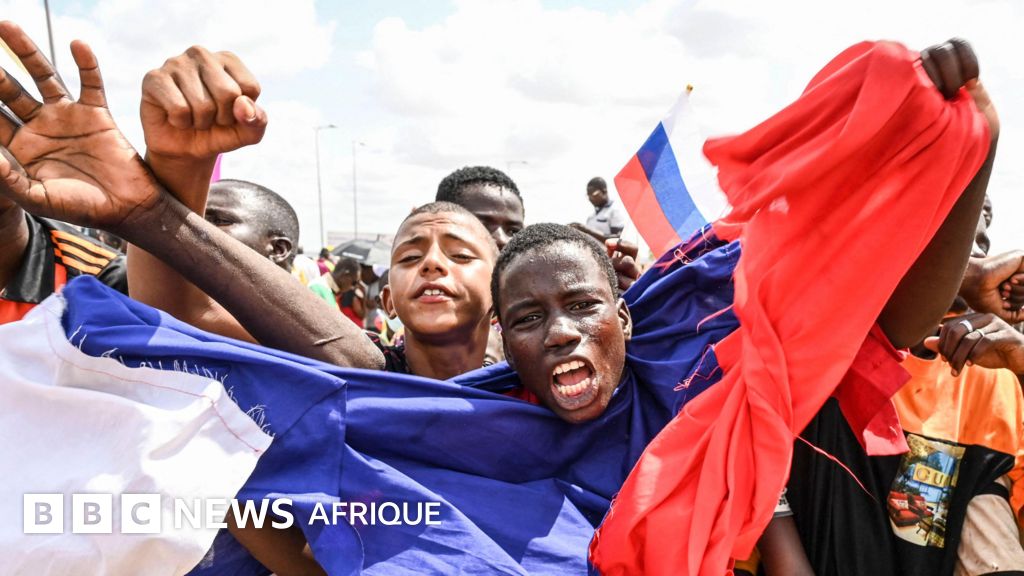
The United States has announced a significant shift in its policy toward the military-led governments of the Sahel region, including Burkina Faso, Mali, and Niger. These nations, which have recently distanced themselves from France in favor of closer ties with Russia, are now being prioritized for renewed security partnerships by Washington.
The U.S. State Department confirmed that Nick Checker, head of its Africa Affairs Bureau, will visit Bamako, Mali, to reaffirm American support for the region’s sovereignty and outline a new path for cooperation. This move aligns with a broader strategy that emphasizes security and economic interests over previous democratic and human rights concerns.
US revisits military partnerships in the Sahel
Following recent political upheavals—including the ousting of elected leaders in Burkina Faso, Mali, and Niger—the U.S. had previously suspended military cooperation. However, the Biden administration’s approach has undergone a marked transformation, particularly after the return of Donald Trump to the White House in early 2025.
Key developments include the closure of USAID operations in the region shortly after Trump’s inauguration, signaling a shift toward a more security-focused agenda. This transition has been accompanied by a renewed emphasis on counterterrorism efforts, with development and governance initiatives taking a backseat.
Military juntas gain US support despite democratic backsliding
Captain Ibrahim Traoré, leader of Burkina Faso’s military junta, has positioned himself as a vocal opponent of “imperialism” and “neocolonialism,” resonating strongly with youth across Africa. The Trump administration has made it clear that it does not prioritize democratic governance in its foreign policy, emphasizing instead the principle of non-interference in sovereign affairs.
Massad Boulos, a senior Africa advisor to the Trump administration, stated in late 2024: “Democracy is valued, but our policy is not to interfere in the internal affairs of other countries. People are free to choose the system that suits them.” This stance represents a stark departure from previous U.S. policies in the region.
Security takes precedence in US-Sahel strategy
General Michael Langley, former head of the U.S. Africa Command (AFRICOM) under Biden, had previously highlighted the importance of good governance and environmental concerns alongside military support. However, under Trump, Langley emphasized that combating terrorism is now the top priority.
General John Brennan, AFRICOM’s deputy director, recently confirmed that the U.S. continues to provide active support to the military-led governments of Mali, Burkina Faso, and Niger in their fight against jihadist groups, particularly the Islamic State’s West Africa Province (ISWAP). The Sahel region, spanning parts of Burkina Faso, Mali, and Niger, has become a global hotspot for terrorism, accounting for a significant share of worldwide terrorism-related deaths.
The region’s vast mineral wealth—including gold, lithium, and uranium—further underscores its strategic importance. The Nigerien junta has already taken control of the country’s main uranium mine, previously operated by French firm Orano, and is now exploring partnerships with Russia in this sector. U.S. policymakers are keen to ensure that Russia does not become the sole external partner in defense and security matters.
US seeks to balance Russian influence in the Sahel
The U.S. has not expressed concern over Russia’s military presence in the Sahel, where Moscow has deployed approximately 1,000 private security contractors to Mali, along with smaller contingents in Burkina Faso and Niger. While reports have emerged of human rights abuses by Russian forces, particularly in Mali, Washington appears willing to overlook these issues in favor of counterterrorism cooperation.
General Brennan indicated that the U.S. is providing intelligence support to the three countries and may also supply additional weaponry. However, Washington has no plans to redeploy active troops or reopen its drone base in Agadez, Niger, which was shut down after the Biden administration pressured the junta to commit to a democratic transition timeline.
The withdrawal of Burkina Faso, Mali, and Niger from the Economic Community of West African States (ECOWAS) in 2024 has further complicated regional stability efforts. The trio has since formed the Alliance of Sahel States (AES), reducing ECOWAS’s influence over their internal governance. This shift has allowed the remaining ECOWAS members to focus on practical security cooperation with the juntas to combat Islamist militants.
With jihadist groups infiltrating neighboring countries such as Benin, Nigeria, Togo, Ghana, and Côte d’Ivoire, the stakes for regional stability have never been higher. U.S. intelligence and potential arms deliveries could play a pivotal role in targeting key insurgent figures. However, as France’s decade-long military intervention in the Sahel demonstrated, military solutions alone are insufficient without addressing the region’s underlying social and economic challenges.