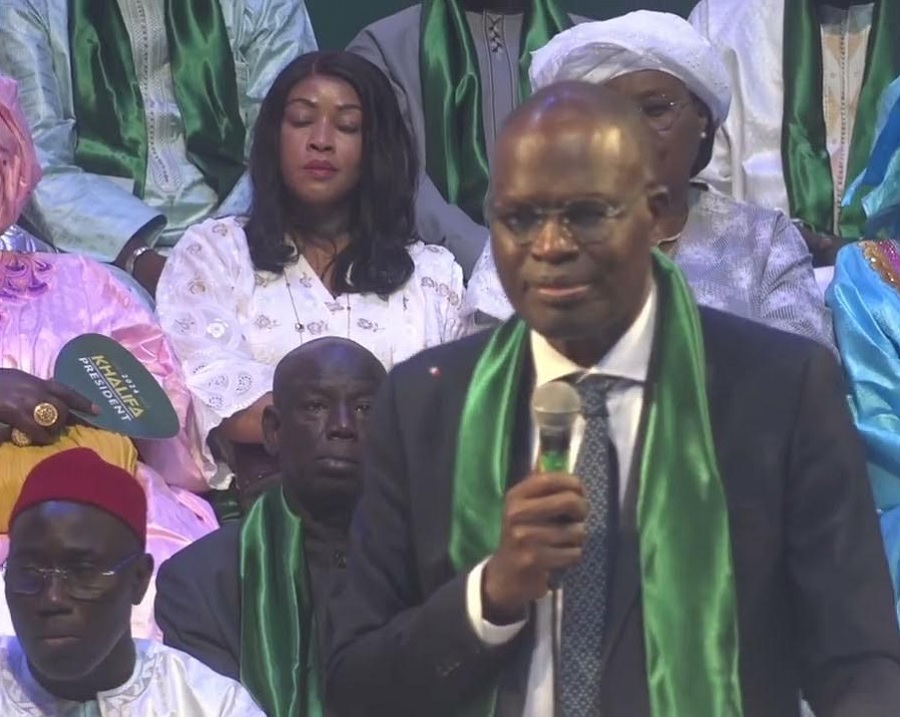
Taxawu Sénégal has held its constitutive congress in Dakar, marking its official transition from a political platform to a structured party. The event, centered on the theme “From platform to political party: Rethinking the social contract for a sovereign, just, united, and prosperous Senegal“, brought together activists, leaders, and supporters to endorse a new strategic direction for the movement.
Khalifa Sall elected as party leader amid national challenges
At the close of the congress, Khalifa Ababacar Sall was acclaimed as the leader of Taxawu Sénégal in an atmosphere of enthusiasm and militant commitment. In a speech blending critique and vision, the new leader delivered a stark assessment of the country’s condition, highlighting “deep concerns” and “real difficulties faced daily by compatriots.” He stated, “Across our cities and rural areas, neighborhoods and villages, one reality is undeniable: Senegalese men and women feel—and I would even say are certain—that the promises of social justice, prosperity, and transparency remain unfulfilled.”
A nation grappling with multifaceted social crises
The socialist leader outlined a Senegal confronted by a complex social crisis: teachers seeking recognition, students protesting harsh study conditions, workers demanding better salaries, and farmers, fishermen, and women facing increasingly precarious economic realities. “Our farmers are in total distress,” he emphasized, warning of the “progressive depletion of fish stocks” that threatens local fishermen and the nation’s maritime economy. The youth crisis—characterized by mass unemployment and a resurgence of clandestine migration—was also a focal point of his address.
“When a nation’s youth falters, the entire country trembles,” he declared. “A directionless youth signals a future without momentum.” With a memorable turn of phrase, he added, “We have plenty of young people looking for work; we struggle to find those who actually secure jobs.”
Taxawu Sénégal’s vision for a renewed social contract
To address these challenges, Taxawu Sénégal proposes a revamped political agenda centered on a “rethought social contract.” For Khalifa Sall, this refoundation begins with an “impartial, efficient, and exemplary state,” ensuring citizens better access to education, healthcare, employment, and social protection. The party advocates for stronger decentralization, empowering local governments with autonomy, transparent budgets, and participatory governance to foster citizen engagement.
Institutional reforms are also a priority, with a call for an independent judiciary free from “selective justice” or restrictions on public freedoms. “A democracy without a viable opposition is merely an unacknowledged autocracy,” he asserted, championing freedom of expression, press freedom, and political pluralism.
The speech also addressed international geopolitical and economic issues, urging Senegalese diplomacy to prioritize “peace, multilateralism, African solidarity, and economic sovereignty” in a world marked by conflicts, geopolitical tensions, and economic instability.
Socialist roots and economic justice
Outlining Taxawu Sénégal’s ideological foundations, Khalifa Sall reaffirmed the party’s socialist identity. “We are socialists. We cannot accept a system where inequality persists across generations,” he declared. The party’s societal project revolves around a “structuring triad”: “Humanity, Water, and Land,” aiming to foster a “productive and distributive economy” that generates wealth and ensures equitable growth.
In a heartfelt appeal to socialist activists, he urged left-leaning groups to unite around a credible alternative to tackle the nation’s current challenges. “Senegal needs a united opposition. Unity is our strength—and it will pave the way for our victory,” he concluded, as the congress erupted in applause.