The current situation in Senegal, characterized by a fundamental redefinition of Parliament’s role, raises profound questions about our democracy. Positioned between an institutional crisis and a democratic renaissance, the stakes transcend simple politics, prompting a re-evaluation of the very foundations of power within the state.

For several weeks, public discourse in Senegal has been dominated by alarming interpretations of the institutional landscape. Some perceive a major crisis, others a power struggle, and still others a worrying deviation. Yet, one thing is clear: the events unfolding today are bigger than the individuals and circumstances involved. The very mechanics of our democracy are being reshaped before our eyes.
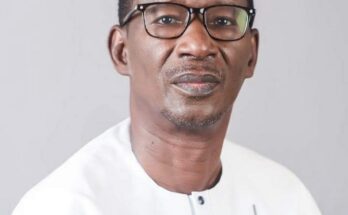
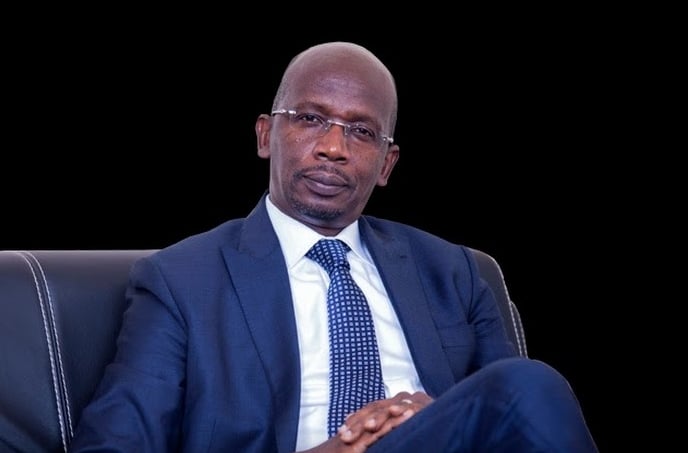
The analysis by Abdou FALL, Nasser NIANE, and El Hadj KASSE correctly diagnoses a core issue: since 1963, our political system has been built around an oversized Executive, the sole center of public decision-making. This extreme centralization has, over the decades, consistently generated friction whenever duality or rivalry emerged at the highest level of government.
While their assessment is astute, it overlooks a crucial element: for the first time in over two decades, Senegal has a Parliament that is not beholden to the President of the Republic.
For twenty years, under Presidents WADE and SALL, we witnessed the near-total subservience of the Parliament, which was reduced to a mere rubber-stamping body. This situation led to a deep institutional imbalance, where the Constitution itself was manipulated, amended, or interpreted to suit the interests of the executive branch. Successive revisions, opportunistic adjustments, and circumstantial readings weakened the country’s normative stability.
At that time, Senegal operated under a system where the top controlled everything, and any political transition or cohabitation was potentially explosive. This is precisely why the current situation cannot be viewed solely as a crisis. It can and should be understood as a democratic rebirth, a moment when Parliament finally ceases to be subordinate and begins to fulfill its constitutional duty. This isn’t a malfunction; it is the natural respiration of a maturing democracy. This is how great democracies operate.
The example of France is illuminating: its National Assembly has often rejected presidential bills, cohabitations are common, and tensions between the two heads of the Executive are considered normal. These tensions are not crises; they are balancing mechanisms, essential for preventing the concentration of power. What some are calling a “crisis” in Senegal today can therefore be seen as the nation’s entry into a culture of checks and balances, where the Executive is no longer hegemonic and the Legislature reclaims its rightful place.
This is a historic turning point. It is the first time our democracy is truly testing the strength of its institutions, not through submission, but through equilibrium. Senegal is not collapsing; it is adjusting, balancing, and normalizing.
The nation is discovering what major democracies have long experienced: permanent negotiation, de facto cohabitation, the limitation of executive power by the legislature, and shared responsibility. Far from being a sign of chaos, this situation is a historic opportunity.
An opportunity for democratic strengthening
It compels us to rethink our institutional model, to reinforce our parliamentary culture, to stabilize the constitutional rules of the game, to foster citizen participation, and to solidify checks and balances. This is how robust democracies are built.
It is how Cape Verde, Ghana, Botswana, and South Africa (where President Cyril Ramaphosa faces a revived impeachment process following a Constitutional Court decision related to the Farmgate scandal) have built their reputations as African democratic showcases: not through an absence of tension, but through the capacity of their institutions to absorb, regulate, and transform it into a sustainable equilibrium.
Today, Senegal has the chance to join this circle. We must welcome this evolution, support it, and consolidate it. A strong democracy is not measured by the absence of conflict, but by the quality of its checks and balances, the maturity of its institutions, and the ability of its Parliament to fully play its role. This moment is not a crisis; it is a renaissance. It may well be the best institutional news our country has received in twenty years.