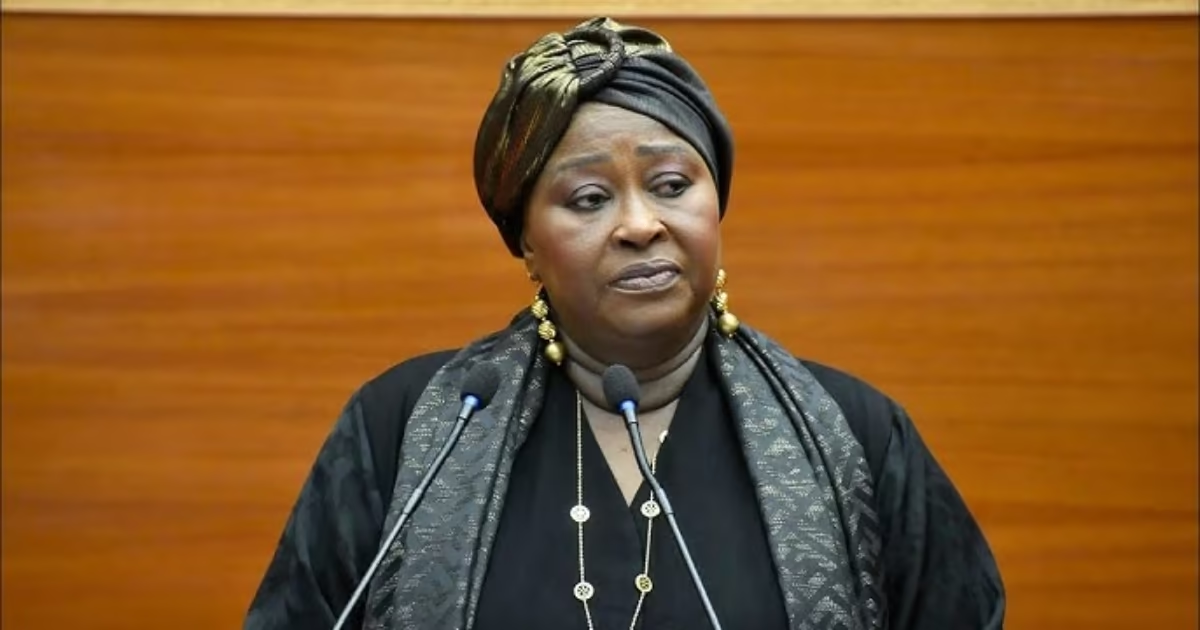
In Khombole, a recent gathering took a surprising turn when activist Maïmouna Dièye’s remarks about opposition leader Ousmane Sonko sparked immediate controversy. Her choice of words not only drew attention but also ignited a broader debate about the boundaries between political admiration and religious reverence in Senegal.
Maïmouna Dièye’s statement and its religious implications
During a public address in Khombole, Maïmouna Dièye referred to Ousmane Sonko using the honorific phrase ‘Seydina Ousmane Sonko Salalahou Aleyhi Wa Salam’ — a traditional Islamic invocation typically reserved for the Prophet Muhammad (peace and blessings be upon him). This phrasing immediately raised eyebrows, as it blurred the line between political respect and religious sanctification.
In Islamic tradition, such invocations are sacred and exclusively attributed to the Prophet and, in some interpretations, to other recognized prophets. Their application to a political figure, no matter how prominent, crosses a red line for many faithful. The controversy stems not from the admiration shown toward Sonko but from the religious framing of that admiration — a practice that risks elevating a human leader to a divine or quasi-divine status, which Islamic teachings strictly forbid.
Ousmane Sonko responds to the backlash
Ousmane Sonko quickly moved to clarify the situation, stating that while he deeply values the support of his followers, he firmly rejects any attempt to equate his status with that of the Prophet. In a carefully worded statement, he emphasized that the invocation ‘Salalahou Aleyhi Wa Salam’ belongs solely to the Prophet Muhammad and cannot be appropriated for any political leader, regardless of popularity or influence.
His response was not just a personal clarification but a broader reminder of the importance of maintaining religious integrity in political discourse. In Senegal, where faith and public life are deeply intertwined, such distinctions carry significant weight. Sonko’s reaction underscores the sensitivity surrounding religious language in politics and the need to preserve the sanctity of Islamic traditions.
Broader implications for political rhetoric in Senegal
This incident highlights a growing concern among religious leaders and citizens alike: the risk of blurring the line between political loyalty and religious devotion. While admiration for a leader is natural, the use of sacred religious language risks distorting political discourse and undermining the principles of secular governance.
In a country where Islam plays a central role in daily life and public discourse, such missteps can quickly escalate into major controversies. The episode serves as a cautionary tale for political figures and their supporters, reminding them that the language of faith must be used with care — especially when addressing matters of state.