Libreville’s turning point: $120 million investment to balance urban growth with social justice
Libreville’s urban transformation has reached a pivotal moment. While bulldozers reshape neighborhoods like Diba-Diba, Okala, and Lac Bleu, the government is making a decisive push to ensure progress does not come at the expense of displaced families.
Facing mounting pressure from families affected by demolition and redevelopment efforts launched on November 4, President Brice Clotaire Oligui Nguema announced an additional FCFA 4 billion allocation. This brings the total social safeguard budget to nearly FCFA 12 billion, aimed at fair compensation and dignified relocation for the 430 households in Libreville’s first arrondissement.
Human dignity takes center stage in urban renewal
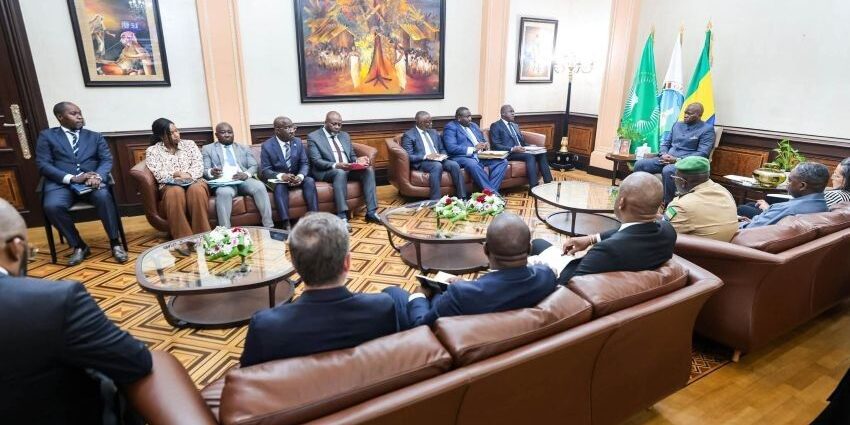
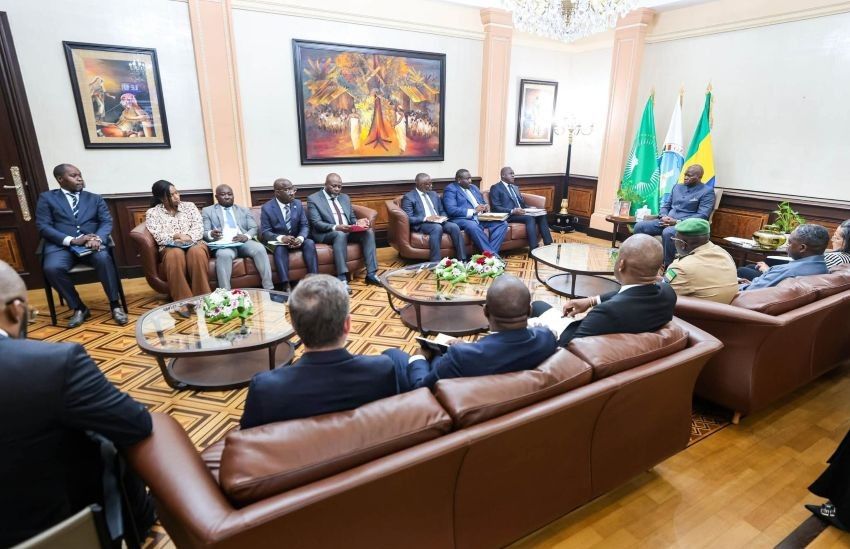
During a high-level meeting led by Vice President Hermann Immongault, the president emphasized that modernization must never overshadow the human cost of displacement. “I know what a home means—where families grow, where children are raised, where life savings are invested,” he stated, underscoring the government’s commitment to responsible urban governance.
The enhanced financial package will supplement existing compensation with tangible solutions: each affected family will receive a developed plot and a legally secured land title. Designated relocation sites include Malibé, 1st Campement, and Ntoum, where infrastructure is being prepared to welcome displaced communities.
From plans to people: ensuring tangible benefits
The Ministry of Housing, Urban Planning, and Land Reform is overseeing social support and administrative processing, while the Ministry of Public Works handles road construction. President Oligui Nguema has demanded real-time tracking of every case to ensure no family is left behind during this transition.
Behind the numbers lie real lives disrupted: families losing homes, livelihoods, schools, and social networks. While cash compensation and land allocation are critical first steps, their success hinges on the quality of plots, their development status, accessibility, and the legal security of land titles. Transparency and consistency in implementation will determine whether families experience genuine recovery or prolonged uncertainty.
New roads, new opportunities, and renewed challenges
The urban footprint being reclaimed will enable major infrastructure projects: extending the airport bypass to Okala, expanding the Jeanne-Ebori intersection into a dual-carriageway, and creating a direct route between Lac Bleu and Diba-Diba. These projects aim to ease congestion, enhance emergency access, improve safety, and reduce flood risks in vulnerable areas—addressing long-standing urban vulnerabilities in Gabon’s rapidly growing capital.
Yet, infrastructure alone cannot resolve the core dilemma: how to build a modern, functional city without deepening the hardships of those living in the path of progress? The answer lies not just in asphalt and concrete, but in policy choices that prioritize equity, accountability, and continuity of social support throughout the transition.
The true measure of progress
The FCFA 12 billion commitment is a strong signal of intent. But in Libreville, success will be measured not by construction milestones alone, but by the number of families who regain stable housing, secure legal titles, and rebuild their lives in dignified conditions. A modern city is not defined solely by its roads or skyline, but by the well-being of its people.
The transformation now underway is more than a construction boom—it’s a turning point. Whether it leads to equitable progress or exacerbates inequality will define Libreville’s future for generations.
Comments are closed, but trackbacks and pingbacks are open.