
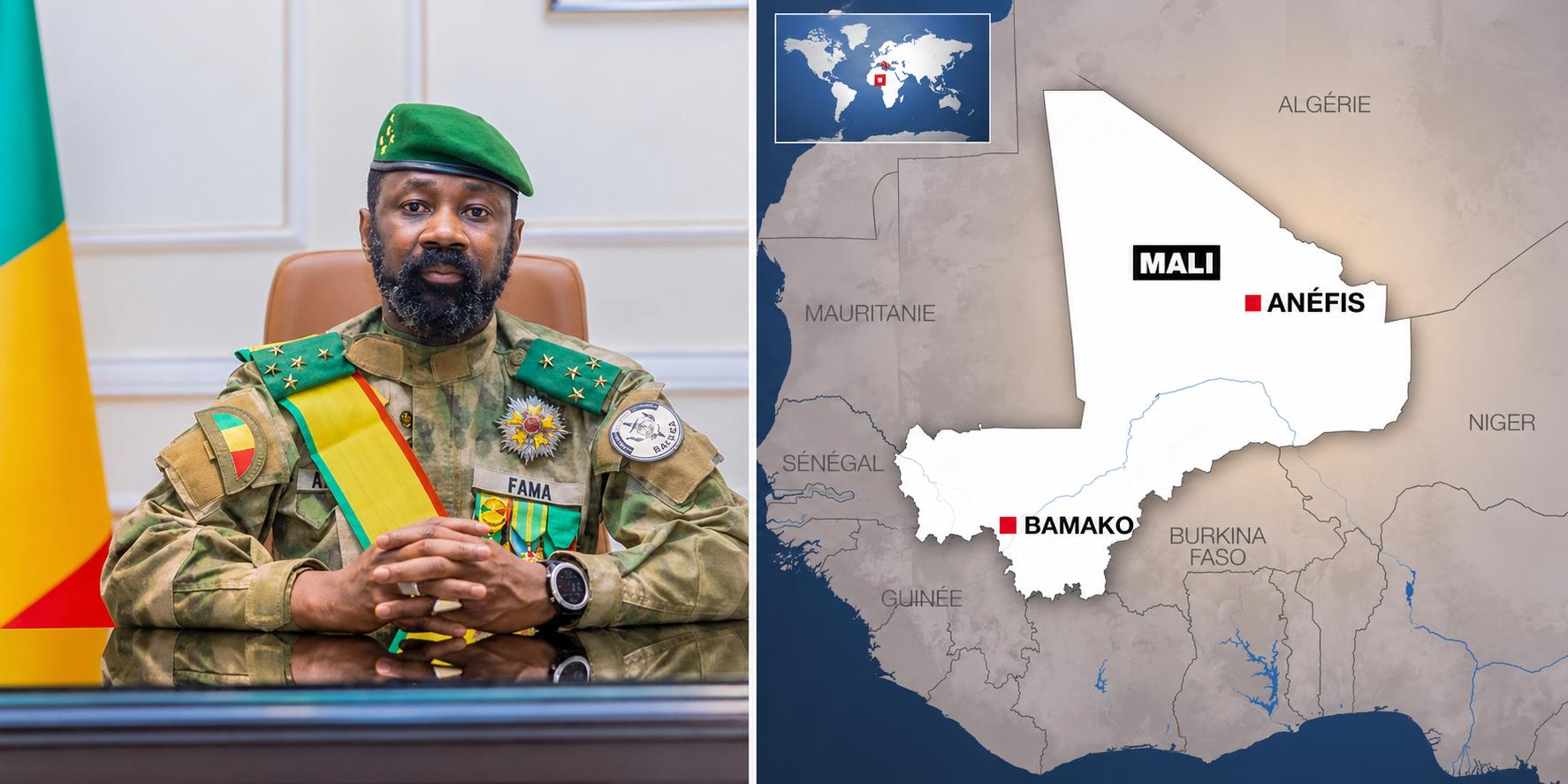
Tin Araban becomes latest flashpoint as Mali army faces coordinated attack
A fierce battle erupted yesterday in the Tin Araban area, close to Tabankort, pitting a large military convoy of the Malian Armed Forces (FAMa) and their Russian-backed Africa Corps allies against a coalition of rebel and terrorist armed groups. The confrontation unfolded against the backdrop of escalating unrest in northern Mali, while Bamako’s transitional leadership remains conspicuously silent—raising serious questions about the true state of national security.
The Gao-Anéfis corridor has once again become a critical battleground. Reports indicate that a substantial military convoy, comprising over 60 vehicles including logistics trucks, armored units, and ground troops, departed Gao at the start of the week. Its mission: to resupply and reinforce the beleaguered garrison at Anéfis, a strategic outpost in the Kidal region under intense pressure from armed factions opposed to Bamako’s authority.
The ambush struck near Tin Araban, a remote desert zone located about 100 kilometers south of Anéfis, near Tabankort. Witnesses described a meticulously planned assault involving heavy artillery, drone strikes, and sustained ground fire. The attackers were identified as part of a temporary alliance between Tuareg separatists from the Azawad Liberation Front (FLA) and jihadist elements from the Group for the Support of Islam and Muslims (JNIM), which maintains ties to al-Qaeda.
Heavy losses reported amid media blackout
While an independent and verified casualty count remains elusive due to restricted access to the battlefield, unverified reports from insurgent communication channels suggest significant losses on both sides. Several FAMa transport vehicles and light armored units operated by Russian instructors from Africa Corps—formerly associated with the Wagner Group—are believed to have been destroyed or captured. Partial video footage also appears to confirm the loss of drone reconnaissance platforms and dozens of casualties across the opposing forces.
Yet despite the gravity of the situation, no official statement has been released by Malian authorities. Over 24 hours after the ambush near Tabankort, the Directorate of Information and Public Relations of the Armed Forces (DIRPA) and the transitional government in Bamako continue to maintain a stony silence.
This blanket of secrecy is not merely a tactical delay or an operational misstep—it reflects a deliberate strategy of concealing the true scale of military setbacks in the North. By avoiding any acknowledgment of battlefield reversals or the intensity of recent fighting, Bamako appears determined to uphold a narrative of unstoppable military progress, even as evidence mounts of a far more precarious security reality.
Anéfis: the northern frontline at risk
The stakes of this engagement extend far beyond a single tactical skirmish. The ability of Malian forces to secure and maintain supply routes between Gao and Kidal is vital to preserving Bamako’s influence in the North. Should the convoy’s failure to reach Anéfis be confirmed, the isolated garrison could face imminent collapse, emboldening the coalition of armed groups to launch a broader counteroffensive. A territorial shift that the capital’s political rhetoric will struggle to rationalize without acknowledging the growing fragility of its military position.
