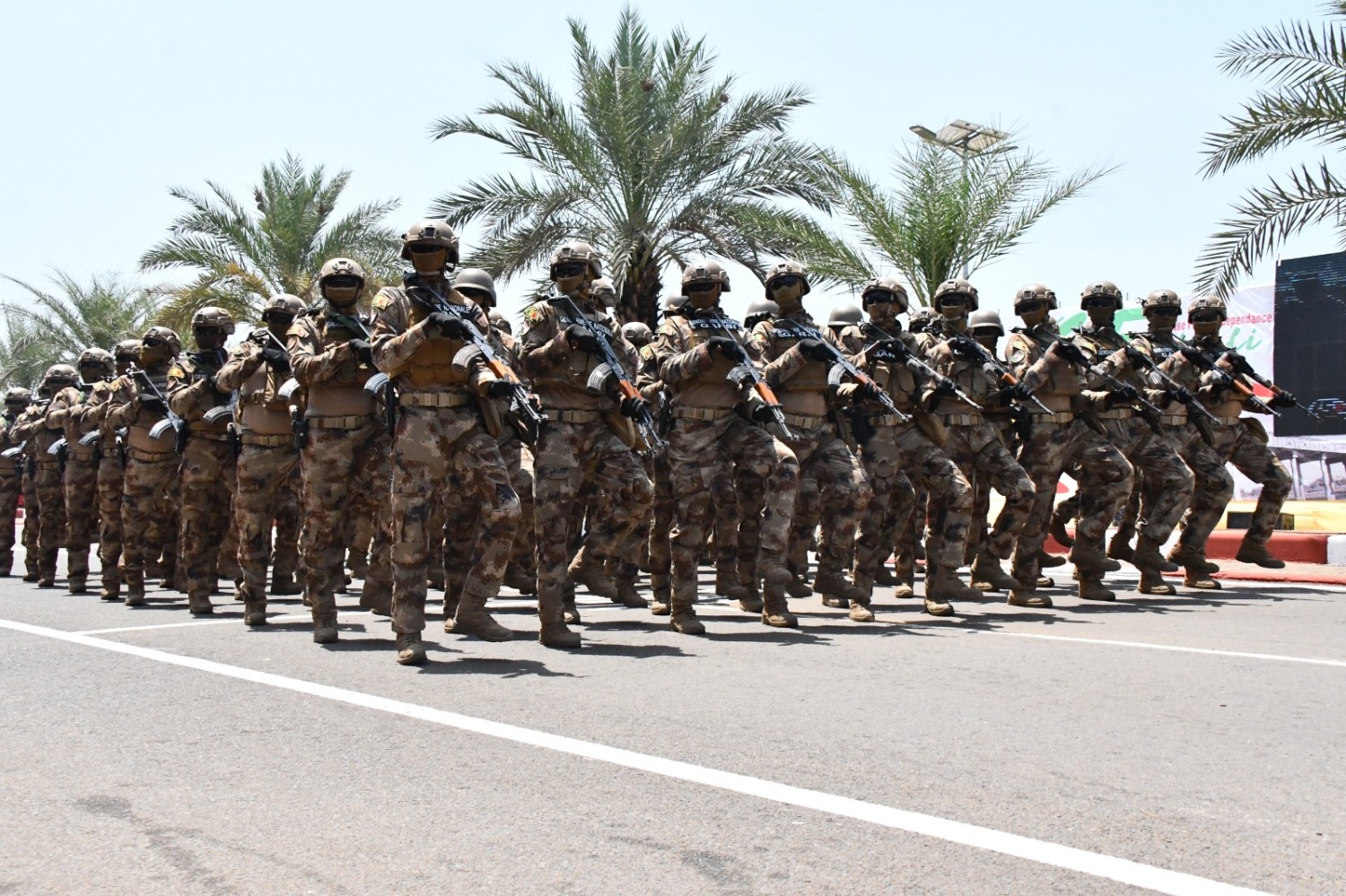
At least fifty Malian soldiers and five Russian paramilitaries serving with Africa Corps — the structure that took over from Wagner — were killed on Thursday 10 September when jihadist fighters overran the military camp at Dioura, in central Mali. Regional authorities confirmed the scale of the bloodshed on Monday 14 September, putting the number of dead somewhere between 50 and 80, and announced “air and ground operations against the assailants”.
One of the heaviest blows struck against Mali’s army
Roughly fifteen years of war have done little to prepare Mali’s armed forces for a raid of this magnitude. The assault on the Dioura camp ranks among the deadliest the army has endured. Beyond the confirmed deaths, several dozen Malian troops were taken captive.
The Group for the Support of Islam and Muslims (JNIM), an affiliate of Al-Qaïda, claimed the operation on the very day it was carried out.
Testimonies point to a far higher toll
An officer deployed at the scene was blunt: “The toll is high.” A security official in Mopti, in the centre of the country, spoke of “more than 60 soldiers killed in the attack, plus around sixty others captured”. A locally elected representative, meanwhile, described “at least 80 soldiers killed and many prisoners”.
Further testimony suggests the camp was hit twice and left without support: “The jihadists attacked the Dioura camp and came back the following day (…) the army sent no reinforcements to the site.”
Air and ground operations launched against the attackers
In a statement released on Sunday about the situation in Dioura, the Malian army reported that “air-ground operations” had been “engaged against the assailants”. It also claimed the “neutralisation”, to the south-west of the town, of “several terrorist elements on motorcycles who were trying to conceal themselves beneath vegetation”.
A security crisis rooted in 2012
Mali’s instability stretches back to 2012 and has been fed by jihadist groups, by their allies in the Touareg separatist movement gathered in the Azawad Liberation Front (FLA), and by community-based criminal networks.
The junta running this Sahelian state has drawn closer to Russia, whose Africa Corps paramilitaries assist its counter-jihadist campaign. Yet the security picture has grown even more critical since late April 2026, when JNIM fighters and the FLA rebellion joined forces for a series of coordinated attacks on strategic positions held by the junta and the army in several cities, including on the outskirts of Bamako, the capital.
The defence minister among the dead
Those coordinated strikes cost the life of the defence minister. On 18 July, the coalition of Touareg separatists and jihadists ambushed an army convoy as it travelled from the strategic northern town of Anéfis towards the major city of Gao, killing at least 50 more soldiers.
Comments are closed, but trackbacks and pingbacks are open.