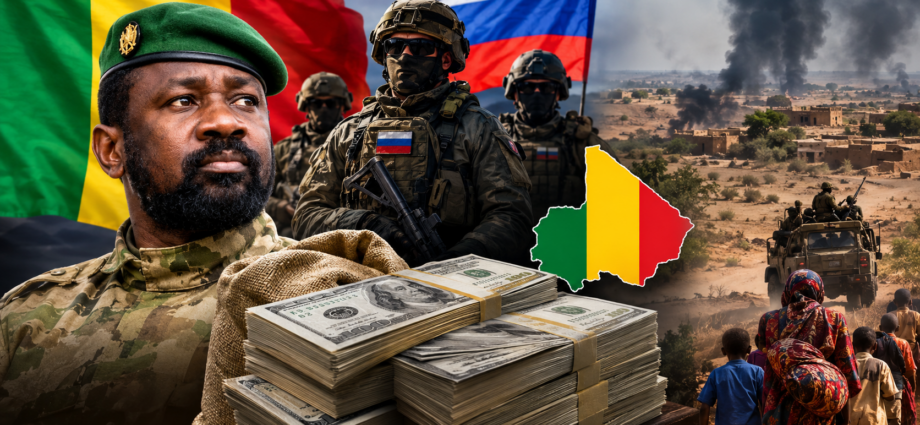
The Price of Security: One Billion Dollars Spent on Russian Forces
Mali has allocated nearly one billion dollars to fund its partnership with Russian paramilitary groups, initially Wagner and later integrated into the Africa Corps framework. These forces cost approximately $10,000 per fighter per month, a substantial financial commitment that raises pressing questions for Malian authorities. As Bamako deepens its military ties with Moscow, the central issue remains: what tangible security gains have justified this strategic shift?
This expenditure reflects a broader political paradox. By severing military cooperation with Western partners, particularly France, Mali’s transitional government pledged to regain control over its security landscape. The Russian alliance was positioned as a sovereign choice one that would bolster Mali’s military capabilities and restore state authority nationwide. Yet the true measure of success lies not in rhetoric but in results: the protection of civilians, the security of supply routes, the reduction of armed attacks, and the restoration of public services in threatened regions.
Where the Money Didn’t Go: The Opportunity Cost of Military Partnership
The billion-dollar sum is not merely a military expense; it represents a significant reallocation of public funds that could have been invested in infrastructure, healthcare, education, or economic development in conflict-affected areas. While no military partnership can instantly end insurgency, the scale of this investment demands accountability. Citizens deserve clarity on how these resources translate into measurable improvements in safety and stability.
Current trends, however, suggest a disconnect between spending and outcomes. Persistent attacks, vulnerable military outposts, and populations still under threat from armed groups raise doubts about the effectiveness of this collaboration. The challenge for Malian leaders is no longer justifying the financial outlay but demonstrating its tangible benefits for the people they serve.
From Wagner to Africa Corps: A Name Change, Not Necessarily Progress
The rebranding from Wagner to Africa Corps represents a structural reorganization within Russia’s African military operations. Yet renaming a force does not inherently improve security on the ground. For Mali, the critical question is whether this evolution has yielded tangible benefits: enhanced coordination with national forces, improved intelligence capabilities, stronger protection for local communities, and a sustained reduction in threats.
Foreign fighters can provide specialized operational support, but enduring security cannot depend solely on external forces. Mali must invest in building an autonomous, well-equipped, and capable national army to reclaim and hold territory. If security remains critically dependent on costly foreign partnerships, the proclaimed push for strategic independence must be scrutinized.
The Political Liability of Unmet Security Promises
The Malian government’s pivot from France to Russia was justified under the banner of sovereignty, framed as a move toward independence and diversified alliances. Yet sovereignty also demands transparency, accountability, and results. Citizens deserve answers: What is the real cost of the Russian military presence? What specific missions are these forces undertaking? What measurable gains have been achieved? And what protections are in place for civilian populations?
This isn’t a critique of the Russian partnership in principle, nor a defense of past allegiances. It is a demand for fair evaluation. No military partnership should receive a free pass merely because it aligns with the government’s political narrative. The greater the financial commitment, the higher the obligation for authorities to prove its effectiveness.
What Matters Most: The Security of Everyday Malians
Ultimately, security is judged not by press releases or political speeches but by the lived experience of ordinary Malians. Families in embattled zones, traders relying on safe passage, farmers accessing their fields, and displaced communities hoping to return home these are the true arbiters of success. Their safety, mobility, and access to basic services must improve if the billion-dollar investment is to be considered worthwhile.
For this partnership to be deemed a success, Mali must see a durable reduction in violence, a stronger state presence in reconquered areas, and a restoration of public services. Without such progress, the government faces a growing credibility gap. The failure would not lie in the choice of partner, but in the inability to deliver on the promised dividends of security and stability.
One Billion Dollars Later: The Burden of Proof
The stakes extend beyond Mali’s alliance with Russia. This partnership tests the government’s ability to translate diplomatic realignment into tangible benefits for its population. Military cooperation, no matter how strategic, cannot be an end in itself. It must produce measurable outcomes in security, governance, and quality of life.
With such vast resources committed, the onus is on authorities to provide verifiable data: payment records, troop numbers, contract durations, operations conducted, and security trends before and after the Russian deployment. Only then can the public assess whether these investments have translated into meaningful progress. A billion dollars is a staggering figure but it is ultimately meaningless without results.
In a nation enduring prolonged conflict, sovereignty cannot be measured solely by the rejection of former allies. It must also be measured by the protection of its people and the restoration of its territorial integrity. The question is no longer whether Mali made a strategic choice, but whether that choice has made Mali safer.
By Alasane OUEDRAOGO — Journalist
Comments are closed, but trackbacks and pingbacks are open.