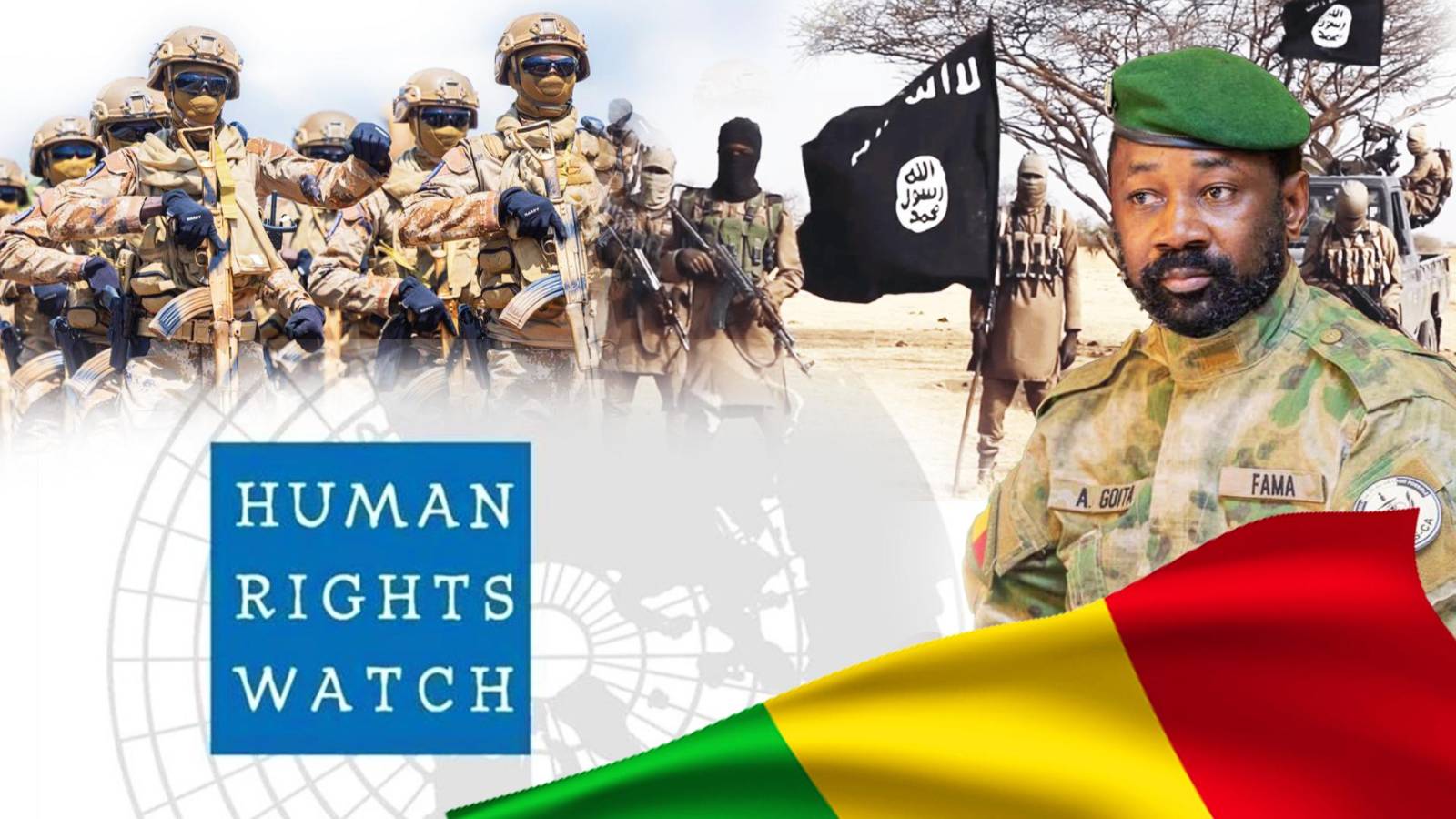
Human Rights Watch documents widespread abuses amid Mali’s deepening crisis
Investigations by a leading human rights organization reveal a disturbing escalation of violence in Mali following the April 25 military shift. Since the fall of Kidal and the loss of Defense Minister Sadio Camara, a deadly cycle of retribution has taken hold, with government forces, Russian allies, and Islamist insurgents engaged in a brutal contest for control. Beyond the immediate human toll, a calculated campaign to cripple the nation’s economy threatens to push millions into desperation.
The fall of Kidal and the birth of a new phase
The coordinated offensive by the Group for the Support of Islam and Muslims (JNIM) and the Azawad Liberation Front (FLA) on April 25 marked a turning point. Kidal’s capture signaled not only a military setback but also the elimination of a key security figure. In response, the Malian Armed Forces (FAMa), supported by Russia’s Africa Corps, launched a sweeping counteroffensive. While authorities have withheld precise casualty figures, field reports indicate at least 13 civilians killed and 25 wounded in the initial clashes around Gao and Kidal.
Economic warfare: a deliberate strategy of suffocation
The JNIM’s tactics have shifted from traditional combat to economic strangulation. By enforcing roadblocks and targeting supply lines, the group aims to cripple Bamako’s logistical lifelines. Between May 6 and 21 alone, over 40 civilian transport vehicles were intercepted and destroyed. The systematic targeting of fuel tankers—since September 2025—has disrupted fuel distribution, plunging regions into darkness and shuttering schools and markets. The message is clear: submit or starve.
This campaign of terror extends beyond infrastructure. In Tonka, near Timbuktu, a public execution served as a grim warning to any who might resist the group’s rule. The brutal display underscores the insurgents’ dual strategy: starve the population while instilling paralyzing fear.
Civilian suffering under government and allied operations
Yet the response from Bamako’s forces has not spared civilians either. Human Rights Watch’s field investigations document at least 38 civilian deaths—including 23 children—between May 14 and 17 during ground operations in central Mali. The targeting of Peul communities has drawn particular scrutiny, as many bear the brunt of indiscriminate raids under the assumption of affiliation with insurgent groups.
The aerial campaign has been equally devastating. On April 25 in Guimbé, a drone strike killed 12 children and adolescents. On May 17 in Téné, an airstrike struck a wedding ceremony, leaving 10 civilians dead. These incidents highlight a broader pattern of disproportionate force, where the line between military targets and civilian life has blurred beyond recognition.
No accountability, no justice: the cycle of impunity
Despite repeated inquiries, neither the Malian government nor the JNIM has provided satisfactory explanations for these violations. The JNIM claims its actions are justified by alleged civilian defiance of its imposed decrees, while Bamako’s Ministry of Justice has remained silent in the face of formal requests for clarification. This lack of transparency and accountability has created a vacuum where international law is routinely flouted.
Ilaria Allegrozzi, Sahel researcher for Human Rights Watch, warns that without urgent intervention, the cycle of violence will only intensify. The absence of an independent monitoring mechanism—following the withdrawal of the former UN mission—has left Mali’s civilian population exposed to arbitrary abuses. The organization now urges the African Union and the United Nations to swiftly establish an international fact-finding mission. Such a probe is essential to gather irrefutable evidence that could one day hold perpetrators accountable and pave the way for justice.
A plea for intervention before it’s too late
The humanitarian toll of this conflict is mounting. Entire regions face fuel and electricity shortages, schools remain closed, and markets lie dormant. The civilian population, caught between the hammer of insurgent violence and the anvil of state-led countermeasures, has become the primary victim of a war that shows no sign of abating. Without immediate action to break the cycle of impunity and restore accountability, Mali’s already fragile social fabric risks unraveling entirely.
Comments are closed, but trackbacks and pingbacks are open.