Following the military takeovers in 2020 and 2021, Mali has undergone a radical geopolitical recalibration under the direction of Assimi Goïta. By adopting a narrative centered on national autonomy, the administration has moved away from traditional Western cooperation to embrace new security and economic configurations with Russia and the UAE. Yet, this pursuit of self-determination has highlighted the vulnerabilities of transactional diplomacy in unstable regions. Despite diversifying its international connections, the country continues to face growing insurgencies, a stagnant economy, and a decline in effective governance.
The leadership of Assimi Goïta has steered Mali into a period of deep uncertainty. His governance is defined by a fierce sovereigntist rhetoric that champions national independence and resists foreign oversight. This stance has found significant support among citizens who felt marginalized by years of persistent violence and what they perceived as the overbearing influence of France.
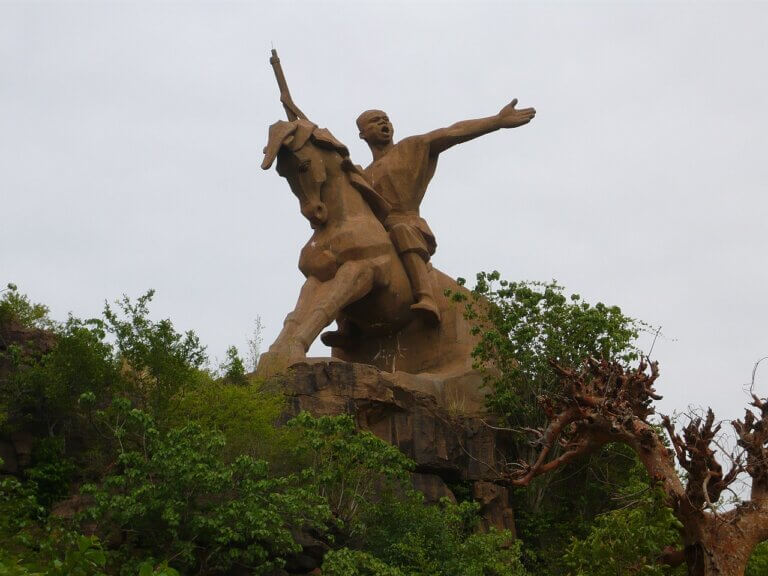
While positioning himself as the guardian of Mali’s integrity, Assimi Goïta has fundamentally restructured the nation’s external affairs. This involves a calculated distancing from Western powers and the termination of the United Nations Multidimensional Integrated Stabilization Mission in Mali (MINUSMA). In their place, Bamako has fostered closer ties with Russia, reflecting a desire to regain domestic control over strategic military and political choices.
This evolving framework can be viewed as transactional sovereigntist post-alignment. In this model, the state asserts formal independence while selectively engaging with various global actors to ensure regime survival and secure material aid. Rather than committing to a single bloc, Mali leverages rival powers to bolster its domestic standing amid institutional weakness.
To maintain popular backing, Assimi Goïta pledged to eradicate systemic corruption and rebuild national institutions. While this message appealed to a public tired of elite misconduct, concrete progress in safety and development is still missing. Since early 2022, the transitional authorities have repeatedly pushed back election dates, citing technical hurdles, and even suggested keeping the current leadership in place until 2030. These delays, coupled with the May 2025 decision to dissolve all political parties and ban their activities, have sparked significant concern regarding the future of democracy in the country.
The persistent challenge of economic stagnation
Despite the government’s promises, the delivery of essential public services like justice, infrastructure, and security remains inadequate, particularly in remote border areas. The majority of Malians face harsh living conditions as economic progress remains trapped in urban centers. This focus on the cities has left rural populations behind, widening the gap in social and economic opportunities.
The income disparity between urban and rural sectors in Mali is approximately 5.5%, a figure significantly higher than the 2.7% seen in countries like India. Currently, Mali ranks 188th out of 193 nations on the United Nations Human Development Index, placing it firmly in the Low Human Development bracket. This ranking reflects the deep-seated issues in education, healthcare, and general prosperity that the current regime has yet to solve.
Corruption also remains a major roadblock. While the post-coup government initially promised transparency, there has been little evidence of improvement. Instead, the visible wealth of the new elite has only deepened the public’s sense of inequality and governance failure.
Security threats and the role of international players
Mali’s security situation continues to deteriorate, providing fertile ground for the growth of extremist factions. Economic despair is driving more young people toward militant groups across the Sahel, such as ISIS-Sahel and Jama’at Nusrat al-Islam wal-Muslimin (JNIM), which are highly effective at capitalizing on local grievances.
Operational security remains elusive despite constant vows to end terrorism. The country is still plagued by frequent ambushes and violent confrontations. Furthermore, these armed groups are becoming more sophisticated, utilizing modern technology to improve their recruitment and tactical coordination.
Russia has emerged as a primary partner in Mali’s new security strategy. After the departure of French and UN missions, the Wagner Group stepped in to provide training and direct combat support. While this partnership helped the military retake Kidal in 2023, it also brought numerous reports of human rights violations. By June 2025, the Wagner Group was officially replaced by the Africa Corps, a force managed by the Russian Defense Ministry. Though smaller in scale, this group maintains a presence while adopting a less direct operational role.
This transition signifies a more formal integration of Russian influence into Mali’s defense and economic sectors. However, the regime maintains a level of flexibility; as of March 2026, reports indicated that Washington and Bamako were discussing the resumption of American intelligence flights, proving that Mali’s “sovereignty” is often pragmatic and adaptable.
Ukraine has also become an unexpected participant in this regional struggle. Its indirect support—providing intelligence and drone tech to certain groups—has turned Mali into a proxy stage for the broader Russia-Ukraine conflict. Following a major ambush near Tinzaouatene in July 2024 linked to Ukrainian support, Bamako officially cut ties with Kyiv, illustrating how global wars are now impacting the Sahel.
The United Arab Emirates (UAE) is another influential actor. While the UAE has officially criticized the coups in the region, it has quietly maintained support for the new administrations in Mali and Niger. This involvement is part of a larger strategy to project power across the Sahel and compete with regional rivals like Algeria and Qatar.
A precarious path forward
The fundamental problems of Mali—underdevelopment, violence, and the spread of non-state armed groups—are as deep as ever. Neither the Malian Armed Forces nor their shifting international alliances have managed to secure the country or improve the daily lives of its citizens.
Mali’s current path is not a simple move from West to East, but a commitment to a transactional form of sovereignty. While this helps the regime stay in power for now, it risks creating a cycle of dependency and turning the nation into a permanent theater for foreign rivalries. Without structural reforms that restore the bond between the state and the people, the crisis is likely to worsen and potentially destabilize neighboring countries along the Gulf of Guinea.